In the Name of Allah, the Most Gracious, the Most Merciful
Hajj Mabrur
Hajj Almanac
For my family, in shā Allāh
A companion for the pilgrim, in shā Allāh
Thirteen Days ⸻ Dhul Hijjah 1447
Dhul Hijjah 1447 ⸻ May 2026
Type
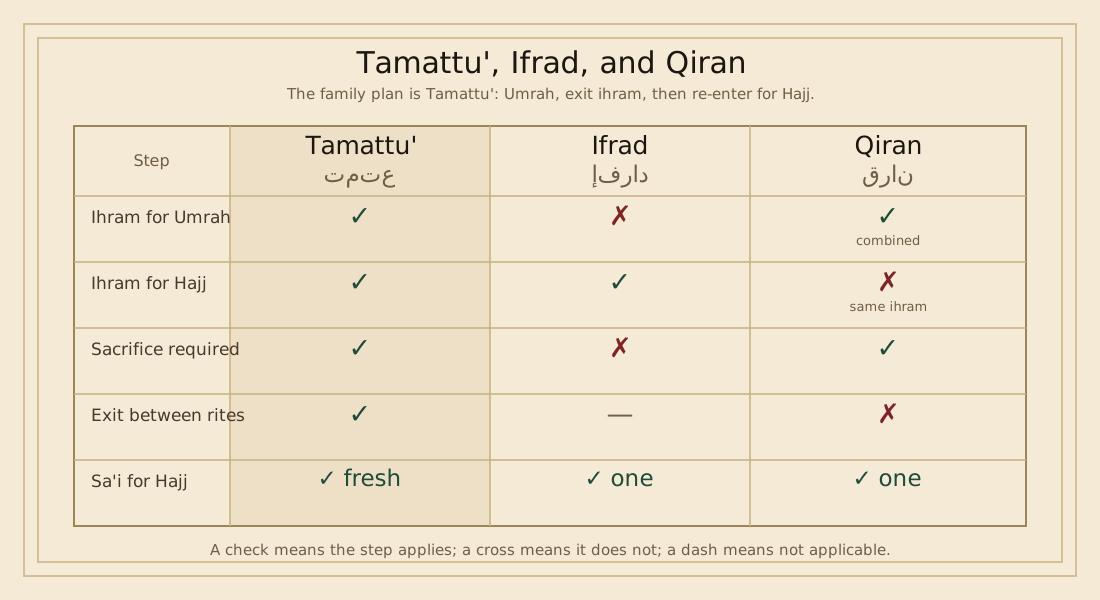
Hajj Tamattu'
Package
ALJ Jameel 102 Luxury
Travel
19 May → 31 May 2026
Group
4 pilgrims
School
Sunni · Sunnah-direct
Year
1447 AH · 2026 CE
13
Days
4
Pilgrims
3
Hotels
5
Hajj days
49
Pebbles
14
Stops
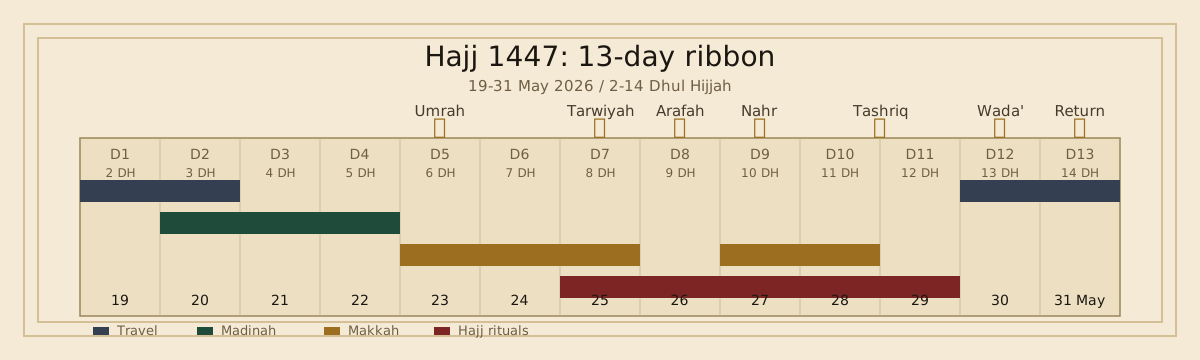
A 13-day phase ribbon: travel, Madinah, Makkah, and the five Hajj days share the same May 19-31 timeline.
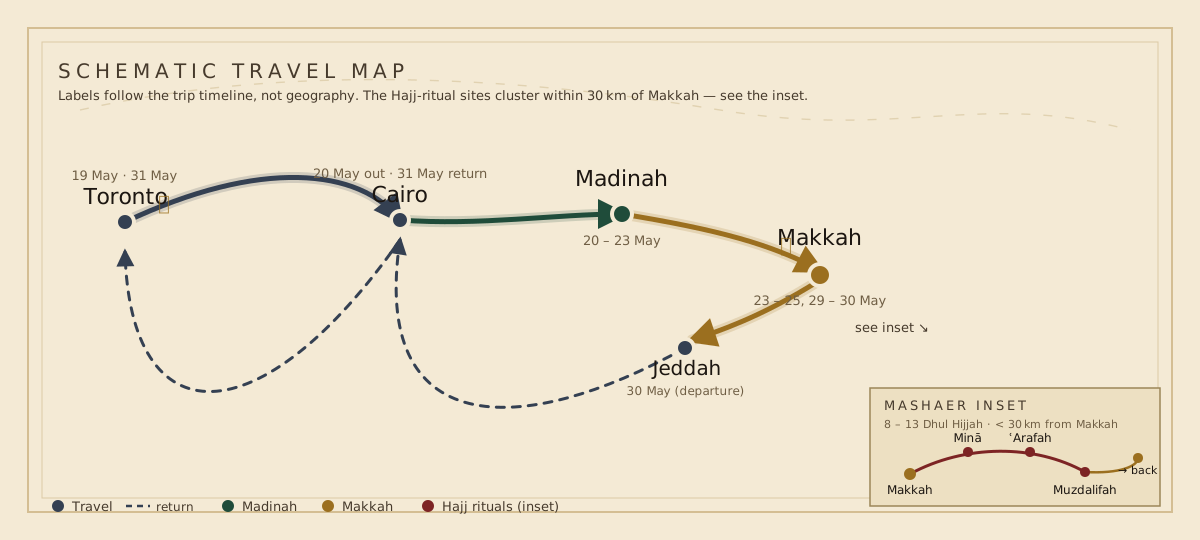
The route, end to end
The route is schematic and not to scale; the Saudi inset expands the Mashaer sequence.
TravelMadinahMakkahHajj rituals
At a glance
A complete Hajj companion
Every step of the pilgrimage, every du’ā in its place, every common mistake flagged before it happens — built from the Qur’ān, Ṣaḥīḥ al-Bukhārī, Ṣaḥīḥ Muslim, the four Sunan, and the established du’ā compilations. Free, no account, designed to be read on a phone in the heat of Mina or quietly at home in the months before.
Every du’ā cites its source. Drawn from the Qur’ān, Ṣaḥīḥ al-Bukhārī, Ṣaḥīḥ Muslim, the four Sunan (Abū Dāwūd, Tirmidhī, Nasā’ī, Ibn Mājah), the Muwaṭṭa’, and Ḥiṣn al-Muslim. Installable as a home-screen app. No login. Free.
6 Dhul Hijjah · First Umrah day all times Saudi (AST)
Ihram, Miqat, the Kaaba
Ghusl at Saja, ihram before the bus, niyyah at the Miqat, Umrah at the Kaaba.
Niyyah at Miqat (Tamattu')
لَبَّيْكَ اللَّهُمَّ عُمْرَةً مُتَمَتِّعًا بِهَا إِلَى الْحَجِّLabbayka Allāhumma ʿUmratan Mutamattiʿan bihā ilā-l-Ḥajj"Here I am, O Allah — for an Umrah, enjoying [normal life] until the Hajj."
Pre-FajrGhusl with niyyah for Umrah. Trim nails. Remove armpit/pubic hair (Sunnah).
FajrMasjid Nabawi.
7:00 AMSaudiWear ihram at Saja. Apply unscented body lotion / deodorant.
8:30 AMSaudiFinal hotel checkout. ALJ bus departs.
~10:00 AMSaudi★ Reach Miqat: Dhul Hulayfah / Abiyaar Ali. Make niyyah, begin continuous Talbiyah.
10–2 PMSaudiBus to Makkah, ~4 hours. Talbiyah continuously. Stop at first sight of the Kaaba.
~2:00 PMSaudiAnjum Hotel check-in. Drop heavy luggage. Rest.
Maghrib★Group Umrah. Tawaf 7 → 2 raka'ah at Maqam Ibrahim → Zamzam → Sa'i 7.
LateTaqsir (men: barber ~50 SAR · women: fingertip from a braid). Exit ihram. Sleep.
6
Makkah
Sun 24 May 2026
7 Dhul Hijjah · Makkah free day all times Saudi (AST)
The day before Hajj begins
Optional nafl Tawaf. Stock water. Pack the mini-bag for Mina.
FajrMasjid al-Haram.
AMOptional nafl Tawaf.Tip: first floor takes ~10 min vs 30+ at peak.
PM★Pack the small backpack for Mina. Heavy luggage stays in Anjum.
All prayersHaram.
7
Hajj · Tarwiyah
Mon 25 May 2026
8 Dhul Hijjah · Day of Tarwiyah all times Saudi (AST)
The Hajj begins · to Mina
Re-enter ihram for Hajj. Bus to Camp A · Majr Al Kabsh.
Niyyah for Hajj
لَبَّيْكَ اللَّهُمَّ حَجًّاLabbayka Allāhumma Ḥajjan"Here I am O Allah, for Hajj."
Pre-FajrGhusl, wear ihram (2nd time, for Hajj). Pack mini backpack.
DhuhrPray in Mina, shortened (qasr) to 2 raka'ah, NOT combined.
AsrMina, 2 raka'ah.
MaghribMina, 3 raka'ah.
IshaMina, 2 raka'ah.
EveningQuran, dhikr, Talbiyah. Sleep early.
8
Hajj · Arafah
Tue 26 May 2026
9 Dhul Hijjah · The day of Arafah all times Saudi (AST)
"Hajj is Arafah."
The most important day of your life. Stand in dua sunrise to sunset. Sleep under stars at Muzdalifah.
Critical reminders
Do NOT fast. Drink water continuously — heat is 40–50°C. Do NOT leave Arafat before sunset — invalidates Hajj. Do NOT pray Maghrib at Arafat — pray it combined with Isha at Muzdalifah.
The dua of Arafah
لَا إِلَٰهَ إِلَّا اللَّهُ وَحْدَهُ لَا شَرِيكَ لَهُ، لَهُ الْمُلْكُ وَلَهُ الْحَمْدُ، وَهُوَ عَلَى كُلِّ شَيْءٍ قَدِيرٌLā ilāha illā Allāh waḥdahū lā sharīka lah, lahu-l-mulku wa lahu-l-ḥamd, wa huwa ʿalā kulli shay'in qadīr"There is no god but Allah alone, no partner. To Him belongs all dominion and praise; He has power over everything."
Pre-FajrWake. Light breakfast. Hydrate.
FajrMina, 2 raka'ah.
~5:30 AMSaudiTrain Mina → Arafat (~20 min). Continue Talbiyah.
~7:00 AMSaudiArrive ALJ luxury tent at Arafat. Settle, water, shade.
~12:00 PMSaudiKhutbah. Pray Dhuhr + Asr combined & shortened at Dhuhr time.
PM★STAND in dua until sunset. Continuous istighfar, Quran, personal duas. Face Qiblah.
Pre-sunsetUse Arafat washrooms. Lines at Muzdalifah are much longer.
~7:00 PMSaudiSunset. Wuquf complete. Begin train to Muzdalifah.
Cairo layover, then Toronto. Hajj Mabrur in shā Allāh.
1:10 AMCairoLand Cairo CAI Terminal 5.
2:55 AMCairoMS995 Cairo → Toronto departs. 11h 30m flight.
7:25 AMTorontoLand Toronto YYZ Terminal 1. Customs.
★Hajj complete. Welcome home as a Hajji. May Allah accept it.
Every step · every du'ā · in order
Hajj Step by Step
A single-page chronological companion — from leaving home to returning home. Excludes the ʿArafah du'ās (those have a dedicated companion).
One page, start to finish — every action, every du'ā, in order
A single-page chronological companion. For each phase: what to do, what to say, what to seek refuge in. The standing of ʿArafah has its own full companion (the Arafah Duas page) and is summarised here.
Make tawbah from every category of sin you can remember. Be specific. Itemise.
Settle debts — pay what you can. For what you can't, get the creditor's written knowledge or arrange a clear repayment plan.
Reconcile with any person you have wronged or fallen out with. Send a message. Make a call. If they refuse, your duty is fulfilled.
Write your waṣiyyah (will) — even a short one. Required if you have any wealth and dependants (Bukhārī 2738).
Brief your family — finances, schools, medical, who to call. Leave the people you provide for in good order.
Give ṣadaqah before you leave — even small. The Prophet ﷺ encouraged it.
Choose your companions for the journey carefully — "A man is upon the religion of his close friend" (Tirmidhī 2378).
What to say
Sincere intention — refresh in your heart:
O Allāh, I am intending Ḥajj for Your Face alone. Make it easy for me, accept it from me, and do not let it be a Ḥajj of show or fame.
When leaving the house:
بِسْمِ اللَّهِ، تَوَكَّلْتُ عَلَىٰ اللَّهِ، وَلَا حَوْلَ وَلَا قُوَّةَ إِلَّا بِاللَّهِ.Bismillāh, tawakkaltu ʿalā-llāh, wa lā ḥawla wa lā quwwata illā billāh.In the name of Allāh, I trust in Allāh, and there is no power and no strength except by Allāh.Sunan Abū Dāwūd 5095, Tirmidhī 3426, ṣaḥīḥ
Leaving anything (house, hotel, building) — refuge from harm:
اللَّهُمَّ إِنِّي أَعُوذُ بِكَ أَنْ أَضِلَّ أَوْ أُضَلَّ، أَوْ أَزِلَّ أَوْ أُزَلَّ، أَوْ أَظْلِمَ أَوْ أُظْلَمَ، أَوْ أَجْهَلَ أَوْ يُجْهَلَ عَلَيَّ.Allāhumma innī aʿūdhu bika an aḍilla aw uḍall, aw azilla aw uzall, aw aẓlima aw uẓlam, aw ajhala aw yujhala ʿalayy.O Allāh, I seek refuge in You from going astray or being led astray, from slipping or being made to slip, from wronging or being wronged, from being foolish or being treated foolishly.Sunan Abū Dāwūd 5094
Wuḍū before leaving for the airport — it's nāfilah but recommended.
Pray two rakʿah of "travel ṣalāh" if time allows (the Prophet ﷺ used to pray two before journeying).
Pack the iḥrām garments in carry-on — you may need to change into them mid-flight.
At the airport: pray any due ṣalāh before boarding. Don't board with unpaid debts of ṣalāh.
In flight: maintain calm dhikr; recite Qur'ān; sleep so you arrive rested.
What to say
When the vehicle/plane begins to move:
سُبْحَانَ الَّذِي سَخَّرَ لَنَا هَٰذَا، وَمَا كُنَّا لَهُ مُقْرِنِينَ، وَإِنَّا إِلَىٰ رَبِّنَا لَمُنْقَلِبُونَ. اللَّهُمَّ إِنَّا نَسْأَلُكَ فِي سَفَرِنَا هَٰذَا الْبِرَّ وَالتَّقْوَىٰ، وَمِنَ الْعَمَلِ مَا تَرْضَىٰ. اللَّهُمَّ هَوِّنْ عَلَيْنَا سَفَرَنَا هَٰذَا، وَاطْوِ عَنَّا بُعْدَهُ. اللَّهُمَّ أَنْتَ الصَّاحِبُ فِي السَّفَرِ، وَالْخَلِيفَةُ فِي الْأَهْلِ. اللَّهُمَّ إِنِّي أَعُوذُ بِكَ مِنْ وَعْثَاءِ السَّفَرِ، وَكَآبَةِ الْمَنْظَرِ، وَسُوءِ الْمُنْقَلَبِ فِي الْمَالِ وَالْأَهْلِ.Subḥāna-lladhī sakhkhara lanā hādhā, wa mā kunnā lahū muqrinīn, wa innā ilā Rabbinā la-munqalibūn. Allāhumma innā nas'aluka fī safarinā hādha-l-birra wa-t-taqwā, wa mina-l-ʿamali mā tarḍā. Allāhumma hawwin ʿalaynā safaranā hādhā, wa-ṭwi ʿannā buʿdah. Allāhumma anta-ṣ-ṣāḥibu fi-s-safar, wa-l-khalīfatu fi-l-ahl. Allāhumma innī aʿūdhu bika min waʿthā'i-s-safar, wa ka'ābati-l-manẓar, wa sū'i-l-munqalabi fi-l-māli wa-l-ahl.Glory be to the One who has subjected this to us — we could never have done it ourselves — and to our Lord we will surely return. O Allāh, we ask You on this journey of ours for righteousness and taqwā, and from action what pleases You. O Allāh, ease for us this journey of ours, and fold up for us its distance. O Allāh, You are the Companion on the journey and the Caretaker over the family. O Allāh, I seek refuge in You from the hardships of travel, the bleakness of the view, and an ill return to wealth and family.Ṣaḥīḥ Muslim 1342
When the plane goes up (ascending) — three times Allāhu akbar; when it descends — three times Subḥān Allāh. (Bukhārī 2993)
First visit to Masjid Nabawī — enter with right foot, two rakʿah taḥiyyat al-masjid.
Book Rawḍah permit on Nusuk app for the next available slot (men and women have separate slots).
At the Rawḍah: two rakʿah, du'ā in sujūd, salām to the Prophet ﷺ, salām to Abū Bakr, salām to ʿUmar.
Every fard ṣalāh in Masjid Nabawī — multiplier of 1,000.
ʿAṣr → Maghrib block in the masjid — the most blessed window of the day.
Visit Qubā' Masjid (Saturday is Sunnah) — wuḍū at the hotel, two rakʿah at Qubā' = reward of ʿUmrah (Tirmidhī 324, ṣaḥīḥ).
Visit Baqīʿ al-Gharqad — the cemetery beside the masjid.
Visit Uḥud — the martyrs' graves and the mountain.
Send abundant ṣalawāt on the Prophet ﷺ throughout. Target 500/day.
Eat 7 ʿAjwa dates in the morning (Bukhārī 5445).
What to say
Entering Masjid Nabawī (right foot):
بِسْمِ اللَّهِ، وَالصَّلَاةُ وَالسَّلَامُ عَلَىٰ رَسُولِ اللَّهِ، اللَّهُمَّ افْتَحْ لِي أَبْوَابَ رَحْمَتِكَ.Bismillāh, wa-ṣ-ṣalātu wa-s-salāmu ʿalā Rasūlillāh, Allāhumma-ftaḥ lī abwāba raḥmatik.In the name of Allāh, ṣalāh and salām be upon the Messenger of Allāh. O Allāh, open for me the doors of Your mercy.Sunan Abū Dāwūd 466, Muslim 713
Exiting any masjid (left foot):
بِسْمِ اللَّهِ، وَالصَّلَاةُ وَالسَّلَامُ عَلَىٰ رَسُولِ اللَّهِ، اللَّهُمَّ إِنِّي أَسْأَلُكَ مِنْ فَضْلِكَ.Bismillāh, wa-ṣ-ṣalātu wa-s-salāmu ʿalā Rasūlillāh, Allāhumma innī as'aluka min faḍlik.In the name of Allāh, ṣalāh and salām be upon the Messenger of Allāh. O Allāh, I ask You from Your bounty.Muslim 713
At the Rawḍah — salām to the Prophet ﷺ:
السَّلَامُ عَلَيْكَ يَا رَسُولَ اللَّهِ، السَّلَامُ عَلَيْكَ يَا نَبِيَّ اللَّهِ، السَّلَامُ عَلَيْكَ يَا خَيْرَةَ خَلْقِ اللَّهِ، السَّلَامُ عَلَيْكَ يَا حَبِيبَ اللَّهِ، السَّلَامُ عَلَيْكَ وَعَلَىٰ آلِكَ وَأَزْوَاجِكَ وَأَصْحَابِكَ، وَرَحْمَةُ اللَّهِ وَبَرَكَاتُهُ.As-salāmu ʿalayka yā Rasūl-Allāh, as-salāmu ʿalayka yā Nabiyy-Allāh, as-salāmu ʿalayka yā Khīyarata Khalq-Allāh, as-salāmu ʿalayka yā Ḥabīb-Allāh, as-salāmu ʿalayka wa ʿalā ālika wa azwājika wa aṣḥābika wa raḥmatullāhi wa barakātuh.Peace be upon you, O Messenger of Allāh. Peace be upon you, O Prophet of Allāh. Peace be upon you, O chosen of Allāh's creation. Peace be upon you, O Beloved of Allāh. Peace be upon you and upon your family, your wives, and your Companions, and the mercy and blessings of Allāh.
Salām to Abū Bakr (step right):
السَّلَامُ عَلَيْكَ يَا أَبَا بَكْرٍ، خَلِيفَةَ رَسُولِ اللَّهِ ﷺ، وَصَاحِبَهُ فِي الْغَارِ، رَضِيَ اللَّهُ عَنْكَ وَأَرْضَاكَ.As-salāmu ʿalayka yā Abā Bakr, khalīfata Rasūl-illāhi ﷺ, wa ṣāḥibahū fi-l-ghār, raḍiyallāhu ʿanka wa arḍāk.Peace be upon you, O Abū Bakr — successor of the Messenger of Allāh ﷺ and his companion in the cave. May Allāh be pleased with you and grant you contentment.
Salām to ʿUmar (step right):
السَّلَامُ عَلَيْكَ يَا عُمَرَ، أَمِيرَ الْمُؤْمِنِينَ، الْفَارُوقَ، رَضِيَ اللَّهُ عَنْكَ وَأَرْضَاكَ.As-salāmu ʿalayka yā ʿUmar, amīra-l-mu'minīn, al-Fārūq, raḍiyallāhu ʿanka wa arḍāk.Peace be upon you, O ʿUmar — commander of the believers, the Distinguisher. May Allāh be pleased with you and grant you contentment.
At Baqīʿ al-Gharqad (the Prophet's ﷺ own words there):
السَّلَامُ عَلَيْكُمْ دَارَ قَوْمٍ مُؤْمِنِينَ، وَإِنَّا إِنْ شَاءَ اللَّهُ بِكُمْ لَاحِقُونَ، نَسْأَلُ اللَّهَ لَنَا وَلَكُمُ الْعَافِيَةَ.As-salāmu ʿalaykum dāra qawmin mu'minīn, wa innā in shā'a-llāhu bikum lāḥiqūn, nas'alu-llāha lanā wa lakumu-l-ʿāfiyah.Peace be upon you, abode of a believing people. We, in shā Allāh, will join you. We ask Allāh for well-being for us and for you.Ṣaḥīḥ Muslim 974
Leaving Madīnah:
اللَّهُمَّ لَكَ الْحَمْدُ كَمَا تَقُولُ، وَخَيْرًا مِمَّا نَقُولُ. اللَّهُمَّ إِنِّي أَسْأَلُكَ تَقْوَاكَ، وَخَيْرَ الزَّادِ، وَأَنْ تَجْمَعَ لِي خَيْرَ الدُّنْيَا وَالْآخِرَةِ. اللَّهُمَّ لَا تَجْعَلْهَا آخِرَ زِيَارَتِنَا لِمَسْجِدِ نَبِيِّكَ ﷺ.Allāhumma laka-l-ḥamdu kamā taqūl, wa khayran mimmā naqūl. Allāhumma innī as'aluka taqwāk, wa khayra-z-zād, wa an tajmaʿa lī khayra-d-dunyā wa-l-ākhirah. Allāhumma lā tajʿalhā ākhira ziyāratinā li-masjidi nabiyyika ﷺ.O Allāh, all praise belongs to You as You have spoken of Yourself, and better than what we say. O Allāh, I ask You for taqwā of You, the best provision, and that You gather for me the good of this world and the Hereafter. O Allāh, do not make this our last visit to the masjid of Your Prophet ﷺ.
Apply perfume to your body — not to the iḥrām garments (Bukhārī 270).
Don the iḥrām garments (men: izār + ridā', white, unstitched; women: modest, loose clothing, no niqāb / gloves).
Pray Ẓuhr (or whatever obligatory ṣalāh is due) before entering iḥrām if possible.
At Dhul-Ḥulayfah miqāt (Abyār ʿAlī):
Pray two raka'ah of ṣalāh al-iḥrām (Sunnah).
Make niyyah in the heart, then say aloud the niyyah for the type of pilgrimage.
Begin the Talbiyah immediately — say it audibly (men); women say it to themselves. Continue saying it until you begin Tawāf in Makkah.
What to say
Niyyah for ʿUmrah (Tamattuʿ — the standard Hajj package):
لَبَّيْكَ اللَّهُمَّ عُمْرَةً مُتَمَتِّعًا بِهَا إِلَى الْحَجِّ.Labbayka Allāhumma ʿUmratan mutamattiʿan bihā ila-l-Ḥajj.Here I am, O Allāh — for an ʿUmrah, enjoying [normal life] until the Ḥajj.
Conditional niyyah (in case illness prevents completion) — Sunnah for the cautious:
اللَّهُمَّ مَحِلِّي حَيْثُ حَبَسْتَنِي.Allāhumma maḥillī ḥaythu ḥabastanī.O Allāh, my place of exiting iḥrām is wherever You hold me back.Ṣaḥīḥ al-Bukhārī 5089, Muslim 1207
The Talbiyah (from miqāt until Tawāf):
لَبَّيْكَ اللَّهُمَّ لَبَّيْكَ، لَبَّيْكَ لَا شَرِيكَ لَكَ لَبَّيْكَ، إِنَّ الْحَمْدَ وَالنِّعْمَةَ لَكَ وَالْمُلْكَ، لَا شَرِيكَ لَكَ.Labbayka Allāhumma labbayk, labbayka lā sharīka laka labbayk, inna-l-ḥamda wa-n-niʿmata laka wa-l-mulk, lā sharīka lak.Here I am, O Allāh, here I am. Here I am, You have no partner, here I am. Verily all praise, grace, and dominion are Yours. You have no partner.Ṣaḥīḥ al-Bukhārī 1549, Muslim 1184
The Talbiyah is the audible sign of iḥrām. Repeat it continuously — in the bus, the tent, walking, sitting. Raise the voice (men); lower it for ṣalāh, in masjids, and at moments of mass quiet. Stop only at the start of Tawāf in Makkah.
From the moment of iḥrām, the 9 prohibitions apply
(Full details in the Foundations section, Layer 5):
Arrive at hotel (the bus / train brings you here).
Continue the Talbiyah until you begin Tawāf.
Drop luggage, refresh wuḍū.
Walk to the Masjid al-Ḥarām — your tour group will guide.
Enter via Bāb al-Salām if convenient (Sunnah for first visit).
What to say
Entering Makkah / approaching the Ḥaram:
Most authentic narrations show the Prophet ﷺ did not have a specific verbal du'ā at the city boundary; he was reciting the Talbiyah. Continue the Talbiyah. Make personal du'ā as the buildings appear.
Entering the Masjid al-Ḥarām (right foot):
بِسْمِ اللَّهِ، وَالصَّلَاةُ وَالسَّلَامُ عَلَىٰ رَسُولِ اللَّهِ، اللَّهُمَّ افْتَحْ لِي أَبْوَابَ رَحْمَتِكَ.Bismillāh, wa-ṣ-ṣalātu wa-s-salāmu ʿalā Rasūlillāh, Allāhumma-ftaḥ lī abwāba raḥmatik.In the name of Allāh, ṣalāh and salām be upon the Messenger of Allāh. O Allāh, open for me the doors of Your mercy.
First sight of the Kaʿbah:
When the Kaʿbah first comes into view, pause. The Prophet ﷺ did not teach a single specific formula here. Companions are reported to have raised hands and made du'ā. Du'ā at first sight of the Kaʿbah is among the times du'ā is answered. Ask Allāh for whatever is in your heart — for yourself, your parents, your family, the ummah. Stop the Talbiyah when you reach the Black Stone to begin Tawāf.
The ʿUmrah is four acts in sequence: Tawāf → 2 raka'ah → Saʿy → Halq/Taqsīr. After the last, you exit iḥrām and remain in normal clothes until 8 Dhul Ḥijjah.
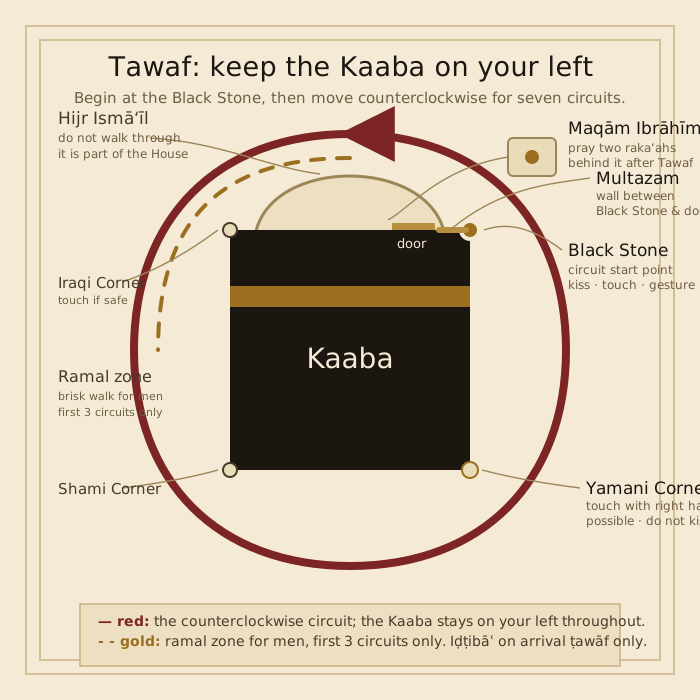
Men only: idhṭibāʿ — pass the ridā' under the right armpit so the right shoulder is exposed. (Only for this first Tawāf; revert after.)
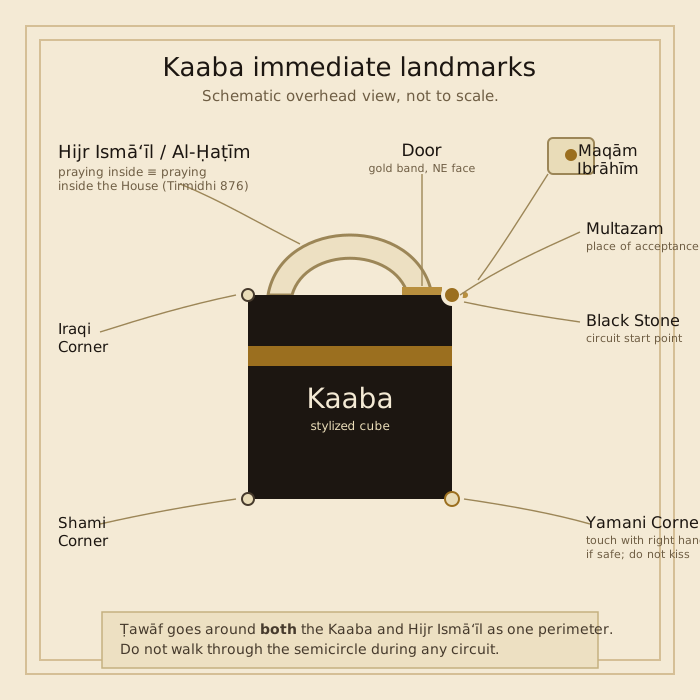
Approach the Black Stone. Face it. Raise the right hand.
Say (below).
Touch / kiss the Black Stone if possible without harming anyone; otherwise gesture with the right hand. Do not kiss the hand afterwards.
Begin walking counter-clockwise — Kaʿbah on your left.
First three circuits (men): raml — walk briskly with shoulders swung. The last four: normal walk.
At each pass of the Black Stone: gesture, say "Bismillāh, Allāhu akbar".
At the Yamānī Corner (the corner just before the Black Stone): touch with right hand if possible. No kissing, no gesturing if you can't reach.
Between Yamānī Corner and Black Stone: recite the Rabbanā du'ā (below).
The rest of the circuit: personal du'ā, dhikr.
Complete 7 circuits.
Re-cover the right shoulder (for men) after the 7th.
What to say
At the Black Stone — starting and each circuit:
بِسْمِ اللَّهِ، اللَّهُ أَكْبَرُ، اللَّهُمَّ إِيمَانًا بِكَ وَتَصْدِيقًا بِكِتَابِكَ وَوَفَاءً بِعَهْدِكَ وَاتِّبَاعًا لِسُنَّةِ نَبِيِّكَ ﷺ.Bismillāh, Allāhu akbar, Allāhumma īmānan bika wa taṣdīqan bi-kitābik wa wafā'an bi-ʿahdik wa-ttibāʿan li-sunnati nabiyyik ﷺ.In the name of Allāh, Allāh is greater. O Allāh, in faith in You, in attestation of Your Book, in fulfilment of Your covenant, and in following the Sunnah of Your Prophet ﷺ.
Between Yamānī Corner and Black Stone — every circuit:
رَبَّنَا آتِنَا فِي الدُّنْيَا حَسَنَةً، وَفِي الْآخِرَةِ حَسَنَةً، وَقِنَا عَذَابَ النَّارِ.Rabbanā ātinā fi-d-dunyā ḥasanah, wa fi-l-ākhirati ḥasanah, wa qinā ʿadhāba-n-nār.Our Lord, grant us good in this world and good in the Hereafter, and protect us from the punishment of the Fire.Qur'ān 2:201 — the Prophet's ﷺ most-said du'ā (Bukhārī 6389)
Rest of the circuit: your own du'ā. Personal. In any language. There are no other specific Sunnah formulas for each circuit — anyone telling you to recite a specific page per circuit is teaching a later innovation.
6.2 Two raka'ah behind Maqām Ibrāhīm
What to do
After the 7th circuit, walk to behind Maqām Ibrāhīm (the small glass-enclosed station east of the Kaʿbah).
Recite Q. 2:125: "Wa-ttakhidhū min maqāmi Ibrāhīma muṣallā."
If you can't get near the Maqām (very likely — it is one of the most contested spots in the Masjid), pray anywhere in the Masjid. The reward attaches to the prayer, not strictly the location.
6.3 Zamzam
What to do
Drink Zamzam after the two raka'ah.
Face the Qiblah. Drink in three breaths.
Drink your fill.
Pour some on your head and body.
What to say
Before drinking — make du'ā for whatever you want. The Prophet ﷺ said:
"The water of Zamzam is for whatever it is drunk for." — Ibn Mājah 3062, ṣaḥīḥ
A complete du'ā:
اللَّهُمَّ إِنِّي أَسْأَلُكَ عِلْمًا نَافِعًا، وَرِزْقًا وَاسِعًا، وَشِفَاءً مِنْ كُلِّ دَاءٍ.Allāhumma innī as'aluka ʿilman nāfiʿā, wa rizqan wāsiʿā, wa shifā'an min kulli dā'.O Allāh, I ask You for beneficial knowledge, abundant provision, and a cure from every disease.al-Dāraquṭnī 2731, ṣaḥīḥ by some
6.4 Saʿy between Ṣafā and Marwa — 7 trips
What to do
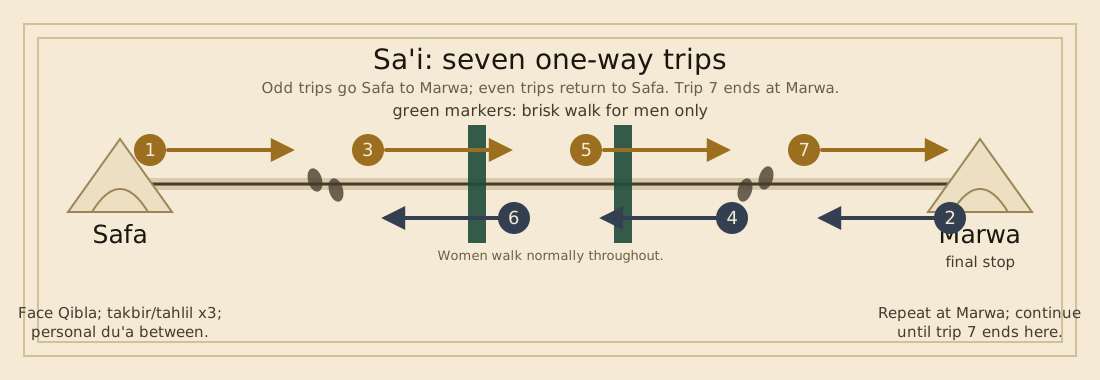
Walk to Ṣafā (south-east end of the masʿā corridor).
At the foot of Ṣafā, recite Q. 2:158 (below).
Climb a few steps; face the Kaʿbah.
Raise both hands. Recite the takbīr + tahleel formula three times, with personal du'ā in between.
Walk down toward Marwa = Trip 1.
Between the green markers (Sunnah): men jog/run; women walk.
At Marwa: climb, face Kaʿbah, repeat the same formula three times with du'ā.
Walk back to Ṣafā = Trip 2. Continue.
End at Marwa = Trip 7.
What to say
At Ṣafā (only the first time you stand here):
إِنَّ الصَّفَا وَالْمَرْوَةَ مِنْ شَعَائِرِ اللَّهِ، فَمَنْ حَجَّ الْبَيْتَ أَوِ اعْتَمَرَ فَلَا جُنَاحَ عَلَيْهِ أَنْ يَطَّوَّفَ بِهِمَا. أَبْدَأُ بِمَا بَدَأَ اللَّهُ بِهِ.Inna-ṣ-Ṣafā wa-l-Marwata min shaʿā'iri-llāh, faman ḥajja-l-bayta awi-ʿtamara fa-lā junāḥa ʿalayhi an yaṭṭawwafa bihimā. Abda'u bimā bada'a-llāhu bih.Verily, Ṣafā and Marwa are among the symbols of Allāh. So whoever performs Ḥajj or ʿUmrah — there is no blame on him going between them. I begin with what Allāh began with.Qur'ān 2:158 + Ṣaḥīḥ Muslim 1218
At each climb of Ṣafā and Marwa (face Kaʿbah, raise hands, ×3):
اللَّهُ أَكْبَرُ، اللَّهُ أَكْبَرُ، اللَّهُ أَكْبَرُ. لَا إِلَٰهَ إِلَّا اللَّهُ وَحْدَهُ لَا شَرِيكَ لَهُ، لَهُ الْمُلْكُ وَلَهُ الْحَمْدُ، يُحْيِي وَيُمِيتُ، وَهُوَ عَلَىٰ كُلِّ شَيْءٍ قَدِيرٌ. لَا إِلَٰهَ إِلَّا اللَّهُ وَحْدَهُ، أَنْجَزَ وَعْدَهُ، وَنَصَرَ عَبْدَهُ، وَهَزَمَ الْأَحْزَابَ وَحْدَهُ.Allāhu akbar, Allāhu akbar, Allāhu akbar. Lā ilāha illa-llāh waḥdahū lā sharīka lah, lahu-l-mulku wa lahu-l-ḥamd, yuḥyī wa yumīt, wa huwa ʿalā kulli shay'in qadīr. Lā ilāha illa-llāh waḥdah, anjaza waʿdah, wa naṣara ʿabdah, wa hazama-l-aḥzāba waḥdah.Allāh is greatest, Allāh is greatest, Allāh is greatest. There is no god but Allāh alone, no partner with Him. To Him is the dominion and to Him is praise. He gives life and gives death. He is over all things able. There is no god but Allāh alone, He fulfilled His promise, helped His slave, and defeated the confederates alone.Ṣaḥīḥ Muslim 1218
Repeat this formula three times with your own personal du'ā in between each repetition.
While walking between the two hills: personal du'ā, dhikr, ṣalawāt. No specific Sunnah formula for the corridor itself.
6.5 Halq or Taqsīr — exiting iḥrām
What to do
Men: shave the entire head (ḥalq, preferred) or trim throughout (taqṣīr). "O Allāh, have mercy on the shavers — three times — and on the trimmers — once" (Bukhārī 1727).
Women: trim a fingertip's length from the ends of the hair (Abū Dāwūd 1985).
You have now exited iḥrām. All 9 prohibitions are lifted.
Resume normal clothing, perfume, your wife, food preferences.
Stay in this state in Makkah until 8 Dhul Ḥijjah (Yawm al-Tarwiyah) when you re-enter iḥrām for Ḥajj.
Pack a small backpack for 5 days at Minā / ʿArafah / Muzdalifah. Heavy luggage stays in the Makkah hotel.
After Fajr at the hotel (or in Minā if you have arrived already):
Make niyyah for Ḥajj.
Begin the Talbiyah.
Travel to Minā (your tour transport).
Pray Ẓuhr, ʿAṣr, Maghrib, ʿIshā', and Fajr at Minā — each fard shortened to 2 raka'ah (qaṣr), not combined. This is the Sunnah of the Prophet ﷺ (Bukhārī 1656).
Sleep at Minā — modest comforts, your tour camp, communal meals.
What to say
Niyyah for Ḥajj (Tamattuʿ — entering iḥrām for the second time, from Makkah):
لَبَّيْكَ اللَّهُمَّ حَجًّا.Labbayka Allāhumma Ḥajjan.Here I am, O Allāh, for Ḥajj.
The Talbiyah again (from now until Ramy al-ʿAqaba on 10 Dhul Ḥijjah):
The standing at ʿArafah is the entire Ḥajj."Hajj is ʿArafah" (Tirmidhī 889). Missing it invalidates the Ḥajj.
>
For the full ʿArafah du'ā companion — 28,000 words, every du'ā you'll want from sunrise to sunset on this day — go to the dedicated **Arafah Duas** page. This entry is the chronological summary only.
What to do
Fajr at Minā. After sunrise, set off for ʿArafah.
Stop at Namira (just outside ʿArafah) — wait there until Ẓuhr time, hear the khuṭbah.
Enter ʿArafah boundary after the khuṭbah.
Pray Ẓuhr + ʿAṣr combined and shortened — 2 + 2, one adhān, two iqāmahs.
Stand from Ẓuhr time until Maghrib (sunset) — face the Qiblah (not Jabal al-Raḥmah), raise your hands, do not stop making du'ā.
At sunset, leave for Muzdalifah. Do NOT pray Maghrib at ʿArafah.
What to say
The best du'ā of ʿArafah — the one the Prophet ﷺ named:
لَا إِلَٰهَ إِلَّا اللَّهُ وَحْدَهُ لَا شَرِيكَ لَهُ، لَهُ الْمُلْكُ وَلَهُ الْحَمْدُ، وَهُوَ عَلَىٰ كُلِّ شَيْءٍ قَدِيرٌ.Lā ilāha illa-llāhu waḥdahū lā sharīka lah, lahu-l-mulku wa lahu-l-ḥamd, wa huwa ʿalā kulli shay'in qadīr.There is no god but Allāh, alone, without partner. To Him belongs the dominion and to Him belongs all praise, and He is over all things able.Jāmiʿ al-Tirmidhī 3585
The Prophet ﷺ: "The best du'ā is the du'ā of the Day of ʿArafah, and the best of what I and the prophets before me have said is this." Repeat it 100+ times throughout the day, with everything else.
>
**For the complete du'ā companion for this day, see the Arafah Duas page.**
Travel from ʿArafah to Muzdalifah after sunset (by bus / train).
Pray Maghrib + ʿIshā' combined — jamʿ ta'khīr — at Muzdalifah. One adhān, two iqāmahs, 3 + 2 raka'ah, with ʿIshā' shortened.
Collect pebbles — 49 (for a 3-day Tashrīq) or 70 (for 4-day, if staying through 13 Dhul Ḥijjah). Pea-sized. Anywhere in Muzdalifah is fine. Don't wash them.
Sleep at Muzdalifah under the open sky — at minimum half the night.
Pray Fajr at Muzdalifah in jamāʿah.
Stand at al-Mash'ar al-Ḥarām facing the Qiblah, raising hands, making du'ā until the sky lightens fully (just before sunrise).
What to say
At al-Mash'ar al-Ḥarām after Fajr (the Qur'ān names this place specifically):
فَإِذَا أَفَضْتُمْ مِنْ عَرَفَاتٍ فَاذْكُرُوا اللَّهَ عِنْدَ الْمَشْعَرِ الْحَرَامِ، وَاذْكُرُوهُ كَمَا هَدَاكُمْ.Fa-idhā afaḍtum min ʿArafātin fa-dhkurū-llāha ʿinda-l-mashʿari-l-ḥarām, wa-dhkurūhu kamā hadākum.When you depart from ʿArafāt, remember Allāh at al-Mash'ar al-Ḥarām, and remember Him as He has guided you.Qur'ān al-Baqarah 2:198
Then make du'ā — for yourself, parents, family, ummah. Continue until the sky brightens fully, then depart for Minā before sunrise.
Continue the Talbiyah on the road to Minā until you throw the first pebble at Jamarat al-ʿAqaba.
After Ẓuhr time begins (not before — ramy before Ẓuhr is invalid):
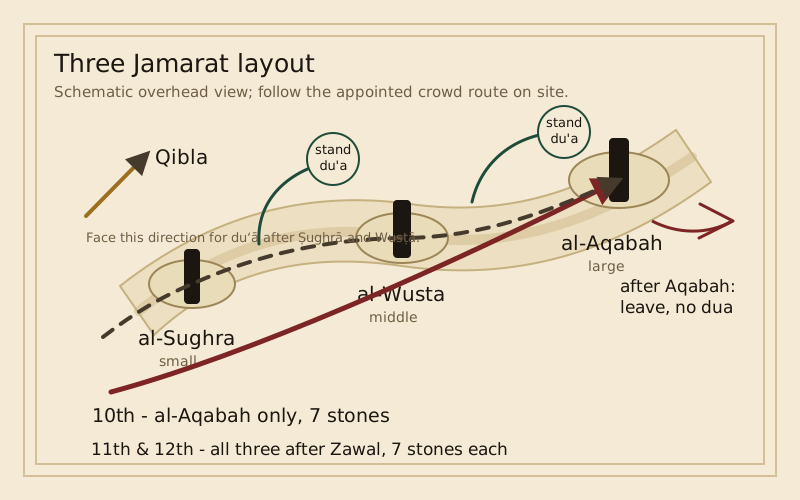
Ramy all three Jamarat in order: • Sughra (small, farthest from Makkah) — 7 pebbles, Allāhu akbar with each. • After Sughra: face Qiblah, raise hands, make long du'ā — for yourself, family, ummah. This is one of the established du'ā moments. • Wusṭa (middle) — 7 pebbles, Allāhu akbar with each. • After Wusṭa: face Qiblah, raise hands, long du'ā again. • ʿAqaba (large) — 7 pebbles, Allāhu akbar with each. • After ʿAqaba: walk away. No du'ā here.
On 12 Dhul Ḥijjah:
If you leave Minā before sunset — your Ḥajj is fewer days (taʿjīl, Q. 2:203).
If you are still in Minā at sunset on 12th — you MUST stay another night and stone again on the 13th.
What to say
With each pebble (all 3 jamarat, both days):
اللَّهُ أَكْبَرُ.Allāhu akbar.Allāh is greater.
After Sughra and Wusṭa (NOT after ʿAqaba) — face Qiblah, raise hands, make personal du'ā at length. The Companions narrate the Prophet's ﷺ stop here was "as long as the recitation of Sūrat al-Baqarah" (Bukhārī 1751).
Just before leaving Makkah for the airport / city of return:
Tawāf — 7 circuits, same procedure as before.
No Saʿy after.
2 raka'ah behind Maqām Ibrāhīm (or anywhere).
Zamzam one last time.
Leave — the farewell Tawāf should be your last contact with the Masjid before departure.
Exception: A menstruating woman is exempted from the farewell Tawāf (Bukhārī 1755).
What to say
Same as for any Tawāf — same du'ās at the Black Stone, at the Yamānī Corner, etc.
After the Tawāf, personal du'ā — for safe return, for acceptance of the entire Ḥajj, for being able to return one day.
اللَّهُمَّ اجْعَلْهُ حَجًّا مَبْرُورًا، وَسَعْيًا مَشْكُورًا، وَذَنْبًا مَغْفُورًا، وَعَمَلًا صَالِحًا مَقْبُولًا، وَتِجَارَةً لَنْ تَبُورَ.Allāhumma-jʿalhu ḥajjan mabrūrā, wa saʿyan mashkūrā, wa dhanban maghfūrā, wa ʿamalan ṣāliḥan maqbūlā, wa tijāratan lan tabūr.O Allāh, make this an accepted Ḥajj — a deserved striving, a forgiven sin, a righteous accepted deed, and a trade that will never perish.
Continue sayingAllāhu akbar when ascending hills / taking off, Subḥān Allāh when descending / landing.
At each town you pass on the route home (or each leg of the flight):
What to say
When approaching a city / settlement:
اللَّهُمَّ بَارِكْ لَنَا فِيهَا، اللَّهُمَّ ارْزُقْنَا جَنَاهَا، وَحَبِّبْنَا إِلَىٰ أَهْلِهَا، وَحَبِّبْ صَالِحِي أَهْلِهَا إِلَيْنَا.Allāhumma bārik lanā fīhā, Allāhumma-rzuqnā janāhā, wa ḥabbibnā ilā ahlihā, wa ḥabbib ṣāliḥī ahlihā ilaynā.O Allāh, bless us in it. O Allāh, provide us its fruits. Make us beloved to its people, and make its righteous people beloved to us.
When entering your home (or hotel on the way back):
اللَّهُمَّ إِنِّي أَسْأَلُكَ خَيْرَ الْمَوْلِجِ، وَخَيْرَ الْمَخْرَجِ، بِسْمِ اللَّهِ وَلَجْنَا، وَبِسْمِ اللَّهِ خَرَجْنَا، وَعَلَىٰ اللَّهِ رَبِّنَا تَوَكَّلْنَا.Allāhumma innī as'aluka khayra-l-mawlij, wa khayra-l-makhraj, bismillāhi walajnā, wa bismillāhi kharajnā, wa ʿala-llāhi Rabbinā tawakkalnā.O Allāh, I ask You for the best of entrances and the best of exits. In the name of Allāh we have entered, in the name of Allāh we have left, and upon Allāh our Lord we have placed our trust.Sunan Abū Dāwūd 5096
After return — practices to maintain
Pray ṣalāt al-shukr (two raka'ah of gratitude) on arrival home.
Treat your first night at home as the new Hajj-Mabrūr threshold — sincere intention, no rancour, charity to the poor.
Write down your du'ās from ʿArafah — revisit them; some Companions saw their du'ās answered 5+ years later.
Send a thank-you to those who supported you in the journey (financially, emotionally, logistically).
Repeat the Hajj cycle every year on its anniversary — fast 9 Dhul Ḥijjah (for non-pilgrims), give in charity on 10th, remember the day you stood at ʿArafah.
بِسْمِ اللَّهِ، تَوَكَّلْتُ عَلَىٰ اللَّهِ، وَلَا حَوْلَ وَلَا قُوَّةَ إِلَّا بِاللَّهِ.Bismillāh, tawakkaltu ʿalā-llāh, wa lā ḥawla wa lā quwwata illā billāh.In the name of Allāh, I trust in Allāh, and there is no power and no strength except by Allāh.Abū Dāwūd 5095, Tirmidhī 3426 — ṣaḥīḥ
اللَّهُمَّ إِنِّي أَعُوذُ بِكَ أَنْ أَضِلَّ أَوْ أُضَلَّ، أَوْ أَزِلَّ أَوْ أُزَلَّ، أَوْ أَظْلِمَ أَوْ أُظْلَمَ، أَوْ أَجْهَلَ أَوْ يُجْهَلَ عَلَيَّ.Allāhumma innī aʿūdhu bika an aḍilla aw uḍall, aw azilla aw uzall, aw aẓlima aw uẓlam, aw ajhala aw yujhala ʿalayy.O Allāh, I seek refuge in You from going astray or being led astray, from slipping or being made to slip, from wronging or being wronged, from being foolish or being treated foolishly.Sunan Abū Dāwūd 5094
سُبْحَانَ الَّذِي سَخَّرَ لَنَا هَٰذَا، وَمَا كُنَّا لَهُ مُقْرِنِينَ، وَإِنَّا إِلَىٰ رَبِّنَا لَمُنْقَلِبُونَ. اللَّهُمَّ إِنَّا نَسْأَلُكَ فِي سَفَرِنَا هَٰذَا الْبِرَّ وَالتَّقْوَىٰ، وَمِنَ الْعَمَلِ مَا تَرْضَىٰ. اللَّهُمَّ هَوِّنْ عَلَيْنَا سَفَرَنَا هَٰذَا، وَاطْوِ عَنَّا بُعْدَهُ. اللَّهُمَّ أَنْتَ الصَّاحِبُ فِي السَّفَرِ، وَالْخَلِيفَةُ فِي الْأَهْلِ. اللَّهُمَّ إِنِّي أَعُوذُ بِكَ مِنْ وَعْثَاءِ السَّفَرِ، وَكَآبَةِ الْمَنْظَرِ، وَسُوءِ الْمُنْقَلَبِ فِي الْمَالِ وَالْأَهْلِ.Subḥāna-lladhī sakhkhara lanā hādhā, wa mā kunnā lahū muqrinīn, wa innā ilā Rabbinā la-munqalibūn. Allāhumma innā nas'aluka fī safarinā hādha-l-birra wa-t-taqwā, wa mina-l-ʿamali mā tarḍā. Allāhumma hawwin ʿalaynā safaranā hādhā, wa-ṭwi ʿannā buʿdah. Allāhumma anta-ṣ-ṣāḥibu fi-s-safar, wa-l-khalīfatu fi-l-ahl. Allāhumma innī aʿūdhu bika min waʿthā'i-s-safar, wa ka'ābati-l-manẓar, wa sū'i-l-munqalabi fi-l-māli wa-l-ahl.Glory be to the One who has subjected this to us — we could never have done it ourselves — and to our Lord we will surely return. O Allāh, we ask You on this journey of ours for righteousness and taqwā, and from action what pleases You. O Allāh, ease for us this journey of ours, and fold up for us its distance. O Allāh, You are the Companion on the journey and the Caretaker over the family. O Allāh, I seek refuge in You from the hardships of travel, the bleakness of the view, and an ill return to wealth and family.Ṣaḥīḥ Muslim 1342
بِسْمِ اللَّهِ، وَالصَّلَاةُ وَالسَّلَامُ عَلَىٰ رَسُولِ اللَّهِ، اللَّهُمَّ افْتَحْ لِي أَبْوَابَ رَحْمَتِكَ.Bismillāh, wa-ṣ-ṣalātu wa-s-salāmu ʿalā Rasūlillāh, Allāhumma-ftaḥ lī abwāba raḥmatik.In the name of Allāh, ṣalāh and salām be upon the Messenger of Allāh. O Allāh, open for me the doors of Your mercy.Sunan Abū Dāwūd 466, Muslim 713
بِسْمِ اللَّهِ، وَالصَّلَاةُ وَالسَّلَامُ عَلَىٰ رَسُولِ اللَّهِ، اللَّهُمَّ إِنِّي أَسْأَلُكَ مِنْ فَضْلِكَ.Bismillāh, wa-ṣ-ṣalātu wa-s-salāmu ʿalā Rasūlillāh, Allāhumma innī as'aluka min faḍlik.In the name of Allāh, ṣalāh and salām be upon the Messenger of Allāh. O Allāh, I ask You from Your bounty.Ṣaḥīḥ Muslim 713
السَّلَامُ عَلَيْكَ يَا رَسُولَ اللَّهِ، السَّلَامُ عَلَيْكَ يَا نَبِيَّ اللَّهِ، السَّلَامُ عَلَيْكَ يَا خَيْرَةَ خَلْقِ اللَّهِ، السَّلَامُ عَلَيْكَ يَا حَبِيبَ اللَّهِ، السَّلَامُ عَلَيْكَ وَعَلَىٰ آلِكَ وَأَزْوَاجِكَ وَأَصْحَابِكَ، وَرَحْمَةُ اللَّهِ وَبَرَكَاتُهُ.As-salāmu ʿalayka yā Rasūl-Allāh, as-salāmu ʿalayka yā Nabiyy-Allāh, as-salāmu ʿalayka yā Khīyarata Khalq-Allāh, as-salāmu ʿalayka yā Ḥabīb-Allāh, as-salāmu ʿalayka wa ʿalā ālika wa azwājika wa aṣḥābika wa raḥmatullāhi wa barakātuh.Peace be upon you, O Messenger of Allāh. Peace be upon you, O Prophet of Allāh. Peace be upon you, O chosen of Allāh's creation. Peace be upon you, O Beloved of Allāh. Peace be upon you and upon your family, your wives, and your Companions, and the mercy and blessings of Allāh.
السَّلَامُ عَلَيْكَ يَا أَبَا بَكْرٍ، خَلِيفَةَ رَسُولِ اللَّهِ ﷺ، وَصَاحِبَهُ فِي الْغَارِ، رَضِيَ اللَّهُ عَنْكَ وَأَرْضَاكَ.As-salāmu ʿalayka yā Abā Bakr, khalīfata Rasūl-illāhi ﷺ, wa ṣāḥibahū fi-l-ghār, raḍiyallāhu ʿanka wa arḍāk.Peace be upon you, O Abū Bakr — successor of the Messenger of Allāh ﷺ and his companion in the cave. May Allāh be pleased with you and grant you contentment.
السَّلَامُ عَلَيْكَ يَا عُمَرَ، أَمِيرَ الْمُؤْمِنِينَ، الْفَارُوقَ، رَضِيَ اللَّهُ عَنْكَ وَأَرْضَاكَ.As-salāmu ʿalayka yā ʿUmar, amīra-l-mu'minīn, al-Fārūq, raḍiyallāhu ʿanka wa arḍāk.Peace be upon you, O ʿUmar — commander of the believers, the Distinguisher. May Allāh be pleased with you and grant you contentment.
السَّلَامُ عَلَيْكُمْ دَارَ قَوْمٍ مُؤْمِنِينَ، وَإِنَّا إِنْ شَاءَ اللَّهُ بِكُمْ لَاحِقُونَ، نَسْأَلُ اللَّهَ لَنَا وَلَكُمُ الْعَافِيَةَ.As-salāmu ʿalaykum dāra qawmin mu'minīn, wa innā in shā'a-llāhu bikum lāḥiqūn, nas'alu-llāha lanā wa lakumu-l-ʿāfiyah.Peace be upon you, abode of a believing people. We, in shā Allāh, will join you. We ask Allāh for well-being for us and for you.Ṣaḥīḥ Muslim 974
اللَّهُمَّ لَكَ الْحَمْدُ كَمَا تَقُولُ، وَخَيْرًا مِمَّا نَقُولُ. اللَّهُمَّ إِنِّي أَسْأَلُكَ تَقْوَاكَ، وَخَيْرَ الزَّادِ، وَأَنْ تَجْمَعَ لِي خَيْرَ الدُّنْيَا وَالْآخِرَةِ. اللَّهُمَّ لَا تَجْعَلْهَا آخِرَ زِيَارَتِنَا لِمَسْجِدِ نَبِيِّكَ ﷺ.Allāhumma laka-l-ḥamdu kamā taqūl, wa khayran mimmā naqūl. Allāhumma innī as'aluka taqwāk, wa khayra-z-zād, wa an tajmaʿa lī khayra-d-dunyā wa-l-ākhirah. Allāhumma lā tajʿalhā ākhira ziyāratinā li-masjidi nabiyyika ﷺ.O Allāh, all praise belongs to You as You have spoken of Yourself, and better than what we say. O Allāh, I ask You for taqwā of You, the best provision, and that You gather for me the good of this world and the Hereafter. O Allāh, do not make this our last visit to the masjid of Your Prophet ﷺ.
لَبَّيْكَ اللَّهُمَّ عُمْرَةً مُتَمَتِّعًا بِهَا إِلَى الْحَجِّ.Labbayka Allāhumma ʿUmratan mutamattiʿan bihā ila-l-Ḥajj.Here I am, O Allāh — for an ʿUmrah, enjoying [normal life] until the Ḥajj.
اللَّهُمَّ مَحِلِّي حَيْثُ حَبَسْتَنِي.Allāhumma maḥillī ḥaythu ḥabastanī.O Allāh, my place of exiting iḥrām is wherever You hold me back.Ṣaḥīḥ al-Bukhārī 5089, Muslim 1207
لَبَّيْكَ اللَّهُمَّ لَبَّيْكَ، لَبَّيْكَ لَا شَرِيكَ لَكَ لَبَّيْكَ، إِنَّ الْحَمْدَ وَالنِّعْمَةَ لَكَ وَالْمُلْكَ، لَا شَرِيكَ لَكَ.Labbayka Allāhumma labbayk, labbayka lā sharīka laka labbayk, inna-l-ḥamda wa-n-niʿmata laka wa-l-mulk, lā sharīka lak.Here I am, O Allāh, here I am. Here I am, You have no partner, here I am. Verily all praise, grace, and dominion are Yours. You have no partner.Ṣaḥīḥ al-Bukhārī 1549, Muslim 1184
بِسْمِ اللَّهِ، وَالصَّلَاةُ وَالسَّلَامُ عَلَىٰ رَسُولِ اللَّهِ، اللَّهُمَّ افْتَحْ لِي أَبْوَابَ رَحْمَتِكَ.Bismillāh, wa-ṣ-ṣalātu wa-s-salāmu ʿalā Rasūlillāh, Allāhumma-ftaḥ lī abwāba raḥmatik.In the name of Allāh, ṣalāh and salām be upon the Messenger of Allāh. O Allāh, open for me the doors of Your mercy. (Same as the standard masjid entry du'ā.)Sunan Abū Dāwūd 466, Muslim 713
بِسْمِ اللَّهِ، اللَّهُ أَكْبَرُ، اللَّهُمَّ إِيمَانًا بِكَ وَتَصْدِيقًا بِكِتَابِكَ وَوَفَاءً بِعَهْدِكَ وَاتِّبَاعًا لِسُنَّةِ نَبِيِّكَ ﷺ.Bismillāh, Allāhu akbar, Allāhumma īmānan bika wa taṣdīqan bi-kitābik wa wafā'an bi-ʿahdik wa-ttibāʿan li-sunnati nabiyyik ﷺ.In the name of Allāh, Allāh is greater. O Allāh, in faith in You, in attestation of Your Book, in fulfilment of Your covenant, and in following the Sunnah of Your Prophet ﷺ.
رَبَّنَا آتِنَا فِي الدُّنْيَا حَسَنَةً، وَفِي الْآخِرَةِ حَسَنَةً، وَقِنَا عَذَابَ النَّارِ.Rabbanā ātinā fi-d-dunyā ḥasanah, wa fi-l-ākhirati ḥasanah, wa qinā ʿadhāba-n-nār.Our Lord, grant us good in this world and good in the Hereafter, and protect us from the punishment of the Fire.Qur'ān al-Baqarah 2:201 — the Prophet's ﷺ most-said du'ā (Bukhārī 6389)
اللَّهُمَّ إِنِّي أَسْأَلُكَ عِلْمًا نَافِعًا، وَرِزْقًا وَاسِعًا، وَشِفَاءً مِنْ كُلِّ دَاءٍ.Allāhumma innī as'aluka ʿilman nāfiʿā, wa rizqan wāsiʿā, wa shifā'an min kulli dā'.O Allāh, I ask You for beneficial knowledge, abundant provision, and a cure from every disease.al-Dāraquṭnī 2731 — ṣaḥīḥ by some; build any sincere du'ā here, "the water of Zamzam is for whatever it is drunk for" (Ibn Mājah 3062)
إِنَّ الصَّفَا وَالْمَرْوَةَ مِنْ شَعَائِرِ اللَّهِ، فَمَنْ حَجَّ الْبَيْتَ أَوِ اعْتَمَرَ فَلَا جُنَاحَ عَلَيْهِ أَنْ يَطَّوَّفَ بِهِمَا. أَبْدَأُ بِمَا بَدَأَ اللَّهُ بِهِ.Inna-ṣ-Ṣafā wa-l-Marwata min shaʿā'iri-llāh, faman ḥajja-l-bayta awi-ʿtamara fa-lā junāḥa ʿalayhi an yaṭṭawwafa bihimā. Abda'u bimā bada'a-llāhu bih.Verily, Ṣafā and Marwa are among the symbols of Allāh. So whoever performs Ḥajj or ʿUmrah — there is no blame on him going between them. I begin with what Allāh began with.Qur'ān 2:158 + Ṣaḥīḥ Muslim 1218
اللَّهُ أَكْبَرُ، اللَّهُ أَكْبَرُ، اللَّهُ أَكْبَرُ. لَا إِلَٰهَ إِلَّا اللَّهُ وَحْدَهُ لَا شَرِيكَ لَهُ، لَهُ الْمُلْكُ وَلَهُ الْحَمْدُ، يُحْيِي وَيُمِيتُ، وَهُوَ عَلَىٰ كُلِّ شَيْءٍ قَدِيرٌ. لَا إِلَٰهَ إِلَّا اللَّهُ وَحْدَهُ، أَنْجَزَ وَعْدَهُ، وَنَصَرَ عَبْدَهُ، وَهَزَمَ الْأَحْزَابَ وَحْدَهُ.Allāhu akbar, Allāhu akbar, Allāhu akbar. Lā ilāha illa-llāh waḥdahū lā sharīka lah, lahu-l-mulku wa lahu-l-ḥamd, yuḥyī wa yumīt, wa huwa ʿalā kulli shay'in qadīr. Lā ilāha illa-llāh waḥdah, anjaza waʿdah, wa naṣara ʿabdah, wa hazama-l-aḥzāba waḥdah.Allāh is greatest, Allāh is greatest, Allāh is greatest. There is no god but Allāh alone, no partner with Him. To Him is the dominion and to Him is praise. He gives life and gives death. He is over all things able. There is no god but Allāh alone, He fulfilled His promise, helped His slave, and defeated the confederates alone.Ṣaḥīḥ Muslim 1218 — repeat three times with personal du'ā in between each repetition
لَا إِلَٰهَ إِلَّا اللَّهُ وَحْدَهُ لَا شَرِيكَ لَهُ، لَهُ الْمُلْكُ وَلَهُ الْحَمْدُ، وَهُوَ عَلَىٰ كُلِّ شَيْءٍ قَدِيرٌ.Lā ilāha illa-llāhu waḥdahū lā sharīka lah, lahu-l-mulku wa lahu-l-ḥamd, wa huwa ʿalā kulli shay'in qadīr.There is no god but Allāh, alone, without partner. To Him belongs the dominion and to Him belongs all praise, and He is over all things able. For the full ʿArafah du'ā companion — every du'ā for the full day — see the Arafah Duas page.Jāmiʿ al-Tirmidhī 3585 — declared by the Prophet ﷺ himself to be the best du'ā of this day
فَإِذَا أَفَضْتُمْ مِنْ عَرَفَاتٍ فَاذْكُرُوا اللَّهَ عِنْدَ الْمَشْعَرِ الْحَرَامِ، وَاذْكُرُوهُ كَمَا هَدَاكُمْ.Fa-idhā afaḍtum min ʿArafātin fa-dhkurū-llāha ʿinda-l-mashʿari-l-ḥarām, wa-dhkurūhu kamā hadākum.When you depart from ʿArafāt, remember Allāh at al-Mash'ar al-Ḥarām, and remember Him as He has guided you.Qur'ān al-Baqarah 2:198
اللَّهُ أَكْبَرُ.Allāhu akbar.Allāh is greater. (Only the takbīr is established with each stone — not "Bismillāh, Allāhu akbar" which is a later addition.)Ṣaḥīḥ Muslim 1218 — long ḥadīth of Jābir
اللَّهُمَّ اجْعَلْهُ حَجًّا مَبْرُورًا، وَسَعْيًا مَشْكُورًا، وَذَنْبًا مَغْفُورًا، وَعَمَلًا صَالِحًا مَقْبُولًا، وَتِجَارَةً لَنْ تَبُورَ.Allāhumma-jʿalhu ḥajjan mabrūrā, wa saʿyan mashkūrā, wa dhanban maghfūrā, wa ʿamalan ṣāliḥan maqbūlā, wa tijāratan lan tabūr.O Allāh, make this an accepted Ḥajj — a deserved striving, a forgiven sin, a righteous accepted deed, and a trade that will never perish.
اللَّهُمَّ بَارِكْ لَنَا فِيهَا، اللَّهُمَّ ارْزُقْنَا جَنَاهَا، وَحَبِّبْنَا إِلَىٰ أَهْلِهَا، وَحَبِّبْ صَالِحِي أَهْلِهَا إِلَيْنَا.Allāhumma bārik lanā fīhā, Allāhumma-rzuqnā janāhā, wa ḥabbibnā ilā ahlihā, wa ḥabbib ṣāliḥī ahlihā ilaynā.O Allāh, bless us in it. O Allāh, provide us its fruits. Make us beloved to its people, and make its righteous people beloved to us.
اللَّهُمَّ إِنِّي أَسْأَلُكَ خَيْرَ الْمَوْلِجِ، وَخَيْرَ الْمَخْرَجِ، بِسْمِ اللَّهِ وَلَجْنَا، وَبِسْمِ اللَّهِ خَرَجْنَا، وَعَلَىٰ اللَّهِ رَبِّنَا تَوَكَّلْنَا.Allāhumma innī as'aluka khayra-l-mawlij, wa khayra-l-makhraj, bismillāhi walajnā, wa bismillāhi kharajnā, wa ʿala-llāhi Rabbinā tawakkalnā.O Allāh, I ask You for the best of entrances and the best of exits. In the name of Allāh we have entered, in the name of Allāh we have left, and upon Allāh our Lord we have placed our trust.Sunan Abū Dāwūd 5096
Allāhumma taqabbal minnā, innaka anta-s-Samīʿu-l-ʿAlīm. O Allāh, accept this from us — verily You are the All-Hearing, the All-Knowing. (Qur'ān 2:127)
— end —
The City of the Prophet ﷺ
The Madinah Visit
Step by step through the days in Madīnah — niyyah, the masjid, the Rawḍah, the salām to the Prophet ﷺ, the forty prayers, Qubā', Baqīʿ, Uhud, and departure for Makkah. ~9 parts, 3 appendices, with every du'ā you'll need.
A companion for the days in the Prophet's ﷺ city, with focus on the Rawḍah
"Do not undertake a journey except to three masjids: al-Masjid al-Ḥarām, my Masjid (Madīnah), and al-Masjid al-Aqṣā." — Ṣaḥīḥ al-Bukhārī 1189, Muslim 1397
"Prayer in this masjid of mine is better than a thousand prayers elsewhere — except for al-Masjid al-Ḥarām." — Ṣaḥīḥ al-Bukhārī 1190, Muslim 1394
"Between my house and my pulpit is a garden of the gardens of Paradise." — Ṣaḥīḥ al-Bukhārī 1196, Muslim 1391
How to use this guide
Read it once before you land in Madīnah — the parts about niyyah and the salām are the ones you do not want to be working out on the spot.
The Rawḍah deep-dive is the heart of this document. Whatever else you skim, read Part 4 carefully.
Du'ās for each station — opening the masjid, the Rawḍah, the salām to the Prophet ﷺ and the two Shaykhs — are in callouts with Arabic + transliteration + English + source.
Sunnī Sunnah-direct positions throughout. Where a practice is widely done but not from the Sunnah, it is flagged so you can decide.
PART 1
The Niyyah and the Setting
read once before you land
1.1 The intention — what you are actually here for
The pilgrim travels to Madīnah to visit the Masjid of the Prophet ﷺ. That is the Sunnah niyyah, the one the ḥadīth singles out:
"Do not undertake a journey except to three masjids…" (Bukhārī 1189)
The visit to the grave of the Prophet ﷺ happens because you are inside his masjid — but the niyyah of the journey is the masjid, not the grave. This is the position of the four Sunnī schools and the safer path against the over-veneration that crept into later practice in some places.
What this means practically:
When you board the bus / train / car to Madīnah, intend: "O Allāh, I am travelling to visit the Masjid of Your Prophet ﷺ, seeking the reward You have promised the people of this masjid, and to send my salām upon him."
Du'ā in Madīnah is to Allāh, not to the Prophet ﷺ. Salām (greeting) on the Prophet ﷺ — yes, abundantly. Asking the Prophet ﷺ for needs directly — no.
The visit to the grave is by way of salām from the legal entry point, not by clinging to the structure or asking it for things. (The structure around the grave was built by ʿUmar ibn ʿAbd al-ʿAzīz, not by the Prophet ﷺ.)
1.2 The reward attached to this visit
Three multipliers stack while you are in Madīnah:
Every prayer in Masjid Nabawī = 1,000 prayers elsewhere (Bukhārī 1190). One ṣalāh in the masjid is the reward of roughly half a lifetime of prayer in your home masjid.
The 40-prayer promise — if you pray forty obligatory prayers in Masjid Nabawī without missing one, you are "freed from the Fire, freed from punishment, and freed from hypocrisy" (Aḥmad 12583, graded ḥasan by Shaykh al-Albānī, weak by others; the Sunnī majority act on it). In a 3-night ALJ-style stay this is roughly 15 prayers max, so the full 40 is not on the table — but the intention and what you can pray still attaches you to it.
Visiting the Rawḍah — see Part 4. "Between my house and my pulpit is a garden of the gardens of Paradise."
Three things to do every day in Madīnah — minimum:
Pray every fard ṣalāh in jamāʿah inside Masjid Nabawī.
Send abundant ṣalawāt on the Prophet ﷺ.
Sit, read Qurʾān, make duʿā — this is one of three places on earth where time multiplies.
PART 2
Arrival and First Steps
your first hour and your first masjid visit
2.1 As you enter the Madīnah ḥaram
The boundary of Madīnah's ḥaram is wider than the masjid — it extends to the surrounding mountains. There is no specific du'ā the Prophet ﷺ taught at this boundary, but the Sunnah du'ā when entering any settlement applies:
اللَّهُمَّ بَارِكْ لَنَا فِيهَا، اللَّهُمَّ اجْعَلْ لَنَا بِهَا قَرَارًا وَرِزْقًا حَسَنًا.Allāhumma bārik lanā fīhā, Allāhumma-jʿal lanā bihā qarāran wa rizqan ḥasanā.O Allāh, bless us in it. O Allāh, make for us in it a settled place and a beautiful provision.al-Ṭabarānī, ḥasan
And then the Prophet's ﷺ own duʿā for Madīnah — a duʿā about Madīnah, made by the Prophet ﷺ for the city — which is appropriate to repeat while you are in it:
اللَّهُمَّ اجْعَلْ بِالْمَدِينَةِ ضِعْفَيْ مَا جَعَلْتَ بِمَكَّةَ مِنَ الْبَرَكَةِ.Allāhumma-jʿal bi-l-Madīnati ḍiʿfay mā jaʿalta bi-Makkata mina-l-barakah.O Allāh, place in Madīnah twice the barakah You placed in Makkah.Ṣaḥīḥ al-Bukhārī 1885, Muslim 1369
2.2 The drop at the hotel — the first moves
Drop your luggage at the hotel (your tour will route you here first). Do not be the person who tries to "just stop at the masjid first" with a suitcase — Masjid Nabawī is a 5–7 minute walk from the Saja hotel, but rolling luggage and not knowing the layout will frustrate you.
Make wuḍū at the hotel. Masjid Nabawī wuḍū areas exist but are crowded; coming with wuḍū saves you time.
Wear clean, modest clothing. For men: thawb or modest shirt/trousers; for women: full ḥijāb / ʿabāyah (the masjid has specific expectations and the security is firm).
Bring — a small water bottle (Zamzam is freely available inside), tissues, your phone (silent), a small notebook for du'ā list if you have one, your Nusuk app already opened for the Rawḍah permit (Part 4).
Do NOT bring — backpacks (will not be allowed inside; can be checked at the gate but it's a queue), food, camera bags, valuables.
2.3 The walk to Masjid Nabawī
The first time you walk this — the dome appears, the minarets, the open courtyards under their famous mechanical umbrellas — slow down. There is no rush. Make ṣalawāt on the Prophet ﷺ continuously as you walk. The Prophet ﷺ said:
"Whoever sends one ṣalāh upon me, Allāh sends ten upon him, ten of his sins are wiped away, and he is raised ten degrees." — Sunan al-Nasā'ī 1297, ṣaḥīḥ
A simple, beautiful ṣalawāt for this walk:
اللَّهُمَّ صَلِّ وَسَلِّمْ وَبَارِكْ عَلَىٰ سَيِّدِنَا مُحَمَّدٍ وَعَلَىٰ آلِهِ وَصَحْبِهِ.Allāhumma ṣalli wa sallim wa bārik ʿalā sayyidinā Muḥammad, wa ʿalā ālihī wa ṣaḥbih.O Allāh, send your ṣalāh, salām, and blessing upon our master Muḥammad, his family, and his Companions.
PART 3
Entering Masjid Nabawī
the masjid itself, before the Rawḍah
3.1 Which gate to enter from
Masjid Nabawī has many gates, numbered. The most relevant:
Bāb al-Salām (Gate 1) — the historical gate the Prophet ﷺ used. Entry through it is Sunnah preferred for the first visit.
Bāb al-Baqīʿ (East gates) — closer to most hotels including Saja Al-Madinah.
Bāb Jibrīl — historical, between Bāb al-Salām and the Rawḍah.
If your hotel is on the east side, you will likely enter from there. The first visit's Sunnah is to enter from Bāb al-Salām if you can. For subsequent visits, any gate is fine.
3.2 The du'ā entering the masjid
Step in with the right foot and say:
بِسْمِ اللَّهِ، وَالصَّلَاةُ وَالسَّلَامُ عَلَىٰ رَسُولِ اللَّهِ، أَعُوذُ بِاللَّهِ الْعَظِيمِ وَبِوَجْهِهِ الْكَرِيمِ وَسُلْطَانِهِ الْقَدِيمِ مِنَ الشَّيْطَانِ الرَّجِيمِ، اللَّهُمَّ افْتَحْ لِي أَبْوَابَ رَحْمَتِكَ.Bismillāh, wa-ṣ-ṣalātu wa-s-salāmu ʿalā Rasūlillāh, aʿūdhu billāhi-l-ʿaẓīm, wa bi-wajhihi-l-karīm, wa sulṭānihi-l-qadīm, mina-sh-shayṭāni-r-rajīm, Allāhumma-ftaḥ lī abwāba raḥmatik.In the name of Allāh, ṣalāh and salām be upon the Messenger of Allāh. I seek refuge in Allāh the Magnificent, in His noble Face, and in His eternal sovereignty from the cursed devil. O Allāh, open for me the doors of Your mercy.Abū Dāwūd 466, Muslim 713 — combined
3.3 Two raka'ah of taḥiyyatu-l-masjid — the greeting of the masjid
The Sunnah is to pray two raka'ah upon entering, before sitting. The Prophet ﷺ said:
"When one of you enters the masjid, let him not sit until he prays two raka'ah." — Ṣaḥīḥ al-Bukhārī 444, Muslim 714
Where to pray these:
Best: inside the Rawḍah (see Part 4) — but the Rawḍah requires a permit and queue, so this is usually not the first prayer.
Practical for the first visit: anywhere in the masjid's prayer hall, facing the qiblah.
In a hurry: even at the edge of the masjid, near the gate.
Recite al-Fātiḥah + a short sūrah in each raka'ah. Personal du'ā in sujūd if you have time.
3.4 What to do after the two raka'ah
This is where your priorities shape your time:
If the Rawḍah permit time is now or soon: queue toward the Rawḍah area (Part 4).
If you have time before iqāmah of the next ṣalāh: sit in the masjid, read Qur'ān, make du'ā, send ṣalawāt.
If iqāmah is being called: join the jamāʿah.
The Prophet ﷺ said about waiting in the masjid for ṣalāh: "As long as one of you sits waiting for the ṣalāh, he is in ṣalāh — and the angels say: O Allāh, forgive him, O Allāh, have mercy on him." (Bukhārī 659, Muslim 649). Sitting and waiting is itself worship.
PART 4
The Rawḍah ash-Sharīfah
the deep dive — read this before you go
4.1 What it actually is
The Rawḍah ash-Sharīfah ("the Noble Garden") is a physical area inside Masjid Nabawī — specifically, the space between the Prophet's ﷺ pulpit (minbar) and his house (now the area enclosing his grave). This was the original masjid he ﷺ built when he arrived in Madīnah. Today the masjid is vastly expanded, but the Rawḍah area itself is preserved and marked.
The hadīth:
"Mā bayna baytī wa minbarī rawḍatun min riyāḍi-l-jannah, wa minbarī ʿalā ḥawḍī."
>
"Between my house and my pulpit is a garden of the gardens of Paradise, and my pulpit is upon my pond (al-Ḥawḍ)." — Ṣaḥīḥ al-Bukhārī 1196, Muslim 1391 — narrated by Abū Hurayrah (raḍiyallāhu ʿanhu)
Scholars differ on the meaning of "a garden of the gardens of Paradise":
Literal: an actual piece of Paradise — a portion of the eternal garden manifest on this earth.
Metaphorical: a place that, by being there in worship, brings one toward Paradise.
Either way, this is one of the most sacred spots on earth outside the Ḥaram of Makkah. People wait hours for ten minutes inside it.
4.2 What it looks like today
You will recognise the Rawḍah by:
Green carpet instead of the red carpet of the rest of the masjid. (As you walk in the masjid, the carpet changes color — that boundary is the Rawḍah.)
The minbar of the Prophet ﷺ — a marked pulpit on one end (the original is long gone; the marker is on its location).
The miḥrāb of the Prophet ﷺ — a marked spot indicating where he led prayer.
The Ḥujrah — the enclosed structure on the other end, containing the graves of:
The Prophet Muḥammad ﷺ
Abū Bakr aṣ-Ṣiddīq (raḍiyallāhu ʿanhu)
ʿUmar ibn al-Khaṭṭāb (raḍiyallāhu ʿanhu)
An empty spot reserved by tradition for ʿĪsā ibn Maryam ﷺ when he returns at the end of times
The graves themselves are sealed off; you cannot see them. You face the exterior of the structure to give salām.
4.3 The permit (Nusuk app) — required
Since 2022, entering the Rawḍah requires a permit from the Saudi Nusuk app (formerly Eatmarna). The Saudi authorities cap the number of visitors per slot to manage crowds. Without a permit, security at the Rawḍah entrance will turn you back.
How to get a permit:
Download the Nusuk app (Apple App Store / Google Play) — Saudi government app.
Register with your passport / iqama details.
From the home screen: Reservations → Al-Rawda Visit (or "زيارة الروضة الشريفة").
Choose: • Date (within the next 3 days; permits open ~3 days in advance) • Time slot (15–30 minute windows) • Number of people in your group (one permit per person)
Receive a QR code to show at the Rawḍah security gate.
Important:
Separate slots for men and women — they enter at different times.
Permits are FREE but limited. Book the moment you have visibility (~3 days ahead).
Show up 15 minutes before your slot — the queue forms early.
One permit per visit — you cannot use the same permit twice or get back in if you leave.
If permits are sold out, try again at 12 AM Saudi time (when new days open) — the next available day usually opens then.
4.4 What to do once you are inside
Time inside the Rawḍah is typically 10–15 minutes before security politely moves the next batch through. Use it deliberately:
Step 1 — Two raka'ah inside the Rawḍah (Sunnah)
If you can find a spot to pray (it can be tightly packed), pray two raka'ah with full khushūʿ. This is the taḥiyyat al-masjid if you haven't prayed it elsewhere, OR a nāfilah specifically intended for the Rawḍah.
Rakʿah 1: al-Fātiḥah + Sūrat al-Kāfirūn (109) or al-Ikhlāṣ (112)
Rakʿah 2: al-Fātiḥah + al-Ikhlāṣ (112) or al-Falaq (113)
Slow down. Do not rush the rukūʿ and sujūd. You will not get this spot again easily.
Step 2 — Du'ā in sujūd of the second raka'ah
The Prophet ﷺ said: "The closest a slave is to his Lord is in sujūd, so make abundant du'ā." (Muslim 482). Make your most personal, most urgent du'ās here. Things to ask:
Forgiveness — itemise sins if you can
Acceptance of your Hajj
Guidance and steadfastness
Health for parents, spouse, children
Whatever your heart has been carrying
Step 3 — Sit and make du'ā
After the two raka'ah, sit briefly (if there's space) and make more du'ā. Anything is appropriate here:
Your personal du'ās for dunya and ākhirah
For those who asked you to make du'ā in Madīnah (have your list ready)
For the ummah, for Gaza, for the oppressed
For the people of Madīnah and the safety of this masjid
Step 4 — Send salām on the Prophet ﷺ (the main act)
This is the conventional next step. See Part 5 for the full salām formula. After the salām, take a step right to greet Abū Bakr, another step right to greet ʿUmar (raḍiyallāhu ʿanhumā).
Step 5 — Leave with calm and the niyyah to return
Do not linger past the point security moves you. Walk out with the niyyah to return again (if there is time in your stay).
4.5 Etiquette inside the Rawḍah — read this before you go
The Rawḍah is small, intensely contested for space, and emotionally charged. Most of the friction and difficulty pilgrims experience is from other pilgrims, not from the place itself. Set yourself up to be a good visitor:
No pushing."You are only a stone; you neither harm nor benefit" — ʿUmar (raḍiyallāhu ʿanhu) said this of the Black Stone (Bukhārī 1597). The same applies to physical proximity to the Ḥujrah. Reaching closer at the cost of harming a Muslim is a sin that outweighs the Sunnah you sought.
No photos / videos. The masjid security strictly enforces this near the Ḥujrah. Beyond enforcement: this is not a tourist site. Putting your phone down is part of the niyyah.
No raised voices. Du'ā is in a whisper. The Prophet ﷺ said about his own masjid: "My ummah will be in well-being as long as they do not raise their voices in the masjid." (Sunan Abū Dāwūd 449, ḥasan)
No clinging to walls / pillars / the Ḥujrah grille. Some pilgrims grasp the grille around the Prophet's ﷺ chamber to "feel close." The Salaf did not do this. The walls are not the Prophet ﷺ. Stand respectfully and give salām.
Move when security asks. They are not against you; they are managing thousands of people who all want what you want. Cooperation is part of adab.
Make du'ā for the people next to you. They came from every corner of the earth to be here. Your du'ā for them is among the most accepted du'ās of your life.
4.6 For women specifically
Women have dedicated time slots for the Rawḍah, separate from men. The hours are typically after Fajr until late morning and after ʿIshā'.
The women's entrance is on the east side (Bāb al-Nisā').
Inside the Rawḍah, the women's section is partitioned. The view of the Ḥujrah is via a separate enclosed area.
The same etiquette applies.
The Nusuk app handles permits the same way.
PART 5
The Salām to the Prophet ﷺ and the Two Shaykhs
This is what you came for. Get this right.
5.1 The position to stand
After your two raka'ah and du'ā in the Rawḍah, walk toward the Ḥujrah (the structure enclosing the graves). There is a clear path / area marked for the salām, with security guiding the flow.
The Sunnī position: face the structure (not the qiblah — the position of the four schools). Some scholars say face the qiblah; the dominant practice and the position of the majority of the schools is to face the structure for the salām itself, then turn to the qiblah for du'ā after.
Stand:
A few feet away from the grille / wall. Do not touch it.
Respectfully, with hands at your sides (not raised — raising hands is for du'ā to Allāh, not for salām on a person).
In a soft voice — the dead hear the salām of the living (per several aḥādīth — Bukhārī 1338, Muslim 2870 in context).
5.2 The salām to the Prophet ﷺ
The salām is brief and sincere. Avoid the lengthy elaborate panegyrics in some popular handbooks — the Companions did not say them. The salām of ʿAbdullāh ibn ʿUmar (raḍiyallāhu ʿanhumā) is the model:
Ibn ʿUmar, when he came to the grave of the Prophet ﷺ, would say: "As-salāmu ʿalayka yā Rasūl-Allāh, as-salāmu ʿalayka yā Abā Bakr, as-salāmu ʿalayka yā abatī" — then he would leave. — Reported by Imām Mālik in al-Muwaṭṭa', Kitāb al-Janā'iz
A fuller, classical Sunnī salām:
السَّلَامُ عَلَيْكَ يَا رَسُولَ اللَّهِ، السَّلَامُ عَلَيْكَ يَا نَبِيَّ اللَّهِ، السَّلَامُ عَلَيْكَ يَا خَيْرَةَ خَلْقِ اللَّهِ، السَّلَامُ عَلَيْكَ يَا حَبِيبَ اللَّهِ، السَّلَامُ عَلَيْكَ وَعَلَىٰ آلِكَ وَأَزْوَاجِكَ وَأَصْحَابِكَ، وَرَحْمَةُ اللَّهِ وَبَرَكَاتُهُ.As-salāmu ʿalayka yā Rasūl-Allāh, as-salāmu ʿalayka yā Nabiyy-Allāh, as-salāmu ʿalayka yā Khīyarata Khalq-Allāh, as-salāmu ʿalayka yā Ḥabīb-Allāh, as-salāmu ʿalayka wa ʿalā ālika wa azwājika wa aṣḥābika wa raḥmatullāhi wa barakātuh.Peace be upon you, O Messenger of Allāh. Peace be upon you, O Prophet of Allāh. Peace be upon you, O chosen of Allāh's creation. Peace be upon you, O Beloved of Allāh. Peace be upon you and upon your family, your wives, and your Companions, and the mercy and blessings of Allāh.
Then follow with the ṣalawāt ibrāhīmiyyah:
اللَّهُمَّ صَلِّ عَلَىٰ مُحَمَّدٍ وَعَلَىٰ آلِ مُحَمَّدٍ، كَمَا صَلَّيْتَ عَلَىٰ إِبْرَاهِيمَ وَعَلَىٰ آلِ إِبْرَاهِيمَ، إِنَّكَ حَمِيدٌ مَجِيدٌ.Allāhumma ṣalli ʿalā Muḥammadin wa ʿalā āli Muḥammad, kamā ṣallayta ʿalā Ibrāhīma wa ʿalā āli Ibrāhīm, innaka Ḥamīdun Majīd.O Allāh, send Your ṣalāh upon Muḥammad and the family of Muḥammad, as You sent it upon Ibrāhīm and the family of Ibrāhīm — verily You are Praiseworthy, Glorious.
And the witnessing — that he ﷺ fulfilled his duty:
أَشْهَدُ أَنَّكَ قَدْ بَلَّغْتَ الرِّسَالَةَ، وَأَدَّيْتَ الْأَمَانَةَ، وَنَصَحْتَ الْأُمَّةَ، وَجَاهَدْتَ فِي اللَّهِ حَقَّ جِهَادِهِ.Ashhadu annaka qad ballaghta-r-risālah, wa addayta-l-amānah, wa naṣaḥta-l-ummah, wa jāhadta fillāhi ḥaqqa jihādih.I bear witness that you have delivered the message, fulfilled the trust, advised the ummah, and struggled in the cause of Allāh as is His right to be struggled for.
5.3 What NOT to do at the Prophet's ﷺ grave
This is the most-violated etiquette in this place. Read carefully, even if it feels uncomfortable:
Do not ask the Prophet ﷺ for anything. Du'ā is to Allāh alone. "And do not invoke any deity besides Allāh" (Q. 28:88). The Prophet ﷺ is the one we send salām on; he is not the one we ask.
Do not kiss the grille / wall / curtains. This is not Sunnah. The Companions, who loved him ﷺ infinitely more than we do, did not do this.
Do not prostrate (sujūd) in the direction of the grave. This is impermissible — sujūd is to Allāh alone.
Do not circle / ṭawāf around the structure. Ṭawāf is around the Kaʿbah alone.
Do not raise your hands in du'ā facing the grave. If you want to make du'ā after the salām, turn to face the qiblah and then raise hands.
5.4 Salām to Abū Bakr aṣ-Ṣiddīq (raḍiyallāhu ʿanhu)
Take one step to the right. The grave of Abū Bakr is positioned behind the Prophet's ﷺ, slightly to the right.
السَّلَامُ عَلَيْكَ يَا أَبَا بَكْرٍ، خَلِيفَةَ رَسُولِ اللَّهِ ﷺ، وَصَاحِبَهُ فِي الْغَارِ، رَضِيَ اللَّهُ عَنْكَ وَأَرْضَاكَ.As-salāmu ʿalayka yā Abā Bakr, khalīfata Rasūl-illāhi ﷺ, wa ṣāḥibahū fi-l-ghār, raḍiyallāhu ʿanka wa arḍāk.Peace be upon you, O Abū Bakr — successor of the Messenger of Allāh ﷺ and his companion in the cave. May Allāh be pleased with you and grant you contentment.
5.5 Salām to ʿUmar ibn al-Khaṭṭāb (raḍiyallāhu ʿanhu)
Take one more step to the right. ʿUmar's grave is behind Abū Bakr's.
السَّلَامُ عَلَيْكَ يَا عُمَرَ، أَمِيرَ الْمُؤْمِنِينَ، الْفَارُوقَ، رَضِيَ اللَّهُ عَنْكَ وَأَرْضَاكَ.As-salāmu ʿalayka yā ʿUmar, amīra-l-mu'minīn, al-Fārūq, raḍiyallāhu ʿanka wa arḍāk.Peace be upon you, O ʿUmar — commander of the believers, the Distinguisher (between truth and falsehood). May Allāh be pleased with you and grant you contentment.
5.6 Du'ā after the salām — facing the qiblah
After greeting all three, turn to face the qiblah (away from the structure) and raise your hands. Make your du'ās:
For yourself — forgiveness, acceptance, husn al-khātimah
For your parents, spouse, children — by name
For everyone who asked you for du'ā in Madīnah (have your list)
For the ummah and the oppressed
For acceptance of your Ḥajj
Then walk away calmly. Do not walk backwards out of "respect" — that is a cultural innovation, not Sunnah. Walk away as you would from any masjid spot.
PART 6
The Forty Prayers and the Daily Rhythm
6.1 The forty-prayer ḥadīth — what it is and what it isn't
The narration:
"Whoever prays in my masjid forty prayers, not missing a single prayer — he is granted freedom from the Fire, freedom from punishment, and freedom from hypocrisy." — Musnad Aḥmad 12583, narrated by Anas ibn Mālik (raḍiyallāhu ʿanhu)
Status: graded ḥasan by Shaykh Nāṣir al-Dīn al-Albānī, weak by others (Shuʿayb al-Arnā'ūṭ). The majority of Sunnī scholars regard it as actionable.
The math for a 3-night stay (Wed→Sat, typical Tamattuʿ package):
5 prayers × 3 days ≈ 15 prayers maximum if you catch every single one.
40 prayers requires 8+ days in Madīnah — which most Hajj packages don't allow.
What this means for you:
The full 40 may not be on the table. Do not let this be a reason to lose hope.
The intention itself — that you would have prayed 40 if you could — Allāh writes for you.
Pray every single congregational ṣalāh in the masjid for the days you are there. Don't sleep through Fajr in your hotel.
Be early. The masjid fills up. Walk to the masjid 30+ minutes before iqāmah.
If you have to walk back to the hotel between prayers, that's fine — but for closer ṣalawāt (Maghrib-ʿIshā', or Fajr after sleeping in the masjid), stay.
6.2 The daily rhythm — what a good Madīnah day looks like
A model day, for the pilgrim who wants to maximise his three or four days:
Pre-Fajr (~4:00 AM):
Wake, wuḍū, light snack if needed
Walk to the masjid before adhān
Pray sunnah of Fajr in the masjid
Listen to the adhān, then iqāmah, then Fajr in jamāʿah
After Fajr until sunrise (~45 min):
Do NOT leave. The Prophet ﷺ used to sit in his place of ṣalāh until sunrise, then pray 2 raka'ah, and the reward was "complete, complete, complete — like a Ḥajj and an ʿUmrah" (Tirmidhī 586, ḥasan).
Use this time: dhikr, Qur'ān, du'ā.
After sunrise (~15 min wait after the disc clears the horizon), pray two raka'ah of Ishrāq / Ḍuḥā.
Return to hotel for breakfast and rest (~7:00 AM → 11:30 AM).
Ẓuhr (~12:30 PM):
Wuḍū, walk to the masjid
Sunnah ṣalāh before, fard, sunnah after
Between Ẓuhr and ʿAṣr (~1:00 PM → 3:30 PM):
This is the best window for Rawḍah permit slots — book yours here if you got one
OR rest at the hotel through the afternoon heat
OR do a daylight visit (Quba, Uhud) if your tour offers it
ʿAṣr (~3:30 PM):
Pray ʿAṣr in jamāʿah at the masjid
Between ʿAṣr and Maghrib (~4:00 PM → 6:30 PM):
One of the most blessed times of the day across the week
Stay in the masjid: Qur'ān, du'ā, dhikr
ʿAṣr → Maghrib in the masjid is a single sitting of immense reward
Maghrib + ʿIshā' (~6:30 PM → 8:30 PM):
Pray both in jamāʿah; stay in the masjid in between
Listen to the Imām's recitation in ʿIshā' — the imāms of Masjid Nabawī are world-class qurrā'
After ʿIshā' (~9:00 PM):
Light dinner at the hotel
Sleep by 10:30 to wake for tahajjud or Fajr
Optional — tahajjud (~2:00 AM):
Some pilgrims wake for 1–2 hours of tahajjud in the masjid. Even 2 raka'ah followed by witr is enormously rewarded.
6.3 The 1,000-prayer multiplier — apply it to your fards
"Prayer in this masjid of mine is better than 1,000 prayers elsewhere — except al-Masjid al-Ḥarām." — Bukhārī 1190, Muslim 1394
This means: every single fard ṣalāh you pray in Masjid Nabawī is worth approximately the reward of a person who has prayed five times a day for 200 days elsewhere.
A 3-day stay with all 15 prayers caught in jamāʿah = 15,000 prayers of reward.
Do not skip a single prayer.
PART 7
Other Visits
7.1 Masjid Qubā' — the masjid of one ʿUmrah
The Prophet ﷺ said:
"Whoever purifies himself in his home, then comes to Masjid Qubā' and prays in it two raka'ah, has the reward of an ʿUmrah." — Sunan al-Nasā'ī 700, Ibn Mājah 1412 — ṣaḥīḥ
Practical:
Masjid Qubā' is about 5 km south of Masjid Nabawī. Taxi 10–15 min.
The Prophet ﷺ used to walk or ride to it, especially on Saturdays (Bukhārī 1193).
Do wuḍū / ghusl at the hotel before going, not after arriving. The wording of the ḥadīth is "purifies himself in his home" — the reward attaches to coming purified, not to wuḍū at the masjid.
Pray two raka'ah with full khushūʿ. That is the act.
There is no salām to give at Qubā' — it is a masjid visit, not a grave visit.
7.2 Baqīʿ al-Gharqad — the cemetery of the Companions
Baqīʿ al-Gharqad is the cemetery adjacent to Masjid Nabawī (east of the Ḥujrah). It contains an estimated 10,000+ Companions and family of the Prophet ﷺ, including:
ʿUthmān ibn ʿAffān (raḍiyallāhu ʿanhu)
The wives of the Prophet ﷺ except Khadījah and Maymūnah
His daughters (including Fāṭimah per the dominant opinion)
His son Ibrāhīm
Visit hours:
Men: typically open after Fajr and after ʿAṣr / Maghrib
Women: traditionally not entered by women per the standard Sunnī ruling, though there's a minority opinion permitting it with full ḥijāb and no wailing
Check with security at the gate before entering
The salām (the Prophet's ﷺ own words when he visited Baqīʿ):
السَّلَامُ عَلَيْكُمْ دَارَ قَوْمٍ مُؤْمِنِينَ، أَتَاكُمْ مَا تُوعَدُونَ، غَدًا مُؤَجَّلُونَ، وَإِنَّا إِنْ شَاءَ اللَّهُ بِكُمْ لَاحِقُونَ. اللَّهُمَّ اغْفِرْ لِأَهْلِ بَقِيعِ الْغَرْقَدِ.As-salāmu ʿalaykum dāra qawmin mu'minīn, atākum mā tūʿadūn, ghadan mu'ajjalūn, wa innā in shā'a-llāhu bikum lāḥiqūn. Allāhumma-ghfir li-ahli Baqīʿi-l-Gharqad.Peace be upon you, abode of a believing people. What you were promised has come to you; tomorrow you are delayed — and we, in shā Allāh, will join you. O Allāh, forgive the people of Baqīʿ al-Gharqad.Ṣaḥīḥ Muslim 974
Etiquette:
Walk with calm and reverence — this is a graveyard
Do not walk on top of graves
No raised voices, no wailing
Make du'ā for the deceased and for yourself
Reflect on death — "Visit graves; they remind you of the Hereafter" (Muslim 976)
7.3 Uhud — the battlefield and the martyrs
Mount Uhud is ~5 km north of Masjid Nabawī. The battle of Uhud (3 AH / 625 CE) was the second major battle of the Muslims. The Prophet ﷺ used to visit the graves of the martyrs annually.
Sites at Uhud:
The graves of the martyrs — including Ḥamzah ibn ʿAbd al-Muṭṭalib (the Prophet's ﷺ uncle and a martyr of Uhud)
The archers' hill — where the archers descended against the Prophet's ﷺ command
The mountain itself — where the Prophet ﷺ said "This is Uhud, a mountain that loves us and that we love" (Bukhārī 4422, Muslim 1393)
The salām at the martyrs' graves:
السَّلَامُ عَلَيْكُمْ يَا شُهَدَاءَ أُحُدٍ، السَّلَامُ عَلَيْكَ يَا سَيِّدَ الشُّهَدَاءِ، يَا حَمْزَةَ، أَسَدَ اللَّهِ وَأَسَدَ رَسُولِهِ ﷺ. رَضِيَ اللَّهُ عَنْكُمْ وَأَرْضَاكُمْ، وَجَعَلَ الْجَنَّةَ مَأْوَاكُمْ.As-salāmu ʿalaykum yā shuhadā' Uḥud, as-salāmu ʿalayka yā sayyida-sh-shuhadā' yā Ḥamzah, asad-Allāhi wa asada Rasūlihī ﷺ. Raḍiyallāhu ʿankum wa arḍākum, wa jaʿala-l-jannata ma'wākum.Peace be upon you, O martyrs of Uhud. Peace be upon you, O master of the martyrs, O Ḥamzah, lion of Allāh and lion of His Messenger ﷺ. May Allāh be pleased with you and grant you contentment, and make Paradise your abode.
Reflect on the cost of this deen. The companions left their homes, their wealth, their families — and gave their bodies for what we now read in our handheld translations.
7.4 Masjid al-Qiblatayn — the mosque of the two qiblahs
The masjid where the Prophet ﷺ was praying when the revelation came to change the qiblah from Bayt al-Maqdis (Jerusalem) to the Kaʿbah (Makkah). Mid-ṣalāh, he turned the congregation around to face the new qiblah.
About 3 km from Masjid Nabawī, taxi 8 minutes.
Pray two raka'ah inside.
There is no specific Sunnah du'ā at this masjid; the historical significance is itself the reason for the visit.
7.5 The "seven mosques" tour — politely skip
Tour groups often offer a tour of seven smaller historical mosques in Madīnah. There is no Sunnah basis for visiting these specifically. They are mostly named-after-Companion mosques of debatable historical accuracy. If your time is short, skip and use those hours in Masjid Nabawī instead — the multiplier on every prayer there is unbeatable.
PART 8
Eating, Drinking, Daily Adab
8.1 The dates of Madīnah — and ʿAjwa specifically
The Prophet ﷺ said:
"Whoever eats seven ʿAjwa dates in the morning, no poison or magic will harm him that day." — Ṣaḥīḥ al-Bukhārī 5445, Muslim 2047
ʿAjwa is a specific variety of date — black, slightly sweet, from Madīnah. It is widely available in Madīnah supermarkets and the dates market near the masjid (you'll see vendors with mountains of dates of different colors).
Practical:
Buy ʿAjwa at the dates market or any supermarket. Quality varies; ALJ-grade is usually well-priced.
Seven, in the morning, with intention.
Eat odd numbers of dates in general — the Prophet's ﷺ practice.
Bring some home as a gift; ʿAjwa dates make the most-loved Madīnah souvenir.
8.2 The water of Madīnah and the masjid wells
Multiple wells in Madīnah have prophetic association — including Bi'r Aris (the well into which the Prophet's ﷺ ring fell) and the well Bi'r Ḥā' which Abū Ṭalḥah gave as ṣadaqah after Q 3:92 was revealed.
The masjid itself has dispensers of Zamzam water (transported daily from Makkah). Drink from them, share them with others. Drink standing (Prophet ﷺ drank Zamzam standing — Bukhārī 1637).
8.3 Ṣalawāt — the constant background
Above everything else: send ṣalawāt on the Prophet ﷺ continuously while in his city. Walking, sitting, between prayers, on the toilet (not aloud), at meals. The Prophet ﷺ said:
"My ummah's ṣalawāt on me is presented to me on Fridays. Whoever sent the most ṣalawāt on me will be closest to me." — al-Bayhaqī, Shuʿab al-Īmān 2790
A target: at least 500 ṣalawāt per day in Madīnah. Use Tasbīḥ / a counter on your phone. The simplest form is the shortest:
اللَّهُمَّ صَلِّ عَلَىٰ مُحَمَّدٍ.Allāhumma ṣalli ʿalā Muḥammad.O Allāh, send Your ṣalāh upon Muḥammad.
8.4 The people of Madīnah
The Prophet ﷺ said:
"The people of Madīnah will not be harmed by anyone who wishes them harm, except that Allāh will dissolve him as salt dissolves in water." — Ṣaḥīḥ Muslim 1387
Be kind to the people of Madīnah — the shopkeepers, the porters, the masjid cleaners. They are descendants of and inheritors of a city the Prophet ﷺ loved. Tip generously. Smile. Make duʿā for them.
If you are tired, hungry, or jet-lagged and feel impatience rising — pause. "Verily Madīnah expels its filth as the bellows expels the impurity of iron" (Bukhārī 1883). Whatever is not from you, leave at the boundary.
PART 9
Departure
the last visit, the iḥrām, the journey to Makkah
9.1 The last visit to the masjid
If at all possible, pray the last ṣalāh of your stay in Masjid Nabawī. After it, walk to the Rawḍah (if a permit is available — last-day permits are often easiest), give salām to the Prophet ﷺ and the two Shaykhs one more time, and make du'ā for safe return and for being among those who return again.
9.2 The du'ā leaving Madīnah
The Prophet ﷺ used to say when he departed from a place:
اللَّهُمَّ لَكَ الْحَمْدُ كَمَا تَقُولُ، وَخَيْرًا مِمَّا نَقُولُ. اللَّهُمَّ إِنِّي أَسْأَلُكَ تَقْوَاكَ، وَخَيْرَ الزَّادِ، وَأَنْ تَجْمَعَ لِي خَيْرَ الدُّنْيَا وَالْآخِرَةِ.Allāhumma laka-l-ḥamdu kamā taqūl, wa khayran mimmā naqūl. Allāhumma innī as'aluka taqwāk, wa khayra-z-zād, wa an tajmaʿa lī khayra-d-dunyā wa-l-ākhirah.O Allāh, all praise belongs to You as You have spoken of Yourself, and better than what we say. O Allāh, I ask You for taqwā of You, the best provision, and that You gather for me the good of this world and the Hereafter.
Then the standard travel du'ā:
سُبْحَانَ الَّذِي سَخَّرَ لَنَا هَٰذَا، وَمَا كُنَّا لَهُ مُقْرِنِينَ، وَإِنَّا إِلَىٰ رَبِّنَا لَمُنْقَلِبُونَ. اللَّهُمَّ إِنَّا نَسْأَلُكَ فِي سَفَرِنَا هَٰذَا الْبِرَّ وَالتَّقْوَىٰ، وَمِنَ الْعَمَلِ مَا تَرْضَىٰ.Subḥāna-lladhī sakhkhara lanā hādhā, wa mā kunnā lahū muqrinīn, wa innā ilā Rabbinā la-munqalibūn. Allāhumma innā nas'aluka fī safarinā hādha-l-birra wa-t-taqwā, wa mina-l-ʿamali mā tarḍā.Glory be to the One who has subjected this to us — we could never have done it ourselves — and to our Lord we will surely return. O Allāh, we ask You on this journey of ours for righteousness and taqwā, and from action what pleases You.Ṣaḥīḥ Muslim 1342
9.3 Iḥrām for the Tamattuʿ pilgrim
For the Tamattuʿ pilgrim leaving Madīnah for Makkah, the mīqāt is Dhul-Ḥulayfah (also called Abyār ʿAlī) — about 12 km south of Madīnah. The bus / train will stop here.
Before reaching the mīqāt:
Ghusl at the hotel (Sunnah).
Trim nails, hair if needed.
Apply perfume to the body (not the iḥrām cloth).
Wear the iḥrām garments (men) before boarding.
Women: standard modest travel clothing — no niqāb / gloves in iḥrām (drape the face when men pass).
At the mīqāt:
Pray two raka'ah if a stop is made (Sunnah of the Prophet ﷺ at Dhul-Ḥulayfah).
Make niyyah for ʿUmrah (for Tamattuʿ):
لَبَّيْكَ اللَّهُمَّ عُمْرَةً مُتَمَتِّعًا بِهَا إِلَى الْحَجِّ.Labbayka-llāhumma ʿUmratan mutamattiʿan bihā ila-l-Ḥajj.Here I am, O Allāh — for an ʿUmrah, enjoying [normal life] until the Ḥajj.
Begin the Talbiyah audibly (men) — say it continuously until you begin Tawāf in Makkah:
لَبَّيْكَ اللَّهُمَّ لَبَّيْكَ، لَبَّيْكَ لَا شَرِيكَ لَكَ لَبَّيْكَ، إِنَّ الْحَمْدَ وَالنِّعْمَةَ لَكَ وَالْمُلْكَ، لَا شَرِيكَ لَكَ.Labbayka-llāhumma labbayk, labbayka lā sharīka laka labbayk, inna-l-ḥamda wa-n-niʿmata laka wa-l-mulk, lā sharīka lak.Here I am, O Allāh, here I am. Here I am, You have no partner, here I am. Verily all praise, grace, and dominion are Yours. You have no partner.
From this moment, the 9 prohibitions of iḥrām apply (see the Foundations section, Layer 5).
APPENDIX A
Quick Du'ā Reference Card
The salām + du'ās you'll actually need at the masjid, in order. Print or screenshot before you go.
Inside the Rawḍah — two raka'ah, then du'ā in sujūd
Personal — most beloved du'ās
4
Salām to the Prophet ﷺ
As-salāmu ʿalayka yā Rasūl-Allāh, wa raḥmatu-llāhi wa barakātuh. Ashhadu annaka qad ballaghta-r-risālah, wa addayta-l-amānah, wa naṣaḥta-l-ummah. Allāhumma ṣalli ʿalā Muḥammadin wa ʿalā āli Muḥammad, kamā ṣallayta ʿalā Ibrāhīma wa ʿalā āli Ibrāhīm, innaka Ḥamīdun Majīd.
Choose: • Date (within next 3 days) • Time slot • Number of people (one permit per pilgrim)
Save the QR code to your phone
Arrive 15 min before your slot at the designated gate (men: Bāb Jibrīl typically; women: Bāb al-Nisā')
Show the QR code at the security gate
Inside: pray, du'ā, salām. Move when security asks.
Exit — you cannot re-enter on the same permit
If permits are full: try refreshing at midnight Saudi time when new days release.
A Closing Reflection
This is not your last trip. You are coming back. You are bringing your wife, your children, your parents — in shā Allāh — to this place again. You are making the niyyah now that this will not be the last salām you give to the Prophet ﷺ in this life.
Walk slowly. Send abundant ṣalawāt. Cry if it comes. The same dust the Companions walked on is under your feet.
اللَّهُمَّ لَا تَجْعَلْهَا آخِرَ زِيَارَتِنَا لِمَسْجِدِ نَبِيِّكَ ﷺ.Allāhumma lā tajʿalhā ākhira ziyāratinā li-masjidi nabiyyika ﷺ.O Allāh, do not make this our last visit to the masjid of Your Prophet ﷺ.
Step by step
The Umrah
From ghusl at your Madinah hotel to taqsir at the Haram. Twelve steps; do them in order.
The intention for Tamattu' Umrah
لَبَّيْكَ اللَّهُمَّ عُمْرَةً مُتَمَتِّعًا بِهَا إِلَى الْحَجِّLabbayka Allāhumma ʿUmratan Mutamattiʿan bihā ilā-l-Ḥajj"Here I am O Allah — for an Umrah, enjoying [normal life] until the Hajj."
1
Before ihram — at the hotel
Done at your Madinah hotel after Fajr on the morning you begin the Umrah.
Trim nails, remove armpit and pubic hair (Sunnah, recommended).
Perform ghusl with intention for Umrah: full ritual bath. Bismillah → wash hands 3× → wudu (skip feet) → pour water on head and full body, ensuring it reaches everywhere → right side → left side → wash feet 3×.
Apply unscented body lotion / deodorant. Men can apply cologne on the body (not on the garments) before donning ihram.
2
Wearing the ihram
Men: izār (waist) + ridā' (shoulders). Nothing underneath. Cover both shoulders by default; uncover the right shoulder (Idṭibāʿ) only during Tawaf, then cover again.
Footwear (men): open-toe sandals or flip-flops. Must not cover the entire foot top or the ankle bone.
Women: regular Islamic clothing including hijab. No niqab. No gloves once in the state of ihram. Comfortable closed shoes.
Always pack a second ihram set in case the first is soiled.
3
At the Miqat — entering the state of ihram
The Miqat for our route is Dhul Ḥulayfah / Abiyār ʿAlī (450 km from Makkah, just outside Madinah). The group leader announces arrival.
Make niyyah in the heart — silent intention for Umrah Tamattuʿ.
Recite the Tamattuʿ formula:Labbayka Allāhumma ʿUmratan Mutamattiʿan bihā ilā-l-Ḥajj.
Conditional clause (optional but recommended for safety): Allāhumma maḥillī ḥaythu ḥabastanī — "O Allah, my place is wherever You detain me." This exempts you from sacrifice if illness or detention prevents completion.
You are now in the state of ihram. Begin continuous Talbiyah until first sight of the Kaaba.
4
The Talbiyah — never stop reciting
لَبَّيْكَ اللَّهُمَّ لَبَّيْكَ، لَبَّيْكَ لَا شَرِيكَ لَكَ لَبَّيْكَ، إِنَّ الْحَمْدَ وَالنِّعْمَةَ لَكَ وَالْمُلْكَ، لَا شَرِيكَ لَكَLabbayka Allāhumma labbayk, labbayka lā sharīka laka labbayk, inna-l-ḥamda wa-n-niʿmata laka wa-l-mulk, lā sharīka lak"Here I am O Allah, here I am. Here I am, You have no partner, here I am. Indeed, all praise, grace, and dominion are Yours. You have no partner."
Men recite aloud. Women recite softly, audible only to themselves.
Continue Talbiyah for the entire bus ride to Makkah.
Stop at first sight of the Kaaba.
5
Entering Masjid al-Haram
Have wudu. Renew if lost.
Carry a draw-string bag for shoes (don't leave them at racks).
Step in with the right foot. Recite the entry dua: Bismillāh, wa-ṣ-ṣalātu wa-s-salāmu ʿalā Rasūlillāh. Allāhumma-ftaḥ lī abwāba raḥmatik.
Look down until close enough to see the full Kaaba, then stop, gaze, and make any dua you want — first sight of the Kaaba is one of the times dua is accepted.
6
Tawaf — 7 circuits around the Kaaba
Idṭibāʿ for men: uncover the right shoulder by passing the ridā' under the right armpit, over the left shoulder. Only for this Umrah Tawaf — re-cover after.
Stop reciting Talbiyah.
Walk to the line aligned with the Hajar al-Aswad (Black Stone). Face it, point right palm, say Bismillāh, Allāhu Akbar. Begin walking with the Kaaba on your left.
First 3 circuits — Raml (men only): quick short jogging steps. Women walk normally. Skip Raml if too crowded.
Last 4 circuits: normal walking pace.
At each Black Stone corner: point right palm, say Allāhu Akbar.
At the Yamānī Corner: touch with the right hand if possible (no kissing, no pointing if you can't touch).
Between Yamānī Corner and Black Stone (every circuit): Rabbanā ātinā fid-dunyā ḥasanatan wa fil-ākhirati ḥasanatan wa qinā ʿadhāba-n-nār.
After 7 complete circuits, don't raise hand or say anything at the Black Stone — just turn toward Maqām Ibrāhīm.
If you lose count: assume the lower number. If you lose wudu mid-Tawaf: exit, redo wudu, return to where you stopped — don't restart. If adhan is called: stop, pray with congregation, resume from where you stopped.
Round by round — what to focus on
Classically, no specific du'ā is required for each round — you may say any dhikr, du'ā, or recite Qur'ān throughout. The 7 themes below are drawn from the Indo-Pak manual tradition, useful as a structured devotional rhythm. Recite the universal items every round; choose any (or none) of the themed du'ās below them.
Every round — the universal Sunnah
At the Black Stone (start of each round): face it, point right palm, say Bismillāh, Allāhu Akbar.
At the Yamānī Corner: touch with the right hand if possible (no kissing, no pointing if you can't touch).
Between Yamānī Corner and the Black Stone (every round): Rabbanā ātinā fid-dunyā ḥasanah wa fil-ākhirati ḥasanah wa qinā ʿadhāba-n-nār. — Qur'ān 2:201, Abū Dāwūd 1892
Round 1 of 7
Glorification & Ṣalawāt
What to doStart at the line aligned with the Black Stone. Begin walking with the Kaaba on your left. Men: Raml — quick, short steps — for the first 3 rounds. Women: normal pace.
Suggested themeOpen with glorification and ṣalawāt on the Prophet ﷺ.
سُبْحَانَ ٱللَّٰهِ، وَٱلْحَمْدُ لِلَّٰهِ، وَلَا إِلَٰهَ إِلَّا ٱللَّٰهُ، وَٱللَّٰهُ أَكْبَرُ، وَلَا حَوْلَ وَلَا قُوَّةَ إِلَّا بِٱللَّٰهِ ٱلْعَلِيِّ ٱلْعَظِيمِ، وَٱلصَّلَاةُ وَٱلسَّلَامُ عَلَىٰ رَسُولِ ٱللَّٰهِ ﷺSubḥānallāh, wa-l-ḥamdulillāh, wa lā ilāha illa-llāh, wa-llāhu akbar, wa lā ḥawla wa lā quwwata illā billāhi-l-ʿAliyyi-l-ʿAẓhīm, wa-ṣ-ṣalātu wa-s-salāmu ʿalā Rasūlillāh ﷺ."Glory be to Allāh, all praise to Allāh, there is no god but Allāh, Allāh is Greatest. There is no power and no strength except by Allāh, the Most High, the Most Magnificent. Peace and blessings upon the Messenger of Allāh ﷺ."The four phrases beloved to Allāh — Muslim 2731 · Hawqala — Bukhārī 6384 · Ṣalawāt — Bukhārī 6357. Compiled per Indo-Pak manual tradition.
Round 2 of 7
This is Your House
What to doContinue Raml (men). Recognize where you are — the first house built for worship of Allāh (Q. 3:96).
Suggested themeAffirm the sanctity of where you are standing.
اللَّهُمَّ إِنَّ هَٰذَا الْبَيْتَ بَيْتُكَ، وَالْحَرَمَ حَرَمُكَ، وَالْأَمْنَ أَمْنُكَ، وَالْعَبْدَ عَبْدُكَ، وَأَنَا عَبْدُكَ ابْنُ عَبْدِكَ، هَٰذَا مَقَامُ الْعَائِذِ بِكَ مِنَ النَّارِ، فَحَرِّمْ لُحُومَنَا وَبَشَرَتَنَا عَلَى النَّارِAllāhumma inna hādhā-l-Bayta Baytuk, wa-l-Ḥarama Ḥaramuk, wa-l-amna amnuk, wa-l-ʿabda ʿabduk, wa anā ʿabduka-bnu ʿabdik. Hādhā maqāmu-l-ʿā'idhi bika mina-n-nār, fa-ḥarrim luḥūmanā wa basharatanā ʿalā-n-nār."O Allāh, this House is Your House, the Sanctuary is Your Sanctuary, the safety is Your safety, the servant is Your servant. I am Your servant, son of Your servant. This is the standing of one seeking refuge in You from the Fire — so forbid our flesh and our skin to the Fire."Indo-Pak manual tradition (Ḥanafī manāsik); composite formula echoing prophetic du'ā at the Multazam.
Round 3 of 7
Refuge from doubt & discord
What to doLast round of Raml (men). After this round, all walking is at normal pace.
Suggested themeSeek refuge from the diseases of the heart.
اللَّهُمَّ إِنِّي أَعُوذُ بِكَ مِنَ الشَّكِّ وَالشِّرْكِ وَالشِّقَاقِ وَالنِّفَاقِ وَسُوءِ الْأَخْلَاقِ وَسُوءِ الْمَنْظَرِ وَالْمُنْقَلَبِ فِي الْمَالِ وَالْأَهْلِ وَالْوَلَدِAllāhumma innī aʿūdhu bika mina-sh-shakki wa-sh-shirki wa-sh-shiqāqi wa-n-nifāqi wa sū'i-l-akhlāqi wa sū'i-l-manẓari wa-l-munqalabi fi-l-māli wa-l-ahli wa-l-walad."O Allāh, I seek refuge in You from doubt, shirk, discord, hypocrisy, bad character, and bad outcomes in wealth, family, and children."Indo-Pak manual tradition; theme echoes the prophetic refuge in Sunan al-Nasā'ī 5485.
Round 4 of 7
Forgiveness & an accepted Hajj
What to doNormal walking pace from here. Use this round to slow your breath if you've been jogging.
Suggested themeAsk explicitly for the Hajj to be accepted.
اللَّهُمَّ اجْعَلْهُ حَجًّا مَبْرُورًا، وَسَعْيًا مَشْكُورًا، وَذَنْبًا مَغْفُورًا، وَعَمَلًا صَالِحًا مَقْبُولًا، وَتِجَارَةً لَنْ تَبُورَ. يَا عَالِمَ مَا فِي الصُّدُورِ، أَخْرِجْنِي يَا اللهُ مِنَ الظُّلُمَاتِ إِلَى النُّورِAllāhumma-jʿalhu Ḥajjan mabrūrā, wa saʿyan mashkūrā, wa dhanban maghfūrā, wa ʿamalan ṣāliḥan maqbūlā, wa tijāratan lan tabūr. Yā ʿĀlima mā fi-ṣ-ṣudūr, akhrijnī yā Allāh mina-ẓ-ẓulumāti ila-n-nūr."O Allāh, make this an accepted Hajj, a rewarded Sa'y, a forgiven sin, an accepted righteous deed, and a trade that does not perish. O Knower of what is in the breasts, bring me out, O Allāh, from darkness into light.""Ḥajjan mabrūran" formula — widespread in Hajj manuals; "tijāratan lan tabūr" from Qur'ān 35:29; "min aẓ-ẓulumāti ila-n-nūr" echoes Q. 2:257.
Round 5 of 7
The Shade of the Throne & the Ḥawḍ
What to doYou are past the halfway point. Slow down, increase presence of heart.
Suggested themeAsk for two of the greatest mercies of the Day of Judgement.
اللَّهُمَّ أَظِلَّنِي تَحْتَ ظِلِّ عَرْشِكَ يَوْمَ لَا ظِلَّ إِلَّا ظِلُّكَ، وَاسْقِنِي مِنْ حَوْضِ نَبِيِّكَ مُحَمَّدٍ ﷺ شَرْبَةً هَنِيئَةً مَرِيئَةً سَائِغَةً، لَا نَظْمَأُ بَعْدَهَا أَبَدًاAllāhumma aẓhillanī taḥta ẓhilli ʿArshika yawma lā ẓhilla illā ẓhilluk, wa-sqinī min ḥawḍi nabiyyika Muḥammadin ﷺ sharbatan hanī'atan marī'atan sā'ighah, lā naẓhma'u baʿdahā abadā."O Allāh, shade me under the shade of Your Throne on the Day when there is no shade but Yours, and let me drink from the pond of Your Prophet Muḥammad ﷺ a wholesome, pure, easy-flowing drink, after which we will never thirst again.""Shade under the Throne" — Bukhārī 660, Muslim 1031. The Ḥawḍ — Bukhārī 6579–6585. Composed per Indo-Pak manual tradition.
Round 6 of 7
Rights I owe — to You and to people
What to doLower your gaze. Many lose focus by this round — bring the heart back.
Suggested themeAsk for what's owed to others to be settled.
اللَّهُمَّ إِنَّ لَكَ عَلَيَّ حُقُوقًا كَثِيرَةً فِيمَا بَيْنِي وَبَيْنَكَ، وَحُقُوقًا كَثِيرَةً فِيمَا بَيْنِي وَبَيْنَ خَلْقِكَ. اللَّهُمَّ مَا كَانَ لَكَ مِنْهَا فَاغْفِرْهُ لِي، وَمَا كَانَ لِخَلْقِكَ فَتَحَمَّلْهُ عَنِّي. وَاكْفِنِي بِحَلَالِكَ عَنْ حَرَامِكَ، وَبِطَاعَتِكَ عَنْ مَعْصِيَتِكَ، وَبِفَضْلِكَ عَمَّنْ سِوَاكَAllāhumma inna laka ʿalayya ḥuqūqan kathīratan fīmā baynī wa baynak, wa ḥuqūqan kathīratan fīmā baynī wa bayna khalqik. Allāhumma mā kāna laka minhā fa-ghfirhu lī, wa mā kāna li-khalqika fa-taḥammalhu ʿannī. Wa-kfinī bi-ḥalālika ʿan ḥarāmik, wa bi-ṭāʿatika ʿan maʿṣiyatik, wa bi-faḍlika ʿamman siwāk."O Allāh, I owe You many rights between me and You, and many rights between me and Your creation. Whatever is due to You from them — forgive me. Whatever is due to others — bear it on my behalf. Suffice me with Your lawful so I don't need the forbidden, with Your obedience so I don't need disobedience, with Your bounty so I don't need anyone besides You.""Wa-kfinī bi-ḥalālika..." — Tirmidhī 3563, ḥasan. Composed per Indo-Pak manual tradition.
Round 7 of 7
Perfect faith & a good ending
What to doThe final round. Walk slowly. After you cross the Black Stone line for the 7th time, the Ṭawāf is complete — do not raise your hand or say anything at the Black Stone. Turn toward Maqām Ibrāhīm.
Suggested themeAsk for what matters most — faith, certainty, a good end.
اللَّهُمَّ إِنِّي أَسْأَلُكَ إِيمَانًا كَامِلًا، وَيَقِينًا صَادِقًا، وَرِزْقًا وَاسِعًا، وَقَلْبًا خَاشِعًا، وَلِسَانًا ذَاكِرًا، وَتَوْبَةً نَصُوحًا، تَوْبَةً قَبْلَ الْمَوْتِ، وَرَاحَةً عِنْدَ الْمَوْتِ، وَمَغْفِرَةً وَرَحْمَةً بَعْدَ الْمَوْتِAllāhumma innī as'aluka īmānan kāmilā, wa yaqīnan ṣādiqā, wa rizqan wāsiʿā, wa qalban khāshiʿā, wa lisānan dhākirā, wa tawbatan naṣūḥā — tawbatan qabla-l-mawt, wa rāḥatan ʿinda-l-mawt, wa maghfiratan wa raḥmatan baʿda-l-mawt."O Allāh, I ask You for complete faith, true certainty, ample provision, a humble heart, a tongue that remembers You, and sincere repentance — repentance before death, comfort at death, forgiveness and mercy after death.""Tawbatan qabla-l-mawt…" formula — widely cited (echoes Saʿd ibn Abī Waqqāṣ' du'ā, Aḥmad). Compiled per Indo-Pak manual tradition.
The Tawaf path begins at the Black Stone and moves counterclockwise with the Kaaba on the left.Immediate Kaaba landmarks for Tawaf: Multazam, Hijr Ismail, corners, door, and Maqam Ibrahim.
7
Two raka'ah behind Maqām Ibrāhīm
Men: cover both shoulders before praying.
Walk to a safe spot behind Maqām Ibrāhīm (doesn't have to be directly behind in the crowd).
Recite: Wa-ttakhidhū min Maqāmi Ibrāhīma muṣallā (Q. 2:125).
Rak'ah 1: al-Fatihah + al-Kafirun (Q. 109).
Rak'ah 2: al-Fatihah + al-Ikhlas (Q. 112).
After taslīm: face the Black Stone, say Bismillāh, Allāhu Akbar.
8
Drinking Zamzam
Drink standing (Sunnah for Zamzam specifically), facing the Qiblah, in three breaths.
Drink to your fill. Pour some over your head if you like.
Make any intention while drinking. The Prophet ﷺ said: "Zamzam water is for whatever it is drunk for."
Zamzam dua
اَللَّهُمَّ إِنِّي أَسْأَلُكَ عِلْمًا نَافِعًا، وَرِزْقًا وَاسِعًا، وَشِفَاءً مِنْ كُلِّ دَاءٍAllāhumma innī as'aluka ʿilman nāfiʿan, wa rizqan wāsiʿan, wa shifā'an min kulli dā'"O Allah, I ask You for beneficial knowledge, abundant provision, and a cure from every disease."
9
Sa'i — 7 trips between Safa and Marwa
Critical rule: each one-way trip = 1. Safa → Marwa = 1 trip. Marwa → Safa = 2 trips. End at Marwa on trip 7.
Approach Safa. Recite Q. 2:158 in full (the verse beginning Inna-ṣ-Ṣafā wa-l-Marwata...), then say Abda'u bimā bada'a-llāhu bih. — full Arabic and source in the first callout below.
Climb Safa, face the Qiblah, raise hands, and recite the long takbīr–tahlīl supplication three times, making personal du'ā between each — full text in the second callout below.
Make personal dua between recitations. Don't raise hands during the recitation — only during dua.
Walk toward Marwa, making dua for yourself and family.
Between the green markers: men jog briskly, women walk normally.
Reach Marwa, climb, face Qiblah, recite the same supplication 3× with personal dua. That's trip 1 done.
Walk back to Safa = trip 2. Continue. End at Marwa on trip 7.
At Ṣafā — the first ascent only (Qur'ān 2:158)
إِنَّ ٱلصَّفَا وَٱلْمَرْوَةَ مِن شَعَآئِرِ ٱللَّهِ ۖ فَمَنْ حَجَّ ٱلْبَيْتَ أَوِ ٱعْتَمَرَ فَلَا جُنَاحَ عَلَيْهِ أَن يَطَّوَّفَ بِهِمَا ۚ وَمَن تَطَوَّعَ خَيْرًا فَإِنَّ ٱللَّهَ شَاكِرٌ عَلِيمٌInna-ṣ-Ṣafā wa-l-Marwata min shaʿā'iri-llāh, fa-man ḥajja-l-bayta aw-iʿtamara fa-lā junāḥa ʿalayhi an yaṭṭawwafa bihimā, wa man taṭawwaʿa khayran fa-inna-llāha shākirun ʿalīm."Indeed, [the hills of] Ṣafā and Marwah are among the symbols of Allāh. So whoever makes Ḥajj to the House or performs ʿUmrah, there is no blame upon him for walking between them. And whoever volunteers good — indeed, Allāh is Appreciative, Knowing."Qur'ān 2:158. The Prophet ﷺ recited this when approaching Ṣafā — ḥadīth of Jābir, Ṣaḥīḥ Muslim 1218.
Then say once, beginning the Saʿy with Ṣafā:
أَبْدَأُ بِمَا بَدَأَ ٱللَّهُ بِهِAbda'u bimā bada'a-llāhu bih."I begin with what Allāh began with."Ḥadīth of Jābir — Ṣaḥīḥ Muslim 1218, Sunan al-Nasā'ī 2962.
At Ṣafā and at Marwah — every ascent (recite 3 times, with personal du'ā between)
ٱللَّهُ أَكْبَرُ، ٱللَّهُ أَكْبَرُ، ٱللَّهُ أَكْبَرُ. لَا إِلَٰهَ إِلَّا ٱللَّهُ وَحْدَهُ لَا شَرِيكَ لَهُ، لَهُ ٱلْمُلْكُ وَلَهُ ٱلْحَمْدُ، يُحْيِي وَيُمِيتُ، وَهُوَ عَلَىٰ كُلِّ شَيْءٍ قَدِيرٌ. لَا إِلَٰهَ إِلَّا ٱللَّهُ وَحْدَهُ، أَنْجَزَ وَعْدَهُ، وَنَصَرَ عَبْدَهُ، وَهَزَمَ ٱلْأَحْزَابَ وَحْدَهُAllāhu Akbar, Allāhu Akbar, Allāhu Akbar. Lā ilāha illa-llāhu waḥdahu lā sharīka lah, lahu-l-mulku wa lahu-l-ḥamd, yuḥyī wa yumīt, wa huwa ʿalā kulli shay'in qadīr. Lā ilāha illa-llāhu waḥdah, anjaza waʿdah, wa naṣara ʿabdah, wa hazama-l-aḥzāba waḥdah."Allāh is Greatest, Allāh is Greatest, Allāh is Greatest. There is no god but Allāh alone, with no partner. His is the dominion and His is the praise. He gives life and gives death, and He has power over all things. There is no god but Allāh alone — He fulfilled His promise, supported His servant, and defeated the confederates alone."Ḥadīth of Jābir — Ṣaḥīḥ Muslim 1218. Said 3 times at each peak across all 7 trips, with personal du'ā between each repetition. (Note: "yuḥyī wa yumīt" is in the wider transmission of this du'ā; some shorter versions of Muslim 1218 omit it. Reciting either form fulfils the Sunnah.)
Wudu not required for Sa'i (unlike Tawaf) — if lost, continue. Tip: odd trips end at Marwa; even trips end at Safa. Use a counter.
Leg by leg — what to focus on
There is no fixed du'ā per leg in classical fiqh — the Prophet ﷺ at Saʿy did dhikr, du'ā, and conversation. The 7 themes below give you a structured rhythm for the 45–60 minutes of walking. Recite the universal items at Ṣafā and Marwah every visit; choose anything (or your own du'ā) between them.
At every peak — the universal Sunnah (quick reminder)
At Ṣafā, first ascent only: recite Q. 2:158 in full, then Abda'u bimā bada'a-llāhu bih — see the first full-text callout above.
At Ṣafā and at Marwah, every ascent: recite the long takbīr–tahlīl du'ā 3 times with personal du'ā between — see the second full-text callout above.
Between the green markers: men jog briskly. Women walk normally.
Source: Long ḥadīth of Jābir on Hajj — Ṣaḥīḥ Muslim 1218.
Leg 1 of 7 · Ṣafā → Marwah
Affirm Tawḥīd in Hājar's footsteps
What to doDescend from Ṣafā. Begin walking toward Marwah. When you reach the green pillars, men jog briskly; women walk normally.
Suggested themeThis is the same path Hājar (mother of Ismāʿīl) ran in search of water for her son. Affirm the One she ran to.
سُبْحَانَ ٱللَّٰهِ، وَٱلْحَمْدُ لِلَّٰهِ، وَلَا إِلَٰهَ إِلَّا ٱللَّٰهُ، وَٱللَّٰهُ أَكْبَرُ، وَلَا حَوْلَ وَلَا قُوَّةَ إِلَّا بِٱللَّٰهِSubḥānallāh, wa-l-ḥamdulillāh, wa lā ilāha illa-llāh, wa-llāhu akbar, wa lā ḥawla wa lā quwwata illā billāh."Glory to Allāh, all praise to Allāh, there is no god but Allāh, Allāh is Greatest. There is no power and no strength except by Allāh."The four phrases beloved to Allāh — Muslim 2731. Hawqala — Bukhārī 6384, "a treasure from the treasures of Paradise."
Leg 2 of 7 · Marwah → Ṣafā
Return & seek forgiveness
What to doDescend from Marwah. The return trip — Hājar didn't give up after the first.
Suggested themeReturn is the moment of istighfār.
أَسْتَغْفِرُ ٱللَّٰهَ ٱلَّذِي لَا إِلَٰهَ إِلَّا هُوَ ٱلْحَيُّ ٱلْقَيُّومُ وَأَتُوبُ إِلَيْهِAstaghfirullāha-lladhī lā ilāha illā huwa-l-Ḥayyu-l-Qayyūmu wa atūbu ilayh."I seek the forgiveness of Allāh, besides whom there is no god — the Ever-Living, the Sustainer — and I repent to Him."Abū Dāwūd 1517, Tirmidhī 3577 — ṣaḥīḥ.
Leg 3 of 7 · Ṣafā → Marwah
The most-cited du'ā of the Prophet ﷺ
What to doContinue toward Marwah. Repeat this du'ā as you walk — the Prophet ﷺ said it more than any other.
Suggested themeDunyā good + Ākhirah good + protection from the Fire.
رَبَّنَا آتِنَا فِي ٱلدُّنْيَا حَسَنَةً وَفِي ٱلْآخِرَةِ حَسَنَةً وَقِنَا عَذَابَ ٱلنَّارِRabbanā ātinā fid-dunyā ḥasanah wa fil-ākhirati ḥasanah wa qinā ʿadhāba-n-nār."Our Lord, give us good in this world and good in the Hereafter, and protect us from the punishment of the Fire."Qur'ān 2:201 — "the Prophet ﷺ used to say this more than any other du'ā" (Bukhārī 4522, Muslim 2690).
Leg 4 of 7 · Marwah → Ṣafā
Ṣalawāt continuously
What to doReturn toward Ṣafā. Send blessings on the Prophet ﷺ — this very ritual is from his Sunnah, revived by him from the way of Ibrāhīm ﷺ.
Suggested themeSalātul-Ibrāhīmiyyah — the full ṣalawāt.
اللَّهُمَّ صَلِّ عَلَىٰ مُحَمَّدٍ وَعَلَىٰ آلِ مُحَمَّدٍ، كَمَا صَلَّيْتَ عَلَىٰ إِبْرَاهِيمَ وَعَلَىٰ آلِ إِبْرَاهِيمَ، إِنَّكَ حَمِيدٌ مَجِيدٌ. اللَّهُمَّ بَارِكْ عَلَىٰ مُحَمَّدٍ وَعَلَىٰ آلِ مُحَمَّدٍ، كَمَا بَارَكْتَ عَلَىٰ إِبْرَاهِيمَ وَعَلَىٰ آلِ إِبْرَاهِيمَ، إِنَّكَ حَمِيدٌ مَجِيدٌAllāhumma ṣalli ʿalā Muḥammadin wa ʿalā āli Muḥammad, kamā ṣallayta ʿalā Ibrāhīma wa ʿalā āli Ibrāhīm, innaka Ḥamīdun Majīd. Allāhumma bārik ʿalā Muḥammadin wa ʿalā āli Muḥammad, kamā bārakta ʿalā Ibrāhīma wa ʿalā āli Ibrāhīm, innaka Ḥamīdun Majīd."O Allāh, send Your ṣalāh upon Muḥammad and the family of Muḥammad as You sent it upon Ibrāhīm and the family of Ibrāhīm — indeed You are Praiseworthy, Glorious. O Allāh, send Your blessings upon Muḥammad and the family of Muḥammad as You blessed Ibrāhīm and the family of Ibrāhīm — indeed You are Praiseworthy, Glorious."Bukhārī 3370, Muslim 406 — the Ṣalāh al-Ibrāhīmiyyah, taught by the Prophet ﷺ himself.
Leg 5 of 7 · Ṣafā → Marwah
All power is from Him
What to doContinue toward Marwah. By now legs may be heavy — Hājar had nothing but Allāh.
Suggested themeHawqala on repeat — a treasure of Paradise.
لَا حَوْلَ وَلَا قُوَّةَ إِلَّا بِٱللَّٰهِLā ḥawla wa lā quwwata illā billāh."There is no power and no strength except by Allāh."Bukhārī 6384, Muslim 2704 — the Prophet ﷺ said: "It is a treasure from the treasures of Paradise."
Leg 6 of 7 · Marwah → Ṣafā
Du'ā for everyone you love
What to doReturn toward Ṣafā. Hājar's running was for her child — make this leg about the people in your life.
Suggested themeBy name, by need: parents, spouse, children, siblings, in-laws, friends, those who asked you to make du'ā at the Ḥaram, those who have shown you kindness, those struggling, those who have passed.
رَبِّ ٱرْحَمْهُمَا كَمَا رَبَّيَانِي صَغِيرًا · رَبَّنَا هَبْ لَنَا مِنْ أَزْوَاجِنَا وَذُرِّيَّاتِنَا قُرَّةَ أَعْيُنٍ وَٱجْعَلْنَا لِلْمُتَّقِينَ إِمَامًاRabbi-rḥamhumā kamā rabbayānī ṣaghīrā. Rabbanā hab lanā min azwājinā wa dhurriyyātinā qurrata aʿyunin wa-jʿalnā li-l-muttaqīna imāmā."My Lord, have mercy on them [my parents] as they raised me when I was small. Our Lord, grant us from our spouses and offspring the coolness of our eyes, and make us leaders for the God-conscious."Qur'ān 17:24 (parents) · Qur'ān 25:74 (spouses and children).
Leg 7 of 7 · Ṣafā → Marwah (ends here)
Acceptance & a safe return
What to doThe final leg. End at Marwah. After reciting the long du'ā 3× at Marwah, descend — Sa'y is complete. You are ready for taqṣīr.
Suggested themeAsk for the 'Umrah to be accepted and for a safe return home.
اللَّهُمَّ اجْعَلْهَا عُمْرَةً مَقْبُولَةً، وَسَعْيًا مَشْكُورًا، وَذَنْبًا مَغْفُورًا. اللَّهُمَّ رُدَّنَا إِلَىٰ أَهْلِنَا سَالِمِينَ غَانِمِينَAllāhumma-jʿalhā ʿUmratan maqbūlah, wa saʿyan mashkūrā, wa dhanban maghfūrā. Allāhumma ruddanā ilā ahlinā sālimīna ghānimīn."O Allāh, make this an accepted 'Umrah, a rewarded Saʿy, and a forgiven sin. O Allāh, return us to our families safe and with reward.""Ḥajjan/'Umratan maqbūlah" formula — standard acceptance du'ā. "Ruddanā ilā ahlinā..." adapted from the travel-return du'ā — Muslim 1342.
Sa'i is seven one-way trips, beginning at Safa and ending at Marwa.
10
Halq / Taqsir — exit ihram
Men: Taqsir (shorten) for Umrah, Halq (shave) for Hajj. Why split? Because we re-enter ihram on 8 Dhul Hijjah and would have to do another haircut.
Visit a barber near the Haram (~50 SAR with tip). Have them shorten all sides, not just trim.
Women: cut a fingertip-length (~2.5 cm) from a braid. Bring your own scissors — don't share (hygiene).
You are now out of ihram. Shower, change, apply perfume — back to normal life until 8 Dhul Hijjah.
Men: get the ihram dry-cleaned (cheaper outside the hotel) for Hajj day, OR dispose and buy a fresh set.
11
If your group is lost or separated
Stop. Stand still. Don't push through the crowd.
Pre-agreed meeting points — set with your group leader BEFORE Tawaf and Sa'i. Common picks: King Abdul Aziz Gate (after Tawaf), Marwa exit (after Sa'i).
Phone always charged. Save: your group leader, your tour's Saudi office, family.
Sisters: pink hijab = group ID — wear on ritual days.
your group's Telegram channel — message your location.
12
Common mistakes
Going through Hijr Ismail during Tawaf (it's part of the Kaaba — go around it).
Raising the right palm at the Yamānī Corner (only at the Black Stone).
Sisters pushing into the men's crowd to kiss the Black Stone — not permissible.
Counting Sa'i as round-trips (1 trip = 1 way).
Running between the green markers as a woman (only men).
Stopping Tawaf for prayer when you've already started a circuit — only stop for the adhan/iqamah of an obligatory prayer, then resume.
DIY hair-cutting with own scissors when barbers are available.
8 to 13 Dhul Hijjah
The Hajj
Tarwiyah, Arafah, Muzdalifah, Eid, the three Tashreeq days, then Wada'.
The Tamattu' map
Umrah on 23 May → exit ihram → live in normal clothes → re-enter ihram for Hajj on 8 Dhul Hijjah → Hajj rituals → exit ihram on 10 Dhul Hijjah after stoning + qurbani + halq.
Tamattu' is the family plan: Umrah first, exit ihram, then re-enter for Hajj.
1
The 4 Pillars (Arkān)
Missing any of these invalidates Hajj — cannot be made up by sacrifice:
Entering the state of ihram
Standing in Arafah on 9 Dhul Hijjah
Tawaf al-Ifadah
Performing Sa'i (for Tamattu', a fresh Sa'i is required)
Keep pillars, obligations, and sunnah acts mentally separate when deciding what must be repaired.
2
The 7 Essentials (Wājibāt)
Missing any of these makes Hajj incomplete but valid — must offer Fidyah (a sacrifice in Makkah):
Entering ihram from the Miqat
Standing in Arafah until sunset
Staying in Muzdalifah until after midnight (Sunnah: until after Fajr)
Staying overnight in Mina the nights of Tashrīq (10/11/12)
Stoning the Jamarat
Halq / Taqsir
Tawaf al-Wadāʿ
Iḥrām essentials for women
Clothing: No niqāb. No gloves. Wear ordinary modest sewn clothing — loose, opaque, plain in colour — not the two-piece men's wrap. (Ibn ʿUmar — Bukhari 1838.) When men pass near, draping the head covering loosely over the face is permitted (practice transmitted from ʿĀʾishah).Menstruation: Continue every other Hajj rite — Talbiyah, Wuqūf at Arafah, Muzdalifah, Rami, Saʿy (if already done after a valid Tawaf, or if doing it before for Qārin women per the majority). Only Tawāf is postponed until pure. (ʿĀʾishah — Muslim 1211.)If period starts before Tawāf al-Qudūm: at Miqāt, switch your niyyah from Tamattuʿ to Qirān — combine Umrah + Hajj under one iḥrām, perform all other rites, then offer ONE combined Tawāf + Saʿy once pure (this is the Aisha precedent).If period coincides with Tawāf al-Wadāʿ: Wadāʿ is waived for the menstruating woman — she travels home directly without it.Muzdalifah & Rami concession: Women, elderly, and the weak may leave Muzdalifah after midnight and stone Jamrat al-ʿAqabah before dawn. (Asmāʾ — Muslim 1291.)Wudū & washing: Routine ghusl, washing hands/feet, and gentle scratching are all permitted in iḥrām and during menses — only intimate prayer and Tawāf are restricted.
Fidyah — the three classes of compensation
Almost every situation falls into one of three categories. Confirm the exact penalty with your group's scholars before acting — many things commonly assumed to be violations are not.
Class
When it applies
What is offered
Dam at-Tamattuʿ
The mandatory thanks-sacrifice for our type of Hajj (Umrah + Hajj on one trip). Not a penalty — it is built into Tamattuʿ. Qurʾan 2:196.
One sheep / goat (or ⅐ of a cow), slaughtered inside the Ḥaram during 10–13 Dhul-Ḥijjah. Already included in the your tour package.
Damm Jināyah (penalty)
Iḥrām violation — cutting hair or nails, scented products, wearing sewn garments unnecessarily, or missing one Wājib. Each separate violation triggers one fidyah.
Pilgrim's choice of three: (a) one sheep, OR (b) feed six needy people half a ṣāʿ each (≈ 1.5 kg each), OR (c) fast three days. (Qurʾan 2:196; Kaʿb ibn ʿUjrah — Bukhari 1815.)
Badanah
Major iḥrām breach — marital intercourse before the first taḥallul, or missing the standing at Arafah entirely.
One camel or cow. The Hajj of that year is itself affected — consult a scholar at once, do not act on assumption.
Permissible in iḥrām — the "green list"
A short positive list to cut scrupulosity off at the root. None of these break iḥrām:
Watches, rings, glasses, sunglasses — all fine.
Money belts, bag straps, ID lanyards, your tour wristband — all fine; they are not "stitched-to-fit" clothing.
Unscented soap, shampoo, toothpaste, deodorant — fine. The restriction is on fragrance, not washing.
Sandals that leave the top of the foot and the heel bone visible.
Umbrella overhead while resting or stationary. Tent roofs and bus roofs are fine; the iḥrām cloth touching the face during sleep is forgiven.
Bandages, ointments, medication for genuine medical need.
Gentle scratching, light combing — as long as hair is not pulled out.
Changing one's iḥrām cloth for a clean one — fine. The cloth itself is not consecrated; the state is.
Rami timing — when each day's stoning is valid
Day
Where
Pebbles
Valid window
Best time
10 — Yawm an-Naḥr
Jamrat al-ʿAqabah only
7
Sunrise → next dawn
After sunrise, before Dhuhr
11 — Tashrīq day 1
Ṣughrā → Wusṭā → ʿAqabah
7 + 7 + 7 = 21
Zawāl → next dawn
Between Dhuhr and Maghrib
12 — Tashrīq day 2
Ṣughrā → Wusṭā → ʿAqabah
7 + 7 + 7 = 21
Zawāl → next dawn
Dhuhr–Maghrib — or leave Mina before sunset if doing taʿajjul
13 — Tashrīq day 3 (optional)
Ṣughrā → Wusṭā → ʿAqabah
7 + 7 + 7 = 21
Zawāl → sunset
Soon after Dhuhr — heat is fierce
Concession: on Yawm an-Naḥr (10 Dhul-Ḥijjah) women, elderly, and the weak may stone Jamrat al-ʿAqabah after midnight, before dawn. (Asmāʾ — Muslim 1291.) On the Tashrīq days the strongest position across schools requires Rami to be after Zawāl. Each pebble is thrown one at a time, with "Allāhu Akbar" — never all seven at once.
The five days of Hajj
3
8 Dhul Hijjah · Tarwiyah
The day Hajj begins. Travel from your hotel to Mina.
Pre-Fajr: Ghusl. Wear ihram (2nd time, for Hajj). Pack mini backpack. Heavy luggage stays at your Makkah hotel.
Fajr: Pray at the Haram. Make niyyah for Hajj: Labbayka Allāhumma Ḥajjan. Begin continuous Talbiyah.
Pray at Mina: Dhuhr, Asr, Maghrib, Isha — all shortened (qasr) to 2 raka'ah, except Maghrib (3). Not combined.
Evening: Quran, dhikr, Talbiyah. Sleep early — Arafah is exhausting.
Stay overnight at Mina (Essential #4).
4
9 Dhul Hijjah · Arafah — the most important day
"Hajj is Arafah" — Prophet ﷺ. Missing the standing on the 9th invalidates Hajj.
Fajr: Mina, 2 raka'ah.
After sunrise: Train Mina → Arafat (~20 min). Continue Talbiyah.
Arrive at the your tour's luxury tent compound. Settle. Hydrate.
At Dhuhr time: Listen to khutbah. Pray Dhuhr + Asr combined & shortened (jam' taqdim qasr). 2 + 2 raka'ah, one adhan, two iqamahs.
Mid-day to sunset — the most important hours of your life. Stand, sit, walk inside the Arafat boundary. Face the Qiblah (NOT Jabal al-Rahmah). Continuous dua, dhikr, istighfar, Qur'an. Make personal duas in your own language.
Don't fast. Drink water continuously.
At sunset: Wuquf complete. Begin journey to Muzdalifah by train. Do NOT pray Maghrib at Arafat.
The dua of Arafah
لَا إِلَٰهَ إِلَّا اللَّهُ وَحْدَهُ لَا شَرِيكَ لَهُ، لَهُ الْمُلْكُ وَلَهُ الْحَمْدُ، وَهُوَ عَلَى كُلِّ شَيْءٍ قَدِيرٌ"There is no god but Allah alone, no partner with Him. To Him belongs all dominion and praise; He has power over everything." (Tirmidhi 3585)
Common mistakes:
Settling outside the Arafat boundary
Leaving before sunset — invalidates the standing
Pushing crowds to climb Jabal al-Rahmah — not required, dangerous
Facing the Mountain instead of the Qiblah for dua
5
Night of 9–10 · Muzdalifah
Open valley with carpets. NO tents, NO walls.
Pray Maghrib + Isha combined (jam' ta'khir): one adhan, two iqamahs. Maghrib = 3 raka'ah, Isha = 2 (qasr).
Collect 49 pebbles (chickpea-sized — your tour may pre-supply, check first). 70 if staying through 13th. Don't wash. Don't bring big stones.
Sleep on the ground. Cool at night — use sleeping bag. ~3-4 hrs sleep realistic.
After Fajr at Muzdalifah: Face Qiblah, do tasbih, takbir, istighfar, dua until just before sunrise. Then move to Mina.
Concession: the weak / elderly / women may leave after midnight. Follow your group leader's plan.
Common mistakes: Collecting pebbles before Maghrib + Isha. Believing all 49–70 must come from Muzdalifah (you can collect more in Mina). Washing pebbles.
6
10 Dhul Hijjah · Yowm an-Nahr · Eid al-Adha
The order of operations matters: Stone → Qurbani → Halq → Tawaf+Sa'i.
Be in Mina before light of dawn with 7 pebbles, continuing Talbiyah.
Stone Jamrat al-Aqaba (largest pillar) ONLY: 7 pebbles, one at a time, "Allāhu Akbar" with each — verbatim from Sahih Muslim 1218 (long ḥadīth of Jābir). Stop reciting Talbiyah at the first pebble.Note: Iblīs is not inside the pillar; this is worship, not stoning a devil.
Qurbani: tour-arranged (paid via the package). Wait for the group leader's announcement on the group channel before moving on.
Halq (men: shave preferred) / Taqsir (women: trim a fingertip-length). Many barbers in Mina; or wait until your Makkah hotel.
1st exit of ihram (taḥallul awwal) — normal clothes / perfume OK; marital relations not yet.
Travel to Makkah for Tawaf al-Ifadah:
(a) Walk from Jamarat ~20 min to Aziziyah, taxi to Haram (~$10–20). Total ~1 hour. Best during peak Eid crowds.
(b) your tour group-coordinated bus from Mina (more comfortable, slower).
Tawaf al-Ifadah at Masjid al-Haram. No Raml. Both shoulders covered for men. Then 2 raka'ah at Maqam Ibrahim. Drink Zamzam.
Fresh Sa'i — 7 trips Safa↔Marwa (required for Tamattu').
2nd / full exit of ihram (taḥallul thānī) — everything halal again.
Return to Mina by night. Eid feast at Majr Al Kabsh. Sleep in Mina.
The Sunnah order on Yawm an-Nahr is stone, sacrifice, shave or trim, then Tawaf al-Ifadah and Sa'i.
7
11 & 12 Dhul Hijjah · Tashreeq days
Stay in Mina. Stone all 3 Jamarat after Dhuhr each day.
After Dhuhr — never before. Pre-Dhuhr stoning is invalid.
7 pebbles at each pillar, one at a time, with takbir each. 21 pebbles per day.
After Sughra: walk past, face Qiblah, raise hands, long dua.
After Wusta: same — past, face Qiblah, raise hands, long dua.
After Aqaba:just leave. No dua, no Qiblah-facing, no waiting.
On Tashriq days, stone Sughra, then Wusta, then Aqabah; make dua after the first two only.
Ta'ajul (12th)
If you leave Mina before sunset on the 12th = you're done. If you stay past sunset = you must stay on the 13th and stone all 3 again. Plan to be on the bus by ~5:00 PM on the 12th.
Common mistakes:
Treating Jamarat as anger-fueled "stoning the devil" — it's worship, not rage. No profanity, no big rocks, no personal items.
Throwing all 7 at once (must be one at a time).
Wrong order — always Sughra → Wusta → Aqaba on 11/12/13.
Pebbles missing the basin — those don't count; replace.
8
Tawaf al-Wadāʿ — the farewell
Last act before leaving Makkah. 7 circuits, no Sa'i, no ihram needed.
Plan a 3–5 hour buffer due to crowds. your tour group will announce best window in your group's Telegram channel.
You can shop / eat / drink Zamzam after Wadāʿ — but don't delay 2+ days (would need to redo).
Menstruating women are exempted from Tawaf al-Wadāʿ.
Asking to return
اَللَّهُمَّ لَا تَجْعَلْ هَٰذَا آخِرَ الْعَهْدِ مِنْ بَيْتِكَ، وَإِنْ جَعَلْتَهُ فَاجْعَلْنِي مِنْ أَهْلِ الْفِرْدَوْسِ الْأَعْلَى"O Allah, do not make this the last covenant with Your House; and if You do, make me among the people of the highest Paradise."
Hajjat al-Wadāʿ · 10 AH (632 CE)
The Prophet’s Hajj
What the Messenger of Allah ﷺ actually did — drawn from the long ḥadīth of Jābir ibn ʿAbdullāh in Sahih Muslim 1218, with supporting narrations from Sahih al-Bukhārī. Every act cited.
Why this matters
The Prophet ﷺ said: “Take your rituals from me — for I do not know if I will perform Hajj after this year.” (Sahih Muslim 1297). Every step of the Hajj you are about to perform is modelled on what he did. The full account is preserved in the long ḥadīth of Jābir ibn ʿAbdullāh — the canonical source for the rites of Hajj.
The journey out
1
Setting out from Madīnah · 25 Dhul-Qaʿdah 10 AH
The Prophet ﷺ stayed nine years in Madīnah without performing Hajj. In the tenth year he announced he would perform Hajj, and the whole of Arabia gathered to travel with him.
Reached Dhul-Ḥulayfah at the end of the day, prayed there, and spent the night.
The companions with him: Jābir says “the Messenger of Allah ﷺ was in our midst, and the Qurʾān was descending upon him; he knew its meaning, and we did whatever he did.”
Source: Sahih Muslim 1218.
2
Iḥrām at the Miqāt · Dhul-Ḥulayfah (Bi’r ʿAlī)
Bathed (ghusl) before iḥrām.
Perfumed himself before iḥrām. ʿĀʾishah (raḍiyallāhu ʿanhā) recalled later: “It is as if I am still looking at the sheen of perfume in the parting of the Prophet’s hair while he was in iḥrām” (Sahih al-Bukhārī 271).
Wore two cloths: the wrapped lower garment (izār) and the upper sheet (ridāʾ).
Prayed two rakʿahs of Ẓuhr at the masjid in Dhul-Ḥulayfah.
Made the niyyah and called the Talbiyah aloud. He was performing Qirān (Hajj + ʿUmrah combined under one iḥrām, with sacrificial animals): “Labbayka Allāhumma bi-ḥajjatin wa-ʿumratin maʿan.”
Continued the Talbiyah audibly as he proceeded — his companions raising their voices in the same call.
The Talbiyah
لَبَّيْكَ اللَّهُمَّ لَبَّيْكَ، لَبَّيْكَ لَا شَرِيكَ لَكَ لَبَّيْكَ، إِنَّ الْحَمْدَ وَالنِّعْمَةَ لَكَ وَالْمُلْكَ، لَا شَرِيكَ لَكَ“Here I am O Allah, here I am. Here I am, You have no partner, here I am. Indeed all praise, grace, and dominion are Yours. You have no partner.” (Sahih al-Bukhārī 1549, Sahih Muslim 1184.)
Arrival in Makkah · the ʿUmrah of Qirān
3
Entering Makkah · the first sight of the Kaʿbah
Entered Makkah from its upper side on the morning of 4 Dhul-Ḥijjah (Sahih al-Bukhārī 1577). The narration says only “from its upper side”; traditional sīrah works identify this as Kadāʾ, near the cemetery of al-Ḥajūn — but that specific naming is not in 1577 itself.
Went straight to the Ḥaram, not to a hotel or a meal first. The Tawāf is the greeting of the Masjid al-Ḥarām — the two greeting rakʿahs are not prayed before Tawāf.
On first seeing the Kaʿbah, raised his hands. No fixed verbal duʿā is reliably narrated for this exact moment; he and the companions prayed from the heart. (Many later transmissions of a specific “Allāhumma zid hādhā-l-bayta tashrīfan…” have weak chains and are not used here.)
4
Ṭawāf al-Qudūm · the arrival ṭawāf
Started at the Black Stone, kissed it, said “Allāhu akbar.” When the crowd was heavy he would touch it with his hand or his staff and kiss what touched it; if even that was not possible, he gestured from a distance with “Allāhu akbar” once at the start of each circuit (Sahih al-Bukhārī 1611, 1612).
Iḍṭibāʿ: his right shoulder bare for the entire ṭawāf — the upper sheet under the right armpit, draped over the left shoulder.
Ramal in the first three rounds: brisk, energetic walking with shoulders thrown back. The remaining four rounds at normal pace. (Originally to show strength to the polytheists watching; he kept the practice afterwards as a permanent Sunnah.)
Touched only the Black Stone (kissed) and the Yamānī Corner (touched). The other two corners — Iraqi (Shāmī) and the next — are not part of the original Ibrāhīmī foundation, so he did not touch them.
Between the Yamānī Corner and the Black Stone he recited Q 2:201:
Between the Yamānī Corner and the Black Stone
رَبَّنَا آتِنَا فِي الدُّنْيَا حَسَنَةً وَفِي الْآخِرَةِ حَسَنَةً وَقِنَا عَذَابَ النَّارِ“Our Lord, give us good in this world and good in the next, and protect us from the punishment of the Fire.” (Quran 2:201; said in this place per Sahih Muslim 1218 and Sunan Abī Dāwūd 1892.)
5
After ṭawāf · two rakʿahs at Maqām Ibrāhīm and Zamzam
Stood behind Maqām Ibrāhīm reciting “Wa-ttakhidhū min Maqāmi Ibrāhīma muṣallā” — “And take from the standing-place of Ibrāhīm a place of prayer” (Q 2:125).
Prayed two rakʿahs: in the first Sūrat al-Kāfirūn (Q 109), in the second Sūrat al-Ikhlāṣ (Q 112).
Returned to the Black Stone and kissed it again before going out to Ṣafā.
Drank Zamzam standing, faced the Qiblah, drank deeply, and poured some over his head.
6
Saʿy · between Ṣafā and Marwa
Approached Ṣafā reciting Qur'ān 2:158 in full (see callout below), then said "Abdaʾu bimā badaʾallāhu bih" ("I begin with what Allāh began with") — beginning the Saʿy at Ṣafā.
Climbed Ṣafā until he could see the Kaʿbah. Faced the Qiblah, raised his hands.
Recited the takbīr/tahlīl supplication three times, with personal duʿā between each repetition.
Walked down toward Marwa, jogging briskly through the valley between what are now the green markers (where ramal-on-foot is sunnah for men); walked normally on either side.
إِنَّ ٱلصَّفَا وَٱلْمَرْوَةَ مِن شَعَآئِرِ ٱللَّهِ ۖ فَمَنْ حَجَّ ٱلْبَيْتَ أَوِ ٱعْتَمَرَ فَلَا جُنَاحَ عَلَيْهِ أَن يَطَّوَّفَ بِهِمَا ۚ وَمَن تَطَوَّعَ خَيْرًا فَإِنَّ ٱللَّهَ شَاكِرٌ عَلِيمٌInna-ṣ-Ṣafā wa-l-Marwata min shaʿā'iri-llāh, fa-man ḥajja-l-bayta aw-iʿtamara fa-lā junāḥa ʿalayhi an yaṭṭawwafa bihimā, wa man taṭawwaʿa khayran fa-inna-llāha shākirun ʿalīm."Indeed, Ṣafā and Marwah are among the symbols of Allāh. So whoever makes Ḥajj to the House or performs ʿUmrah, there is no blame upon him for walking between them. And whoever volunteers good — indeed, Allāh is Appreciative, Knowing."Qur'ān 2:158 — recited in full by the Prophet ﷺ when approaching Ṣafā (ḥadīth of Jābir, Ṣaḥīḥ Muslim 1218). Followed by: Abda'u bimā bada'a-llāhu bih ("I begin with what Allāh began with").
Atop Ṣafā and Marwa (×3 each peak)
اللَّهُ أَكْبَرُ، اللَّهُ أَكْبَرُ، اللَّهُ أَكْبَرُ ⸱ لَا إِلَهَ إِلَّا اللَّهُ وَحْدَهُ لَا شَرِيكَ لَهُ ⸱ لَهُ الْمُلْكُ وَلَهُ الْحَمْدُ ⸱ يُحْيِي وَيُمِيتُ ⸱ وَهُوَ عَلَى كُلِّ شَيْءٍ قَدِيرٌ ⸱ لَا إِلَهَ إِلَّا اللَّهُ وَحْدَهُ ⸱ أَنْجَزَ وَعْدَهُ ⸱ وَنَصَرَ عَبْدَهُ ⸱ وَهَزَمَ الْأَحْزَابَ وَحْدَهُ“Allah is greatest (×3). There is no god but Allah alone, no partner with Him; His is the dominion and praise; He gives life and death; He has power over everything. There is no god but Allah alone — He fulfilled His promise, supported His servant, and defeated the confederates alone.” Said three times at each peak across all seven trips, with personal duʿā between each repetition. (Sahih Muslim 1218.)
7
He stayed in iḥrām · ordered Tamattuʿ for those without sacrifice
The Prophet ﷺ had brought sacrificial animals with him — so he could not exit iḥrām until the Day of Sacrifice. He was performing Qirān (Hajj + ʿUmrah combined under a single iḥrām). But for the companions who had not brought sacrifice he gave a firm order:
“Whoever did not bring his sacrifice, let him exit iḥrām and consider [what he just performed] an ʿUmrah.” Some companions were uneasy — combining Hajj and ʿUmrah was unfamiliar — so he repeated, sharpening: “If I had known what I know now, I would not have brought my sacrifice; and if I did not have it with me, I would have exited iḥrām with you.” (Sahih Muslim 1218; Sahih al-Bukhārī 1568.)
This is the foundation for the three forms of Hajj: Tamattuʿ (ʿUmrah, exit, then re-enter for Hajj on 8 Dhul-Ḥijjah — what the majority of the companions did, and what your group will do), Qirān (combined under one iḥrām with a sacrifice — the Prophet’s own form), and Ifrād (Hajj only).
The five days of Hajj
8
8 Dhul-Ḥijjah · Yawm al-Tarwiyah · move to Minā
After sunrise on the 8th, the Prophet ﷺ rode to Minā with the companions.
At Minā he prayed Ẓuhr, ʿAṣr, Maghrib, ʿIshāʾ, and the next day’s Fajr — the four-rakʿah prayers shortened to two (qaṣr), but not joined. Maghrib was prayed in three rakʿahs as normal.
He stayed overnight at Minā until after Fajr the next morning.
Source: Sahih Muslim 1218. The Prophet did not rush to ʿArafah on the 8th; the night at Minā is itself part of the Sunnah.
9
9 Dhul-Ḥijjah · Yawm ʿArafah · the Sermon and the Standing
After Fajr at Minā, with the sun just risen, he set off toward ʿArafah. The companions around him chanted Talbiyah; others chanted Takbīr; he did not object to either.
Stopped at Namirah — a tent had been pitched there for him, just outside the boundary of ʿArafah. He stayed inside until the sun passed its zenith.
At Zawāl, mounted al-Qaṣwāʾ and rode down to the bottom of Wādī ʿUranah, where he addressed the people from the camel’s back.
Delivered the Khuṭbat al-Wadāʿ — the Farewell Sermon (see step 16 below).
Then prayed Ẓuhr + ʿAṣr combined and shortened — one adhān, two iqāmahs, two rakʿahs each. He did not pray any sunnah in between.
Then proceeded into ʿArafah proper, faced the Qiblah, and stood near the rocks at the foot of the Mountain of Mercy (Jabal al-Raḥmah). Standing anywhere within the ʿArafah boundary is valid; climbing the mountain is not required and not Sunnah.
Stayed standing in supplication, riding al-Qaṣwāʾ, until sunset — raising his hands like a beggar standing before his Lord.
The duʿā he is reported to have repeated most often that day:
The best of duʿās · Day of ʿArafah
لَا إِلَٰهَ إِلَّا اللَّهُ وَحْدَهُ لَا شَرِيكَ لَهُ، لَهُ الْمُلْكُ وَلَهُ الْحَمْدُ، وَهُوَ عَلَى كُلِّ شَيْءٍ قَدِيرٌ“There is no god but Allah alone, no partner with Him. To Him belongs all dominion and praise; He has power over everything.” The Prophet ﷺ said: “The best of duʿās is the duʿā of the day of ʿArafah, and the best of what I and the prophets before me have said is: this.” (Jāmiʿ al-Tirmidhī 3585, ḥasan.)
10
9 Dhul-Ḥijjah · sunset · the Sakīnah departure
At sunset, the Prophet ﷺ left ʿArafah riding al-Qaṣwāʾ. He did not pray Maghrib at ʿArafah — Maghrib is combined with ʿIshāʾ at Muzdalifah.
He kept his she-camel’s reins so tightly that her head almost touched the saddle — moving slowly, with composure.
When he saw people rushing he said: “O people, as-Sakīnah, as-Sakīnah!” (“Calmness, calmness!”)
Source: Sahih al-Bukhārī 1671 and Sahih Muslim 1218 (the long Jābir narration).
11
Night of 9–10 · Muzdalifah
Arrived at Muzdalifah and prayed Maghrib + ʿIshāʾ combined — one adhān, two iqāmahs (Maghrib three rakʿahs, ʿIshāʾ shortened to two).
Slept until Fajr. No supererogatory prayers between Maghrib and Fajr that night.
Prayed Fajr early, while it was still dark.
Came to the Mashʿar al-Ḥarām, faced the Qiblah, made duʿā, takbīr, and tahlīl, until the sky was bright.
Departed before sunrise.
Concession: he allowed the weak — women, children, the elderly — to leave Muzdalifah after midnight, ahead of the crush.
Stoned Jamrat al-ʿAqabah with seven small pebbles, one at a time, saying “Allāhu akbar” with each. He stood with the Kaʿbah on his left and Minā on his right.
Stopped reciting the Talbiyah with the first pebble — this is the moment Talbiyah ends.
Sacrificed one hundred camels — sixty-three with his own blessed hand (corresponding to the years of his life), the remaining thirty-seven by ʿAlī ibn Abī Ṭālib (raḍiyallāhu ʿanhu).
Shaved his head completely (ḥalq). He turned the right side of his head first, then the left, and distributed his blessed hair to the companions.
Then exited iḥrām partially — perfume and normal clothes were now permitted; only conjugal relations remained restricted until after Ṭawāf al-Ifāḍah.
Went to Makkah and performed Ṭawāf al-Ifāḍah. No ramal, no iḍṭibāʿ this time — he was no longer in iḥrām.
Drank Zamzam after.
Returned to Minā by night.
The order — stone → sacrifice → shave → ṭawāf — is the Sunnah. Reordering is permissible by concession; the Prophet ﷺ said that day: “Do, and there is no harm.” (Sahih al-Bukhārī 83.)
13
11–12 Dhul-Ḥijjah · the Days of Tashrīq
Stayed at Minā for the nights of 10, 11, and 12.
Each day after Zawāl (when the sun passed its zenith), he stoned the three jamarāt in order: al-Ṣughrā → al-Wusṭā → al-ʿAqabah, seven pebbles at each, takbīr with each.
After al-Ṣughrā: walked past, faced the Qiblah, raised his hands, made long duʿā — “for as long as the recitation of Sūrat al-Baqarah,” according to the description of the companions.
After al-Wusṭā: the same — past, face Qiblah, raise hands, long duʿā.
After al-ʿAqabah:just left. No facing the Qiblah, no duʿā, no waiting.
Source: Sahih al-Bukhārī 1751 (Ibn ʿUmar describing the Prophet’s exact pattern). The asymmetry — long duʿā after the first two, none after the last — is itself the Sunnah.
14
Ṭawāf al-Wadāʿ · the farewell ṭawāf
His last act before leaving Makkah was a final ṭawāf at the Kaʿbah — seven rounds, no Saʿy, no iḥrām.
He commanded:
“No one should leave [Makkah] until his last act is at the House — except a menstruating woman, who is excused.” (Sahih Muslim 1327; Sahih al-Bukhārī 1755.)
After Wadāʿ he did not return to the Kaʿbah — he set out for Madīnah.
Khuṭbat al-Wadāʿ · The Farewell Sermon
15
The Farewell Sermon · 9 Dhul-Ḥijjah at Wādī ʿUranah
From the back of his she-camel at Wādī ʿUranah, the Prophet ﷺ addressed the people. Selections from authentic narrations (Sahih Muslim 1218, Sahih al-Bukhārī 1739 / 1741, with supplementing chains in Musnad Aḥmad and the Sunan):
Sanctity of life, property, honour
“Verily your blood, your property, and your honour are as sacred to one another as the sanctity of this day of yours, in this month of yours, in this city of yours. Have I conveyed [the message]? — O Allah, bear witness.”
Abolishing ribā (interest)
“Every form of usury (ribā) of the days of ignorance is now abolished — and the first ribā I abolish is that of my uncle al-ʿAbbās ibn ʿAbd al-Muṭṭalib. The whole of it is abolished.”
Abolishing blood-vendettas of the Jāhiliyyah
“Every claim of blood from the days of ignorance is under my feet — and the first claim I cancel is that of [the kinsman of] Rabīʿah ibn al-Ḥārith ibn ʿAbd al-Muṭṭalib.” By naming his own family first he made clear that no clan, however close, was above the new law.
On women
“Fear Allah regarding women. You have rights over them, and they have rights over you. Treat them well — for you have taken them as a trust from Allah, and have made their bodies lawful by the word of Allah.”
On equality
“O people, your Lord is one and your father is one. There is no superiority of an Arab over a non-Arab, nor of a non-Arab over an Arab; nor of a white over a black, nor of a black over a white — except by taqwā (God-consciousness).” (Reported in Musnad Aḥmad across several chains; specific hadith number varies by edition. Editor’s note — see review block below.)
Time has returned to its origin
“Time has come back to the same shape it was in on the day Allah created the heavens and the earth. The year is twelve months, of which four are sacred: three in succession — Dhul-Qaʿdah, Dhul-Ḥijjah, and Muḥarram — and Rajab of Muḍar, which lies between Jumādā and Shaʿbān.” (Sahih al-Bukhārī 4662.)
What is left behind
“I have left among you that which, if you hold fast to it, you will never go astray after me — the Book of Allah.” (Sahih Muslim 1218.)
The witnessing
“Have I conveyed [the message]?” The people answered: “You have.” Then he raised his finger to the sky and back down to them, three times, saying: “O Allah, bear witness. O Allah, bear witness. O Allah, bear witness.” (Sahih Muslim 1218.)
16
The completion verse · revealed at ʿArafah that day
While the Prophet ﷺ stood on ʿArafah, on a Friday, Allah revealed:
الْيَوْمَ أَكْمَلْتُ لَكُمْ دِينَكُمْ وَأَتْمَمْتُ عَلَيْكُمْ نِعْمَتِي وَرَضِيتُ لَكُمُ الْإِسْلَامَ دِينًا“This day I have perfected for you your religion, completed My favour upon you, and approved Islam as your religion.” (Quran 5:3)
ʿUmar ibn al-Khaṭṭāb (raḍiyallāhu ʿanhu) wept on hearing this verse, recognizing that the perfection of the religion was a sign that the Prophet’s mission was nearing its end. The Prophet ﷺ returned to Madīnah after the Hajj and passed away approximately three months later, in Rabīʿ al-Awwal of 11 AH.
“Take your rituals from me — for I do not know if I will perform Hajj after this year.” Sahih Muslim 1297
Editor’s notes · items for scholarly review
What has been verified: every sunnah.com URL above resolves and the cited content was spot-checked against the live page. The general structure of the Prophet’s Hajj is drawn directly from the long ḥadīth of Jābir (Sahih Muslim 1218) and supporting Bukhārī narrations.
The following items are reported in authentic chains but warrant a knowledgeable reader’s confirmation before being publicly quoted:
The English phrasing of the Farewell Sermon excerpts above is the editor’s rendering — not a verbatim translation from a published edition. Compare against an authoritative translation (USC-MSA, Darussalam) for direct quotation.
The “no Arab over non-Arab” equality wording is well-attested in multiple Musnad Aḥmad narrations; the specific hadith number varies by printed edition.
Day-of-week and date specifics from Jābir’s narration — Saturday 25 Dhul-Qaʿdah departure, “nine years in Madīnah” without Hajj, the “63 + 37 camels” sacrifice split, “for as long as the recitation of Sūrat al-Baqarah” for Tashrīq duʿā duration, “Friday at ʿArafah” for the revelation of Q 5:3 — are reported in authentic chains; minor variations exist between transmissions.
The Multazam practice (in the duʿā collection as haj-046) is graded hasan here on the basis of Sunan Ibn Mājah 2962 + companion-practice support. Some scholars classify the Ibn Mājah chain as weak. Confirm grading with a knowledgeable imam.
Traditional sīrah works name the Prophet’s entry-point into Makkah as Kadāʾ, near al-Ḥajūn; Bukhārī 1577 itself says only “the upper side.” Use the named landmark with appropriate qualification.
A living reference
The Duas
Quran · Hadith · Sunnah. For every occasion of the journey and beyond.
Authentic supplications with Arabic, transliteration, English, and source. Search by topic, English keyword, or Arabic. Filter by category. The best dua is always the one from your heart in your own language — these are scaffolding, not a script.
9 Dhul Ḥijjah 1447 · ≈ 27 May 2026
The ʿArafah Duas
A continuous companion for the standing — Fajr to Maghrib. 11 parts, 4 appendices, ~28,000 words. Read in order, returning to §1.5 between sections.
"There is no day on which Allāh frees more people from the Fire than the Day of ʿArafah."
— Ṣaḥīḥ Muslim 1348, narrated by ʿĀ'ishah (raḍiyallāhu ʿanhā)
"The best of duʿā is the duʿā of the Day of ʿArafah, and the best of what I and the prophets before me have said is: Lā ilāha illa-llāhu, waḥdahū lā sharīka lah, lahu-l-mulku wa lahu-l-ḥamd, wa huwa ʿalā kulli shay'in qadīr."
— Jāmiʿ al-Tirmidhī 3585, narrated by ʿAbdullāh ibn ʿAmr (raḍiyallāhu ʿanhumā)
PART 1
Opening & Etiquette of the Day
≈ 30 minutes
1.1 Niyyah (Intention) for the Day
Before you begin, say in your heart:
Yā Allāh — I stand at ʿArafah this day seeking only Your Face. I have come for You, from You, to You. Accept my Hajj. Forgive my sins. Free me and my family from the Fire. Make me of those whom You boast about to the angels this evening. Let this be the day I am born anew. Āmīn.
Then say aloud:
اللَّهُمَّ إِنِّي نَوَيْتُ الْوُقُوفَ بِعَرَفَاتَ مُتَّبِعًا لِسُنَّةِ نَبِيِّكَ مُحَمَّدٍ ﷺ، فَتَقَبَّلْ مِنِّي يَا أَرْحَمَ الرَّاحِمِينَ.Allāhumma innī nawaytu-l-wuqūfa bi-ʿArafāta muttabiʿan li-sunnati nabiyyika Muḥammadin ṣallallāhu ʿalayhi wa sallam, fa-taqabbal minnī yā Arḥama-r-rāḥimīn.O Allāh, I have intended the standing of ʿArafah, following the Sunnah of Your Prophet Muḥammad ﷺ — so accept it from me, O Most Merciful of the merciful.
1.2 Adab of Duʿā' — read once, return to in spirit all day
Purify the tongue first: ḥamd, then ṣalawāt. The Prophet ﷺ heard a man supplicate in ṣalāh without ḥamd or ṣalawāt and said: "This man has hurried." Then he ﷺ taught: begin with the praise of your Lord, then ṣalawāt upon the Prophet ﷺ, then ask whatever you will (Abū Dāwūd 1481, Tirmidhī 3477).
Face the Qiblah and raise both hands — "Your Lord is shy and generous; He is shy to send His servant's hands back empty when he raises them to Him" (Abū Dāwūd 1488, Tirmidhī 3556).
Whisper your duʿā' — Allāh is near, you do not need to shout (Qur'ān 7:55, 50:16).
Have certainty in the response — "Call upon Allāh while being certain He will answer; and know that Allāh does not answer a duʿā' from a heedless heart" (Tirmidhī 3479).
Do not be hasty — "The duʿā' of any one of you is answered as long as he is not hasty, saying: I made duʿā' and I made duʿā' and it was not answered" (Bukhārī 6340, Muslim 2735).
Repeat three times — "When the Prophet ﷺ made duʿā', he would repeat it three times; and when he asked, he would ask three times" (Muslim 1794).
Choose the times of response: • The last third of the night • Between the adhān and the iqāmah • In sujūd • After the obligatory prayers • The hour of Jumuʿah • The Day of ʿArafah — the greatest of all times for duʿā'
Eat only ḥalāl — the man who travels long and raises his hands but his food, drink and clothing are ḥarām — "How could his duʿā' be answered?" (Muslim 1015).
Weep, or feign weeping. "Recite the Qur'ān and weep; and if you do not weep, then feign weeping" (Ibn Mājah 1337).
Seal with ṣalawāt — between two ṣalawāt no duʿā' is rejected (Ṭabarānī, ṣaḥīḥ).
1.3 Opening Ḥamd — Praising Allāh
الْحَمْدُ لِلَّهِ رَبِّ الْعَالَمِينَ، الرَّحْمَٰنِ الرَّحِيمِ، مَالِكِ يَوْمِ الدِّينِ.Al-ḥamdu lillāhi Rabbi-l-ʿālamīn, ar-Raḥmāni-r-Raḥīm, Māliki yawmi-d-dīn.All praise belongs to Allāh, Lord of the worlds, the Most Merciful, the Especially Merciful, Master of the Day of Recompense.Qur'ān al-Fātiḥah 1:2–4
الْحَمْدُ لِلَّهِ حَمْدًا كَثِيرًا طَيِّبًا مُبَارَكًا فِيهِ، مِلْءَ السَّمَاوَاتِ وَمِلْءَ الْأَرْضِ، وَمِلْءَ مَا بَيْنَهُمَا، وَمِلْءَ مَا شِئْتَ مِنْ شَيْءٍ بَعْدُ.Al-ḥamdu lillāhi ḥamdan kathīran ṭayyiban mubārakan fīh, mil'a-s-samāwāti wa mil'a-l-arḍ, wa mil'a mā baynahumā, wa mil'a mā shi'ta min shay'in baʿd.Praise be to Allāh — abundant, pure, blessed praise — filling the heavens, filling the earth, filling all that is between them, and filling whatever else You will, beyond.Ṣaḥīḥ Muslim 600
الْحَمْدُ لِلَّهِ كَمَا يَنْبَغِي لِجَلَالِ وَجْهِهِ وَعَظِيمِ سُلْطَانِهِ.Al-ḥamdu lillāhi kamā yanbaghī li-jalāli wajhihī wa ʿaẓīmi sulṭānih.Praise be to Allāh — as is befitting the majesty of His Face and the greatness of His sovereignty.Ibn Mājah 3801, ṣaḥīḥ
سُبْحَانَكَ لَا أُحْصِي ثَنَاءً عَلَيْكَ، أَنْتَ كَمَا أَثْنَيْتَ عَلَىٰ نَفْسِكَ.Subḥānaka lā uḥṣī thanā'an ʿalayk, anta kamā athnayta ʿalā nafsik.Glory be to You — I cannot enumerate Your praise; You are as You have praised Yourself.Ṣaḥīḥ Muslim 486
1.4 Opening Ṣalawāt — Al-Ṣalāt al-Ibrāhīmiyyah
اللَّهُمَّ صَلِّ عَلَىٰ مُحَمَّدٍ وَعَلَىٰ آلِ مُحَمَّدٍ، كَمَا صَلَّيْتَ عَلَىٰ إِبْرَاهِيمَ وَعَلَىٰ آلِ إِبْرَاهِيمَ، إِنَّكَ حَمِيدٌ مَجِيدٌ.Allāhumma ṣalli ʿalā Muḥammadin wa ʿalā āli Muḥammad, kamā ṣallayta ʿalā Ibrāhīma wa ʿalā āli Ibrāhīm, innaka Ḥamīdun Majīd.O Allāh, send Your ṣalāh upon Muḥammad and the family of Muḥammad, as You sent Your ṣalāh upon Ibrāhīm and the family of Ibrāhīm — verily You are Praiseworthy, Glorious.
اللَّهُمَّ بَارِكْ عَلَىٰ مُحَمَّدٍ وَعَلَىٰ آلِ مُحَمَّدٍ، كَمَا بَارَكْتَ عَلَىٰ إِبْرَاهِيمَ وَعَلَىٰ آلِ إِبْرَاهِيمَ، إِنَّكَ حَمِيدٌ مَجِيدٌ.Allāhumma bārik ʿalā Muḥammadin wa ʿalā āli Muḥammad, kamā bārakta ʿalā Ibrāhīma wa ʿalā āli Ibrāhīm, innaka Ḥamīdun Majīd.O Allāh, send Your blessing upon Muḥammad and the family of Muḥammad, as You sent Your blessing upon Ibrāhīm and the family of Ibrāhīm — verily You are Praiseworthy, Glorious.Ṣaḥīḥ al-Bukhārī 3370, Muslim 406
Short ṣalawāt to repeat between sections (×100):
صَلَّى اللَّهُ عَلَىٰ مُحَمَّدٍ وَآلِهِ وَصَحْبِهِ وَسَلَّمَ.Ṣallallāhu ʿalā Muḥammadin wa ālihī wa ṣaḥbihī wa sallam.May Allāh send ṣalāh and salām upon Muḥammad, his family and his companions.
1.5 ⭐ THE BEST DUʿĀ' OF ʿARAFAH — return to this 100+ times today
لَا إِلَٰهَ إِلَّا اللَّهُ وَحْدَهُ لَا شَرِيكَ لَهُ، لَهُ الْمُلْكُ وَلَهُ الْحَمْدُ، وَهُوَ عَلَىٰ كُلِّ شَيْءٍ قَدِيرٌ.Lā ilāha illa-llāhu waḥdahū lā sharīka lah, lahu-l-mulku wa lahu-l-ḥamd, wa huwa ʿalā kulli shay'in qadīr.There is no god but Allāh, alone, without partner. To Him belongs the dominion and to Him belongs all praise, and He is over all things able.Jāmiʿ al-Tirmidhī 3585 — declared the best duʿā' of the Day of ʿArafah by the Prophet ﷺ himself.
Reminder boxes — at the head of every later section in this document, you will see: ↻ Return to §1.5. That is your cue to pause, raise your hands, face the Qiblah, and repeat this duʿā' three times (or more) with full presence. Track repetitions in Appendix A.
PART 2
Foundations of Dhikr
≈ 1.5–2 hours, but you may return to these throughout the day
The Prophet ﷺ said: "The most beloved words to Allāh are four: Subḥān Allāh, al-ḥamdu lillāh, lā ilāha illa-llāh, and Allāhu akbar — it does not matter with which you begin." (Muslim 2137). Begin here. Settle the tongue into dhikr; the heart will follow.
2.1 Tahlīl — Lā ilāha illa-llāh (×100)
لَا إِلَٰهَ إِلَّا اللَّهُLā ilāha illa-llāhThere is no god but Allāh.
"The best dhikr is: Lā ilāha illa-llāh." — Tirmidhī 3383
Extended tahlīl (×33):
لَا إِلَٰهَ إِلَّا اللَّهُ، وَحْدَهُ لَا شَرِيكَ لَهُ، لَهُ الْمُلْكُ وَلَهُ الْحَمْدُ، يُحْيِي وَيُمِيتُ، وَهُوَ حَيٌّ لَا يَمُوتُ، بِيَدِهِ الْخَيْرُ، وَهُوَ عَلَىٰ كُلِّ شَيْءٍ قَدِيرٌ.Lā ilāha illa-llāh, waḥdahū lā sharīka lah, lahu-l-mulku wa lahu-l-ḥamd, yuḥyī wa yumīt, wa huwa Ḥayyun lā yamūt, bi-yadihi-l-khayr, wa huwa ʿalā kulli shay'in qadīr.There is no god but Allāh, alone without partner. To Him belongs the dominion and to Him belongs all praise. He gives life and gives death. He is the Ever-Living who never dies. In His Hand is all good, and He is over all things able.Tirmidhī 3804, ḥasan
2.2 Tasbīḥ — Subḥān Allāh (×100)
سُبْحَانَ اللَّهِSubḥān AllāhGlory be to Allāh — He is far above any deficiency.
Heavy-on-the-scale phrases (×100 each):
سُبْحَانَ اللَّهِ وَبِحَمْدِهِ، سُبْحَانَ اللَّهِ الْعَظِيمِ.Subḥān Allāhi wa bi-ḥamdih, Subḥān Allāhi-l-ʿAẓīm.Glory be to Allāh and praise be to Him; glory be to Allāh, the Magnificent.
"Two phrases, light on the tongue, heavy on the scale, beloved to ar-Raḥmān..." — Bukhārī 6406, Muslim 2694
One hundred subḥān-Allāhi-wa-bi-ḥamdih: a thousand good deeds, a thousand bad deeds erased — Muslim 2698
2.3 Taḥmīd — Al-ḥamdu lillāh (×100)
الْحَمْدُ لِلَّهِAl-ḥamdu lillāhAll praise belongs to Allāh.
"Al-ḥamdu lillāh fills the scale." — Muslim 223
الْحَمْدُ لِلَّهِ حَمْدًا يُوَافِي نِعَمَهُ وَيُكَافِئُ مَزِيدَهُ.Al-ḥamdu lillāhi ḥamdan yuwāfī niʿamahū wa yukāfi'u mazīdah.Praise be to Allāh — praise that befits His blessings and matches His increase.Ibn Mājah 3801, ṣaḥīḥ
2.4 Takbīr — Allāhu Akbar (×100)
اللَّهُ أَكْبَرُAllāhu akbarAllāh is greater than all else.
The Hajj takbīr (begins from Fajr 9 Dhul Ḥijjah, until ʿAṣr 13 Dhul Ḥijjah — say it often today):
اللَّهُ أَكْبَرُ، اللَّهُ أَكْبَرُ، لَا إِلَٰهَ إِلَّا اللَّهُ، وَاللَّهُ أَكْبَرُ، اللَّهُ أَكْبَرُ، وَلِلَّهِ الْحَمْدُ.Allāhu akbar, Allāhu akbar, lā ilāha illa-llāh, wa-llāhu akbar, Allāhu akbar, wa lillāhi-l-ḥamd.Allāh is greater, Allāh is greater. There is no god but Allāh. Allāh is greater, Allāh is greater, and to Allāh belongs all praise.Established Sunnah, narrated from Ibn Masʿūd and ʿUmar (raḍiyallāhu ʿanhumā), ʿAbd al-Razzāq 5633
لَا حَوْلَ وَلَا قُوَّةَ إِلَّا بِاللَّهِLā ḥawla wa lā quwwata illā billāhThere is no power and no strength except by Allāh.
"O ʿAbdullāh ibn Qays, shall I not show you a treasure from the treasures of Paradise?" — "Yes, O Messenger of Allāh." — "Say: Lā ḥawla wa lā quwwata illā billāh." — Bukhārī 6384, Muslim 2704
2.6 Istighfār — Astaghfir-Allāh (×100, more if you can)
أَسْتَغْفِرُ اللَّهَ الَّذِي لَا إِلَٰهَ إِلَّا هُوَ الْحَيُّ الْقَيُّومُ وَأَتُوبُ إِلَيْهِ.Astaghfir-Allāha-lladhī lā ilāha illā huwa-l-Ḥayyu-l-Qayyūm, wa atūbu ilayh.I seek the forgiveness of Allāh — there is no god but He, the Ever-Living, the Sustainer of all — and I turn to Him in repentance.
"Whoever says this, his sins will be forgiven even if he had fled from the battlefield." — Abū Dāwūd 1517, Tirmidhī 3577, ṣaḥīḥ
"By Allāh, I seek the forgiveness of Allāh and turn to Him in repentance more than seventy times every day." — Bukhārī 6307 The Prophet ﷺ said: "O people, repent to Allāh. By Allāh, I repent to Him more than seventy times a day." — Muslim 2702
The Prophet ﷺ — sinless — sought forgiveness 70–100 times daily. You and I have more reason. Repeat this until the tongue is wet with it.
2.7 Sayyid al-Istighfār — The Master of Seeking Forgiveness
اللَّهُمَّ أَنْتَ رَبِّي، لَا إِلَٰهَ إِلَّا أَنْتَ، خَلَقْتَنِي وَأَنَا عَبْدُكَ، وَأَنَا عَلَىٰ عَهْدِكَ وَوَعْدِكَ مَا اسْتَطَعْتُ، أَعُوذُ بِكَ مِنْ شَرِّ مَا صَنَعْتُ، أَبُوءُ لَكَ بِنِعْمَتِكَ عَلَيَّ، وَأَبُوءُ بِذَنْبِي، فَاغْفِرْ لِي، فَإِنَّهُ لَا يَغْفِرُ الذُّنُوبَ إِلَّا أَنْتَ.Allāhumma anta Rabbī, lā ilāha illā ant, khalaqtanī wa anā ʿabduk, wa anā ʿalā ʿahdika wa waʿdika ma-staṭaʿt, aʿūdhu bika min sharri mā ṣanaʿt, abū'u laka bi-niʿmatika ʿalayy, wa abū'u bi-dhanbī, fa-ghfir lī, fa-innahū lā yaghfiru-dh-dhunūba illā ant.O Allāh, You are my Lord — there is no god but You. You created me and I am Your slave. I am keeping my covenant and promise to You as best I can. I seek refuge in You from the evil of what I have done. I acknowledge before You Your favour upon me, and I acknowledge my sin — so forgive me, for none forgives sins but You.
"Whoever says this during the day with conviction and dies that day before evening will be of the people of Paradise; and whoever says it at night with conviction and dies before morning will be of the people of Paradise." — Ṣaḥīḥ al-Bukhārī 6306
Say this at minimum: 3× in the morning, 3× in the afternoon, 3× at sunset. Sit with the words; do not race them.
2.8 Ṣalawāt — additional authentic forms
Short (×100):
اللَّهُمَّ صَلِّ وَسَلِّمْ عَلَىٰ نَبِيِّنَا مُحَمَّدٍ.Allāhumma ṣalli wa sallim ʿalā nabiyyinā Muḥammad.O Allāh, send Your ṣalāh and salām upon our Prophet Muḥammad.
"Whoever sends one ṣalāh upon me, Allāh sends ten upon him." — Muslim 384
Al-Ṣalāt al-Tibbiyyah (the healing ṣalāh):
اللَّهُمَّ صَلِّ عَلَىٰ سَيِّدِنَا مُحَمَّدٍ، طِبِّ الْقُلُوبِ وَدَوَائِهَا، وَعَافِيَةِ الْأَبْدَانِ وَشِفَائِهَا، وَنُورِ الْأَبْصَارِ وَضِيَائِهَا، وَعَلَىٰ آلِهِ وَصَحْبِهِ وَسَلِّمْ.Allāhumma ṣalli ʿalā sayyidinā Muḥammad, ṭibbi-l-qulūbi wa dawā'ihā, wa ʿāfiyati-l-abdāni wa shifā'ihā, wa nūri-l-abṣāri wa ḍiyā'ihā, wa ʿalā ālihī wa ṣaḥbihī wa sallim.O Allāh, send Your ṣalāh upon our master Muḥammad — the medicine of hearts and their cure, the wellness of bodies and their healing, the light of eyes and their radiance — and upon his family and companions, and send salām.
Al-Ṣalāt al-Munjiyyah (the rescuing ṣalāh):
اللَّهُمَّ صَلِّ عَلَىٰ سَيِّدِنَا مُحَمَّدٍ صَلَاةً تُنْجِينَا بِهَا مِنْ جَمِيعِ الْأَهْوَالِ وَالْآفَاتِ، وَتَقْضِي لَنَا بِهَا جَمِيعَ الْحَاجَاتِ، وَتُطَهِّرُنَا بِهَا مِنْ جَمِيعِ السَّيِّئَاتِ، وَتَرْفَعُنَا بِهَا عِنْدَكَ أَعْلَىٰ الدَّرَجَاتِ، وَتُبَلِّغُنَا بِهَا أَقْصَىٰ الْغَايَاتِ مِنْ جَمِيعِ الْخَيْرَاتِ فِي الْحَيَاةِ وَبَعْدَ الْمَمَاتِ.Allāhumma ṣalli ʿalā sayyidinā Muḥammadin ṣalātan tunjīnā bihā min jamīʿi-l-ahwāli wa-l-āfāt, wa taqḍī lanā bihā jamīʿa-l-ḥājāt, wa tuṭahhirunā bihā min jamīʿi-s-sayyi'āt, wa tarfaʿunā bihā ʿindaka aʿlā-d-darajāt, wa tuballighunā bihā aqṣā-l-ghāyāti min jamīʿi-l-khayrāt fī-l-ḥayāti wa baʿda-l-mamāt.O Allāh, send a ṣalāh upon our master Muḥammad — a ṣalāh by which You rescue us from every terror and affliction, fulfil for us every need, purify us from every sin, raise us by it with You to the highest of degrees, and bring us by it to the furthest reach of every good — in this life and after death.
2.9 The Beloved Phrases — heavy on the scale
سُبْحَانَ اللَّهِ، وَالْحَمْدُ لِلَّهِ، وَلَا إِلَٰهَ إِلَّا اللَّهُ، وَاللَّهُ أَكْبَرُ، وَلَا حَوْلَ وَلَا قُوَّةَ إِلَّا بِاللَّهِ.Subḥān Allāh, wa-l-ḥamdu lillāh, wa lā ilāha illa-llāh, wa-llāhu akbar, wa lā ḥawla wa lā quwwata illā billāh.Glory be to Allāh; all praise belongs to Allāh; there is no god but Allāh; Allāh is greater; and there is no power and no strength except by Allāh.
"The most beloved words to Allāh are four..." (Muslim 2137) — say these five together; aim for 100 repetitions across the day.
2.10 Duʿā' of Distress — Lā ilāha illa-llāh al-ʿAẓīm al-Ḥalīm
لَا إِلَٰهَ إِلَّا اللَّهُ الْعَظِيمُ الْحَلِيمُ، لَا إِلَٰهَ إِلَّا اللَّهُ رَبُّ الْعَرْشِ الْعَظِيمِ، لَا إِلَٰهَ إِلَّا اللَّهُ رَبُّ السَّمَاوَاتِ وَرَبُّ الْأَرْضِ وَرَبُّ الْعَرْشِ الْكَرِيمِ.Lā ilāha illa-llāhu-l-ʿAẓīmu-l-Ḥalīm, lā ilāha illa-llāhu Rabbu-l-ʿArshi-l-ʿAẓīm, lā ilāha illa-llāhu Rabbu-s-samāwāti wa Rabbu-l-arḍi wa Rabbu-l-ʿArshi-l-Karīm.There is no god but Allāh, the Magnificent, the Forbearing. There is no god but Allāh, Lord of the Mighty Throne. There is no god but Allāh, Lord of the heavens, Lord of the earth, and Lord of the Noble Throne.Bukhārī 6346, Muslim 2730 — the duʿā' of the Prophet ﷺ in moments of severe distress.
2.11 Ḥasbun-Allāh (×100)
حَسْبُنَا اللَّهُ وَنِعْمَ الْوَكِيلُ.Ḥasbunā-llāhu wa niʿma-l-wakīl.Allāh is enough for us, and the best of Trustees.Qur'ān Āl ʿImrān 3:173 — said by Ibrāhīm ﷺ when thrown into the fire, and by the Prophet ﷺ and his companions when threatened.
2.12 Yā Ḥayy yā Qayyūm — by Your mercy I seek help
يَا حَيُّ يَا قَيُّومُ، بِرَحْمَتِكَ أَسْتَغِيثُ، أَصْلِحْ لِي شَأْنِي كُلَّهُ، وَلَا تَكِلْنِي إِلَىٰ نَفْسِي طَرْفَةَ عَيْنٍ.Yā Ḥayyu yā Qayyūm, bi-raḥmatika astaghīth, aṣliḥ lī sha'nī kullah, wa lā takilnī ilā nafsī ṭarfata ʿayn.O Ever-Living, O Sustainer of all — by Your mercy I seek help. Rectify all my affairs, and do not leave me to myself for the blink of an eye.al-Nasā'ī in ʿAmal al-Yawm wa-l-Laylah 570, ṣaḥīḥ
"And to Allāh belong the most beautiful names — so call upon Him by them." — Qur'ān al-Aʿrāf 7:180
"Allāh has ninety-nine names — one hundred less one. Whoever enumerates them enters Paradise." — Ṣaḥīḥ al-Bukhārī 2736, Muslim 2677
Opening invocation:
اللَّهُمَّ إِنِّي أَسْأَلُكَ بِأَسْمَائِكَ الْحُسْنَىٰ كُلِّهَا، مَا عَلِمْتُ مِنْهَا وَمَا لَمْ أَعْلَمْ، أَنْ تَغْفِرَ لِي وَلِوَالِدَيَّ وَلِأَهْلِي وَلِجَمِيعِ الْمُسْلِمِينَ.Allāhumma innī as'aluka bi-asmā'ika-l-ḥusnā kullihā, mā ʿalimtu minhā wa mā lam aʿlam, an taghfira lī wa li-wālidayya wa li-ahlī wa li-jamīʿi-l-muslimīn.O Allāh, I ask You by all Your most beautiful names — those I know and those I do not — to forgive me, my parents, my family, and all the Muslims.
1. اللَّهُ — Allāh — The God, the only One worthy of worship.
Yā Allāh — I have no Lord but You; let me die having known You truly, having worshipped You alone.
2. الرَّحْمَٰنُ — Ar-Raḥmān — The Entirely Merciful — whose mercy encompasses every creature, believer and disbeliever, in this world.
Yā Raḥmān — let me taste Your mercy this ʿArafah, more than I have ever tasted it before.
3. الرَّحِيمُ — Ar-Raḥīm — The Especially Merciful — whose mercy in the Hereafter is reserved for the believers.
Yā Raḥīm — make me of those for whom Your mercy is written in the Ākhirah.
4. الْمَلِكُ — Al-Malik — The Sovereign King — who owns everything and needs nothing.
Yā Malik — I am Your slave, owned wholly by You; do with me what is best for me.
5. الْقُدُّوسُ — Al-Quddūs — The Holy, the Pure — free of every imperfection.
Yā Quddūs — purify my heart of every disease — riyā', kibr, ḥasad — that none remain.
6. السَّلَامُ — As-Salām — The Source of Peace.
Yā Salām — grant me peace in my heart, peace in my home, peace at my death, and dār as-salām (Paradise) at the end.
7. الْمُؤْمِنُ — Al-Mu'min — The Granter of Security, the Affirmer of Truth.
Yā Mu'min — secure my īmān until the moment of death; let me not waver.
8. الْمُهَيْمِنُ — Al-Muhaymin — The Guardian, the Overseer.
Yā Muhaymin — guard me, my family, and my deen from every harm I see and every harm I do not.
9. الْعَزِيزُ — Al-ʿAzīz — The Almighty, the Mighty, the Irresistible.
Yā ʿAzīz — let Your ʿizzah lift me above every humiliation in this world and the next.
10. الْجَبَّارُ — Al-Jabbār — The Compeller, the Restorer of what is broken.
Yā Jabbār — mend what is broken in me — my heart, my hopes, my relationships — by Your hand.
11. الْمُتَكَبِّرُ — Al-Mutakabbir — The Supremely Great, the only One to whom greatness truly belongs.
Yā Mutakabbir — pull every trace of kibr out of my heart; let me be lowly before You and Your creation.
12. الْخَالِقُ — Al-Khāliq — The Creator.
Yā Khāliq — You created me from nothing; recreate me this ʿArafah, sinless, as a newborn.
13. الْبَارِئُ — Al-Bāri' — The Maker, who fashions without precedent.
Yā Bāri' — make for me from this Hajj a new beginning — a new niyyah, a new heart, a new path.
14. الْمُصَوِّرُ — Al-Muṣawwir — The Fashioner of forms.
Yā Muṣawwir — beautify my inward state as You have beautified my outward form.
15. الْغَفَّارُ — Al-Ghaffār — The Repeatedly Forgiving, who forgives again and again.
Yā Ghaffār — forgive every sin I have ever returned to; do not let any sin of mine stand against me on the Day.
16. الْقَهَّارُ — Al-Qahhār — The Subduer.
Yā Qahhār — subdue my nafs to obedience; subdue my desires under Your command.
17. الْوَهَّابُ — Al-Wahhāb — The Bestower of gifts without expectation of return.
Yā Wahhāb — grant me — from Yourself, not as wages for any deed — a mercy and ease in this dunya and the Ākhirah.
18. الرَّزَّاقُ — Ar-Razzāq — The Provider.
Yā Razzāq — expand my rizq from ḥalāl, bless what You give, and free me from need of anyone but You.
19. الْفَتَّاحُ — Al-Fattāḥ — The Opener, the Granter of Victory.
Yā Fattāḥ — open for me every door of khayr, and close every door of harm and fitnah.
20. الْعَلِيمُ — Al-ʿAlīm — The All-Knowing.
Yā ʿAlīm — You know my state better than I do; give me what is best for me in dunya and Ākhirah, even if I do not see it.
21. الْقَابِضُ — Al-Qābiḍ — The Withholder, who constricts.
Yā Qābiḍ — do not withhold Your mercy from me on the day mercy is most needed.
22. الْبَاسِطُ — Al-Bāsiṭ — The Extender, who expands.
Yā Bāsiṭ — expand my heart for Your remembrance, my chest for ease, my rizq for sufficiency.
23. الْخَافِضُ — Al-Khāfiḍ — The Abaser.
Yā Khāfiḍ — abase before me every fitnah that seeks to harm my deen.
24. الرَّافِعُ — Ar-Rāfiʿ — The Exalter.
Yā Rāfiʿ — raise my rank with You in dunya and Ākhirah, even if it is hidden from the people.
25. الْمُعِزُّ — Al-Muʿizz — The Giver of Honour.
Yā Muʿizz — honour me with obedience to You and humility before Your slaves.
26. الْمُذِلُّ — Al-Mudhill — The Giver of Lowliness (to those who deserve it).
Yā Mudhill — humble every oppressor of the Muslims; bring back to dignity every Muslim humiliated for the sake of his deen.
27. السَّمِيعُ — As-Samīʿ — The All-Hearing.
Yā Samīʿ — You hear me at ʿArafah this hour; do not turn me away empty-handed.
28. الْبَصِيرُ — Al-Baṣīr — The All-Seeing.
Yā Baṣīr — let what You see of me be what pleases You.
29. الْحَكَمُ — Al-Ḥakam — The Judge.
Yā Ḥakam — judge between me and those who have wronged me with Your justice and Your mercy.
30. الْعَدْلُ — Al-ʿAdl — The Utterly Just.
Yā ʿAdl — do not treat me with Your justice alone, but with Your faḍl (bounty).
31. اللَّطِيفُ — Al-Laṭīf — The Subtle, the Gentle.
Yā Laṭīf — be gentle with me in every affair; let me feel Your subtle kindness in the trials I do not see the wisdom in.
32. الْخَبِيرُ — Al-Khabīr — The All-Aware of the hidden.
Yā Khabīr — You know what is hidden in my heart; cleanse what should not be there.
33. الْحَلِيمُ — Al-Ḥalīm — The Forbearing.
Yā Ḥalīm — forbear with me as You have forborne with me my whole life until this hour, and forgive me.
34. الْعَظِيمُ — Al-ʿAẓīm — The Magnificent.
Yā ʿAẓīm — Your magnificence is greater than my sin; forgive me by Your greatness, not by what I deserve.
35. الْغَفُورُ — Al-Ghafūr — The All-Forgiving, the Concealer of sins.
Yā Ghafūr — conceal every sin of mine in dunya, and forgive it on the Day of Judgement so it never appears.
36. الشَّكُورُ — Ash-Shakūr — The Appreciative.
Yā Shakūr — accept the little I have done as if it were much; multiply my deeds beyond what I can imagine.
37. الْعَلِيُّ — Al-ʿAlī — The Most High.
Yā ʿAlī — raise me to the Firdaws al-Aʿlā, neighbour of Your Prophet ﷺ.
38. الْكَبِيرُ — Al-Kabīr — The Most Great.
Yā Kabīr — every problem before me is small before Your greatness; remove what burdens me.
39. الْحَفِيظُ — Al-Ḥafīẓ — The Preserver, the Protector.
Yā Ḥafīẓ — preserve my deen, my family, my health, my Qur'ān in heart, my taqwā — until I meet You.
40. الْمُقِيتُ — Al-Muqīt — The Nourisher.
Yā Muqīt — nourish my body with ḥalāl and my soul with dhikr.
41. الْحَسِيبُ — Al-Ḥasīb — The Reckoner, the Sufficient.
Yā Ḥasīb — make my reckoning easy on the Day; Allāh is sufficient for me.
42. الْجَلِيلُ — Al-Jalīl — The Majestic.
Yā Jalīl — let my heart tremble at Your majesty as it has never trembled before.
43. الْكَرِيمُ — Al-Karīm — The Most Generous.
Yā Karīm — Your generosity exceeds my asking; give me what I am too shy to ask for, and what I do not even know to ask.
44. الرَّقِيبُ — Ar-Raqīb — The Ever-Watchful.
Yā Raqīb — let me live as if I see You; if I do not see You, You see me — make me of the muḥsinīn.
45. الْمُجِيبُ — Al-Mujīb — The Responder to du'ā'.
Yā Mujīb — respond to my duʿā' at ʿArafah; do not send me back empty.
46. الْوَاسِعُ — Al-Wāsiʿ — The Vast, the Encompassing.
Yā Wāsiʿ — Your mercy is vast; let it embrace me, my family, my parents, my children, and the ummah.
47. الْحَكِيمُ — Al-Ḥakīm — The All-Wise.
Yā Ḥakīm — what You decree for me, make me content with it; what You withhold, make me trust the wisdom of.
48. الْوَدُودُ — Al-Wadūd — The Loving.
Yā Wadūd — put love for You in my heart, and love for those You love, and make me beloved to You.
49. الْمَجِيدُ — Al-Majīd — The Glorious, the Noble.
Yā Majīd — make my deeds noble, my words noble, my akhlāq noble.
50. الْبَاعِثُ — Al-Bāʿith — The Resurrector.
Yā Bāʿith — raise me on the Day with Your Prophet ﷺ, beneath his banner, drinking from his Ḥawḍ.
51. الشَّهِيدُ — Ash-Shahīd — The Witness.
Yā Shahīd — bear witness this day at ʿArafah that I stood for You, sought You, asked You, and that You are my Lord and I have no other.
52. الْحَقُّ — Al-Ḥaqq — The Truth, the Real.
Yā Ḥaqq — keep me on the ḥaqq though all the world be on something else; let me die on it.
53. الْوَكِيلُ — Al-Wakīl — The Trustee, the Disposer of affairs.
Yā Wakīl — I entrust my affairs to You — my deen, my dunya, my family, my future — manage them better than I could.
54. الْقَوِيُّ — Al-Qawī — The All-Strong.
Yā Qawī — strengthen me against my nafs and the shayṭān; make me firm on Your deen.
55. الْمَتِينُ — Al-Matīn — The Firm.
Yā Matīn — make me firm; let my feet not slip on the ṣirāṭ in dunya or on the Day.
56. الْوَلِيُّ — Al-Walī — The Protecting Friend.
Yā Walī — be my walī in dunya and Ākhirah; You are the best of protectors (12:101).
57. الْحَمِيدُ — Al-Ḥamīd — The Praiseworthy.
Yā Ḥamīd — let my last words be Your praise, and the last sound my family hears be lā ilāha illa-llāh.
58. الْمُحْصِي — Al-Muḥṣī — The Counter — who counts everything.
Yā Muḥṣī — count my dhikr at ʿArafah this day; let no breath be wasted.
59. الْمُبْدِئُ — Al-Mubdi' — The Originator.
Yā Mubdi' — You began my creation in mercy; complete it in mercy.
60. الْمُعِيدُ — Al-Muʿīd — The Restorer of creation.
Yā Muʿīd — return me to You purified; return what I have squandered.
61. الْمُحْيِي — Al-Muḥyī — The Giver of Life.
Yā Muḥyī — give my heart life through Qur'ān and dhikr; revive whatever in me has died.
62. الْمُمِيتُ — Al-Mumīt — The Causer of Death.
Yā Mumīt — let my death be the best moment of my life — on lā ilāha illa-llāh, in a state pleasing to You.
63. الْحَيُّ — Al-Ḥayy — The Ever-Living.
Yā Ḥayy — by Your ever-living name, do not leave me to my dying self.
64. الْقَيُّومُ — Al-Qayyūm — The Self-Sustaining, the Sustainer of all.
Yā Qayyūm — sustain me with what I do not even know I need; sustain my deen.
65. الْوَاجِدُ — Al-Wājid — The Perceiver, the Finder of what He wills.
Yā Wājid — never let me lose sight of You; let me find You in dhikr, in Qur'ān, in sujūd.
66. الْمَاجِدُ — Al-Mājid — The Noble in Glory.
Yā Mājid — ennoble my offspring (current and future); let my line be noble before You.
67. الْوَاحِدُ — Al-Wāḥid — The One.
Yā Wāḥid — let my heart be one — for You alone — not divided between You and the dunya.
68. الْأَحَدُ — Al-Aḥad — The Unique, the Indivisible One.
Yā Aḥad — let me die on the tawḥīd of Sūrat al-Ikhlāṣ.
69. الصَّمَدُ — Aṣ-Ṣamad — The Eternal, the Refuge.
Yā Ṣamad — let me lean on no one but You; You are the only refuge.
70. الْقَادِرُ — Al-Qādir — The Capable.
Yā Qādir — there is nothing You cannot do; do for me what no one else can.
71. الْمُقْتَدِرُ — Al-Muqtadir — The Omnipotent.
Yā Muqtadir — what I have given up hope on, You have full power over; revive it.
72. الْمُقَدِّمُ — Al-Muqaddim — The Expediter.
Yā Muqaddim — hasten for me every good You have decreed.
73. الْمُؤَخِّرُ — Al-Mu'akhkhir — The Delayer.
Yā Mu'akhkhir — delay from me every harm You have decreed.
74. الْأَوَّلُ — Al-Awwal — The First — before whom there is nothing.
Yā Awwal — You were before I existed and willed my existence; will for me good.
75. الْآخِرُ — Al-Ākhir — The Last — after whom there is nothing.
Yā Ākhir — be the last thing I hold to; the last One I worship; the last One I love.
76. الظَّاهِرُ — Aẓ-Ẓāhir — The Manifest.
Yā Ẓāhir — make Your signs manifest to me — in the verses of Qur'ān and in my own life.
77. الْبَاطِنُ — Al-Bāṭin — The Hidden — closer to His slave than his jugular vein.
Yā Bāṭin — You are closer to me than my own self; do not turn from me when I have turned from You.
78. الْوَالِي — Al-Wālī — The Protecting Master, the Governor.
Yā Wālī — govern my affairs; You are the best of governors.
79. الْمُتَعَالِي — Al-Mutaʿālī — The Self-Exalted, far above what they ascribe.
Yā Mutaʿālī — let no false god ever claim a corner of my heart.
80. الْبَرُّ — Al-Barr — The Most Kind, the Source of all goodness.
Yā Barr — be kind to me on a day I cannot bear Your strictness.
81. التَّوَّابُ — At-Tawwāb — The Acceptor of Repentance.
Yā Tawwāb — accept my tawbah today; let me not return to what I am repenting from.
82. الْمُنْتَقِمُ — Al-Muntaqim — The Avenger.
Yā Muntaqim — do not avenge me with my own sins; pardon me.
83. الْعَفُوُّ — Al-ʿAfuww — The Pardoner, who erases sin entirely.
Yā ʿAfuww — You love to pardon, so pardon me. (See §1.5 — and the famous duʿā' of Laylat al-Qadr.)
Allāhumma innaka ʿafuwwun tuḥibbu-l-ʿafwa fa-ʿfu ʿannī. — O Allāh, You are All-Pardoning and love to pardon, so pardon me. (Tirmidhī 3513)
84. الرَّءُوفُ — Ar-Ra'ūf — The Most Compassionate.
Yā Ra'ūf — have compassion on me, my parents, my wife, my offspring, the ummah.
85. مَالِكُ الْمُلْكِ — Mālik al-Mulk — Owner of all dominion.
Yā Mālik al-Mulk — what I cling to of this dunya is Yours; teach my heart to release what You take.
86. ذُو الْجَلَالِ وَالْإِكْرَامِ — Dhū-l-Jalāli wa-l-Ikrām — Possessor of Majesty and Honour.
Yā Dhā-l-Jalāli wa-l-Ikrām — by Your majesty I take refuge, by Your honour I beg; do not return my hands empty. (Tirmidhī 3525)
87. الْمُقْسِطُ — Al-Muqsiṭ — The Equitable.
Yā Muqsiṭ — establish justice in my home, in my dealings, in my heart.
88. الْجَامِعُ — Al-Jāmiʿ — The Gatherer.
Yā Jāmiʿ — gather me with my parents, my wife, my family, my friends in the Firdaws al-Aʿlā.
89. الْغَنِيُّ — Al-Ghanī — The Self-Sufficient.
Yā Ghanī — make my heart rich with You; the true ghinā is the ghinā of the heart.
90. الْمُغْنِي — Al-Mughnī — The Enricher.
Yā Mughnī — enrich me with ḥalāl, that I never need ḥarām.
91. الْمَانِعُ — Al-Māniʿ — The Withholder of harm.
Yā Māniʿ — withhold from me every harm I see and every harm I do not see.
92. الضَّارُّ — Aḍ-Ḍārr — The One who can permit harm.
Yā Ḍārr — let no creation harm me; You alone permit harm and only by Your wisdom.
93. النَّافِعُ — An-Nāfiʿ — The Benefitter.
Yā Nāfiʿ — benefit me with what You have taught me, teach me what benefits me, and increase me in knowledge.
94. النُّورُ — An-Nūr — The Light.
Yā Nūr — place light in my heart, my grave, my tongue, my hearing, my sight, before me, behind me, on my right, on my left, above me, below me — and make light for me. (Bukhārī 6316 — duʿā' of the Prophet ﷺ)
95. الْهَادِي — Al-Hādī — The Guide.
Yā Hādī — guide me, and through me guide others; keep me on guidance until I die.
96. الْبَدِيعُ — Al-Badīʿ — The Originator without precedent.
Yā Badīʿ — make for me from this Hajj a beginning unprecedented in my life — pure, accepted, transforming.
97. الْبَاقِي — Al-Bāqī — The Everlasting.
Yā Bāqī — let me leave behind ṣadaqah jāriyah, beneficial knowledge, righteous offspring — three things that endure.
98. الْوَارِثُ — Al-Wārith — The Inheritor of all.
Yā Wārith — when the dunya is rolled up and only You remain, accept me into Your mercy.
99. الرَّشِيدُ — Ar-Rashīd — The Guide to Right Conduct.
Yā Rashīd — guide me to the rushd, the most upright path, and keep me on it.
100 (additional). الصَّبُورُ — Aṣ-Ṣabūr — The Patient.
Yā Ṣabūr — grant me ṣabr without complaint, gratitude without forgetfulness.
Closing invocation after the Names:
اللَّهُمَّ إِنِّي عَبْدُكَ، ابْنُ عَبْدِكَ، ابْنُ أَمَتِكَ، نَاصِيَتِي بِيَدِكَ، مَاضٍ فِيَّ حُكْمُكَ، عَدْلٌ فِيَّ قَضَاؤُكَ، أَسْأَلُكَ بِكُلِّ اسْمٍ هُوَ لَكَ سَمَّيْتَ بِهِ نَفْسَكَ، أَوْ أَنْزَلْتَهُ فِي كِتَابِكَ، أَوْ عَلَّمْتَهُ أَحَدًا مِنْ خَلْقِكَ، أَوِ اسْتَأْثَرْتَ بِهِ فِي عِلْمِ الْغَيْبِ عِنْدَكَ، أَنْ تَجْعَلَ الْقُرْآنَ رَبِيعَ قَلْبِي، وَنُورَ صَدْرِي، وَجَلَاءَ حُزْنِي، وَذَهَابَ هَمِّي.Allāhumma innī ʿabduk, ibnu ʿabdik, ibnu amatik, nāṣiyatī bi-yadik, māḍin fiyya ḥukmuk, ʿadlun fiyya qaḍā'uk, as'aluka bi-kulli ismin huwa lak, sammayta bihī nafsak, aw anzaltahū fī kitābik, aw ʿallamtahū aḥadan min khalqik, aw-ista'tharta bihī fī ʿilmi-l-ghaybi ʿindak, an tajʿala-l-Qur'āna rabīʿa qalbī, wa nūra ṣadrī, wa jalā'a ḥuznī, wa dhahāba hammī.O Allāh, I am Your slave, son of Your slave, son of Your maidservant. My forelock is in Your Hand. Your decree on me is binding, Your judgement on me is just. I ask You by every name that is Yours — by which You have named Yourself, or revealed in Your Book, or taught to any of Your creation, or kept hidden in the knowledge of the unseen with You — that You make the Qur'ān the spring of my heart, the light of my chest, the dispeller of my sorrow, and the remover of my distress.Aḥmad 3712, ṣaḥīḥ — the famous "duʿā' al-karb"
Recite slowly, with the intention that this is your direct conversation with Allāh — "I have divided ṣalāh between Myself and My slave..." (Muslim 395). Between each recitation, pause and ask for what is in your heart.
بِسْمِ اللَّهِ الرَّحْمَٰنِ الرَّحِيمِ. الْحَمْدُ لِلَّهِ رَبِّ الْعَالَمِينَ. الرَّحْمَٰنِ الرَّحِيمِ. مَالِكِ يَوْمِ الدِّينِ. إِيَّاكَ نَعْبُدُ وَإِيَّاكَ نَسْتَعِينُ. اهْدِنَا الصِّرَاطَ الْمُسْتَقِيمَ. صِرَاطَ الَّذِينَ أَنْعَمْتَ عَلَيْهِمْ، غَيْرِ الْمَغْضُوبِ عَلَيْهِمْ وَلَا الضَّالِّينَ. آمِينَ.Bismi-llāhi-r-Raḥmāni-r-Raḥīm. Al-ḥamdu lillāhi Rabbi-l-ʿālamīn. Ar-Raḥmāni-r-Raḥīm. Māliki yawmi-d-dīn. Iyyāka naʿbudu wa iyyāka nastaʿīn. Ihdina-ṣ-ṣirāṭa-l-mustaqīm. Ṣirāṭa-lladhīna anʿamta ʿalayhim, ghayri-l-maghḍūbi ʿalayhim wa la-ḍ-ḍāllīn. Āmīn.In the name of Allāh, the Entirely Merciful, the Especially Merciful. All praise belongs to Allāh, Lord of the worlds. The Entirely Merciful, the Especially Merciful. Master of the Day of Recompense. You alone we worship; You alone we ask for help. Guide us to the straight path — the path of those upon whom You have bestowed favour, not of those who earned wrath, nor of those who went astray. Āmīn.
4.2 The Rabbanā Series — Qur'ānic supplications beginning with "Our Lord"
4.2.1 — Ibrāhīm and Ismāʿīl at the Kaʿbah (2:127–128)
رَبَّنَا تَقَبَّلْ مِنَّا، إِنَّكَ أَنْتَ السَّمِيعُ الْعَلِيمُ. رَبَّنَا وَاجْعَلْنَا مُسْلِمَيْنِ لَكَ، وَمِنْ ذُرِّيَّتِنَا أُمَّةً مُسْلِمَةً لَكَ، وَأَرِنَا مَنَاسِكَنَا، وَتُبْ عَلَيْنَا، إِنَّكَ أَنْتَ التَّوَّابُ الرَّحِيمُ.Rabbanā taqabbal minnā, innaka anta-s-Samīʿu-l-ʿAlīm. Rabbanā wa-jʿalnā muslimayni lak, wa min dhurriyyatinā ummatan muslimatan lak, wa arinā manāsikanā, wa tub ʿalaynā, innaka anta-t-Tawwābu-r-Raḥīm.Our Lord, accept this from us — verily You are the All-Hearing, the All-Knowing. Our Lord, make us both submitting to You, and from our offspring a community submitting to You; show us our rites and accept our repentance — verily You are the Acceptor of Repentance, the Most Merciful.
The duʿā' of Ibrāhīm and Ismāʿīl as they built the Kaʿbah — say it now, where their footprints walked.
4.2.2 — The most-said duʿā' of the Prophet ﷺ (2:201)
رَبَّنَا آتِنَا فِي الدُّنْيَا حَسَنَةً، وَفِي الْآخِرَةِ حَسَنَةً، وَقِنَا عَذَابَ النَّارِ.Rabbanā ātinā fi-d-dunyā ḥasanah, wa fi-l-ākhirati ḥasanah, wa qinā ʿadhāba-n-nār.Our Lord, grant us good in this world and good in the Hereafter, and protect us from the punishment of the Fire.
"This was the duʿā' the Prophet ﷺ most often made" — Bukhārī 6389, Muslim 2690. Repeat it many times today.
4.2.3 — At the meeting with Jālūt (2:250)
رَبَّنَا أَفْرِغْ عَلَيْنَا صَبْرًا، وَثَبِّتْ أَقْدَامَنَا، وَانْصُرْنَا عَلَى الْقَوْمِ الْكَافِرِينَ.Rabbanā afrigh ʿalaynā ṣabran, wa thabbit aqdāmanā, wa-nṣurnā ʿala-l-qawmi-l-kāfirīn.Our Lord, pour upon us patience, make our feet firm, and help us against the disbelieving people.
4.2.4 — The final verses of al-Baqarah (2:285–286)
آمَنَ الرَّسُولُ بِمَا أُنْزِلَ إِلَيْهِ مِنْ رَبِّهِ وَالْمُؤْمِنُونَ، كُلٌّ آمَنَ بِاللَّهِ وَمَلَائِكَتِهِ وَكُتُبِهِ وَرُسُلِهِ، لَا نُفَرِّقُ بَيْنَ أَحَدٍ مِنْ رُسُلِهِ، وَقَالُوا سَمِعْنَا وَأَطَعْنَا، غُفْرَانَكَ رَبَّنَا وَإِلَيْكَ الْمَصِيرُ. لَا يُكَلِّفُ اللَّهُ نَفْسًا إِلَّا وُسْعَهَا، لَهَا مَا كَسَبَتْ وَعَلَيْهَا مَا اكْتَسَبَتْ.Āmana-r-Rasūlu bimā unzila ilayhi min Rabbihī wa-l-mu'minūn, kullun āmana billāhi wa malā'ikatihī wa kutubihī wa rusulih, lā nufarriqu bayna aḥadin min rusulih, wa qālū samiʿnā wa aṭaʿnā, ghufrānaka Rabbanā wa ilayka-l-maṣīr. Lā yukallifu-llāhu nafsan illā wusʿahā, lahā mā kasabat wa ʿalayhā ma-ktasabat.The Messenger has believed in what was revealed to him from his Lord, and so have the believers. All have believed in Allāh, His angels, His books, and His messengers — "We make no distinction between any of His messengers." And they say: "We hear and we obey — Your forgiveness, our Lord, and to You is the final return." Allāh does not burden a soul beyond its capacity; it has what good it has earned, and against it is what evil it has earned.
رَبَّنَا لَا تُؤَاخِذْنَا إِنْ نَسِينَا أَوْ أَخْطَأْنَا. رَبَّنَا وَلَا تَحْمِلْ عَلَيْنَا إِصْرًا كَمَا حَمَلْتَهُ عَلَى الَّذِينَ مِنْ قَبْلِنَا. رَبَّنَا وَلَا تُحَمِّلْنَا مَا لَا طَاقَةَ لَنَا بِهِ، وَاعْفُ عَنَّا، وَاغْفِرْ لَنَا، وَارْحَمْنَا، أَنْتَ مَوْلَانَا فَانْصُرْنَا عَلَى الْقَوْمِ الْكَافِرِينَ.Rabbanā lā tu'ākhidhnā in nasīnā aw akhṭa'nā. Rabbanā wa lā taḥmil ʿalaynā iṣran kamā ḥamaltahū ʿala-lladhīna min qablinā. Rabbanā wa lā tuḥammilnā mā lā ṭāqata lanā bih, waʿfu ʿannā wa-ghfir lanā wa-rḥamnā, anta mawlānā fa-nṣurnā ʿala-l-qawmi-l-kāfirīn.Our Lord, do not take us to account if we forget or err. Our Lord, do not place upon us a burden as You placed upon those before us. Our Lord, do not burden us beyond our capacity. Pardon us, forgive us, have mercy upon us — You are our Master, so help us against the disbelieving people.
"Whoever recites the last two verses of al-Baqarah at night, they will suffice him." — Bukhārī 5009, Muslim 808.
4.2.5 — Of the people of understanding (3:8)
رَبَّنَا لَا تُزِغْ قُلُوبَنَا بَعْدَ إِذْ هَدَيْتَنَا، وَهَبْ لَنَا مِنْ لَدُنْكَ رَحْمَةً، إِنَّكَ أَنْتَ الْوَهَّابُ.Rabbanā lā tuzigh qulūbanā baʿda idh hadaytanā, wa hab lanā min ladunka raḥmah, innaka anta-l-Wahhāb.Our Lord, let not our hearts deviate after You have guided us, and grant us from Yourself mercy — verily You are the Bestower.
4.2.6 — Forgiveness and the Fire (3:16)
رَبَّنَا إِنَّنَا آمَنَّا، فَاغْفِرْ لَنَا ذُنُوبَنَا، وَقِنَا عَذَابَ النَّارِ.Rabbanā innanā āmannā, fa-ghfir lanā dhunūbanā, wa qinā ʿadhāba-n-nār.Our Lord, indeed we have believed — so forgive us our sins and protect us from the punishment of the Fire.
4.2.7 — Witness with the messengers (3:53)
رَبَّنَا آمَنَّا بِمَا أَنْزَلْتَ، وَاتَّبَعْنَا الرَّسُولَ، فَاكْتُبْنَا مَعَ الشَّاهِدِينَ.Rabbanā āmannā bimā anzalt, wa-ttabaʿna-r-Rasūl, fa-ktubnā maʿa-sh-shāhidīn.Our Lord, we believe in what You have revealed and we follow the Messenger — so write us with the witnesses.
4.2.8 — Steadfast feet (3:147)
رَبَّنَا اغْفِرْ لَنَا ذُنُوبَنَا وَإِسْرَافَنَا فِي أَمْرِنَا، وَثَبِّتْ أَقْدَامَنَا، وَانْصُرْنَا عَلَى الْقَوْمِ الْكَافِرِينَ.Rabbana-ghfir lanā dhunūbanā wa isrāfanā fī amrinā, wa thabbit aqdāmanā, wa-nṣurnā ʿala-l-qawmi-l-kāfirīn.Our Lord, forgive us our sins and our excesses in our affair, make our feet firm, and help us against the disbelieving people.
4.2.9 — The people of understanding (3:191–194)
رَبَّنَا مَا خَلَقْتَ هَٰذَا بَاطِلًا، سُبْحَانَكَ، فَقِنَا عَذَابَ النَّارِ. رَبَّنَا إِنَّكَ مَنْ تُدْخِلِ النَّارَ فَقَدْ أَخْزَيْتَهُ، وَمَا لِلظَّالِمِينَ مِنْ أَنْصَارٍ. رَبَّنَا إِنَّنَا سَمِعْنَا مُنَادِيًا يُنَادِي لِلْإِيمَانِ أَنْ آمِنُوا بِرَبِّكُمْ فَآمَنَّا. رَبَّنَا فَاغْفِرْ لَنَا ذُنُوبَنَا، وَكَفِّرْ عَنَّا سَيِّئَاتِنَا، وَتَوَفَّنَا مَعَ الْأَبْرَارِ. رَبَّنَا وَآتِنَا مَا وَعَدْتَنَا عَلَىٰ رُسُلِكَ، وَلَا تُخْزِنَا يَوْمَ الْقِيَامَةِ، إِنَّكَ لَا تُخْلِفُ الْمِيعَادَ.Rabbanā mā khalaqta hādhā bāṭilā, subḥānak, fa-qinā ʿadhāba-n-nār. Rabbanā innaka man tudkhili-n-nāra fa-qad akhzaytah, wa mā li-ẓ-ẓālimīna min anṣār. Rabbanā innanā samiʿnā munādiyan yunādī li-l-īmāni an āminū bi-Rabbikum fa-āmannā. Rabbanā fa-ghfir lanā dhunūbanā wa kaffir ʿannā sayyi'ātinā, wa tawaffanā maʿa-l-abrār. Rabbanā wa ātinā mā waʿadtanā ʿalā rusulik, wa lā tukhzinā yawma-l-qiyāmah, innaka lā tukhlifu-l-mīʿād.Our Lord, You have not created all this in vain — exalted are You — so protect us from the punishment of the Fire. Our Lord, whoever You admit to the Fire, You have disgraced him; the wrongdoers will have no helpers. Our Lord, we heard a caller calling to faith — "Believe in your Lord" — and we believed. So forgive us our sins, erase from us our misdeeds, and let us die with the righteous. Our Lord, give us what You promised us through Your messengers, and do not disgrace us on the Day of Resurrection — verily You do not break Your promise.
4.2.10 — We witness; write us with the witnesses (5:83)
رَبَّنَا آمَنَّا فَاكْتُبْنَا مَعَ الشَّاهِدِينَ.Rabbanā āmannā fa-ktubnā maʿa-sh-shāhidīn.Our Lord, we believe — so write us with the witnesses.
4.2.11 — The duʿā' of Ādam ﷺ (7:23)
رَبَّنَا ظَلَمْنَا أَنْفُسَنَا، وَإِنْ لَمْ تَغْفِرْ لَنَا وَتَرْحَمْنَا لَنَكُونَنَّ مِنَ الْخَاسِرِينَ.Rabbanā ẓalamnā anfusanā, wa in lam taghfir lanā wa tarḥamnā la-nakūnanna mina-l-khāsirīn.Our Lord, we have wronged ourselves, and if You do not forgive us and have mercy on us we will surely be among the losers.
The first duʿā' ever made by a human after sin. Ādam's tawbah. Say it as if you were saying it for the first time.
4.2.12 — Decide between us in truth (7:89)
رَبَّنَا افْتَحْ بَيْنَنَا وَبَيْنَ قَوْمِنَا بِالْحَقِّ، وَأَنْتَ خَيْرُ الْفَاتِحِينَ.Rabbana-ftaḥ baynanā wa bayna qawminā bi-l-ḥaqq, wa anta khayru-l-fātiḥīn.Our Lord, decide between us and our people in truth — and You are the best of those who decide.
4.2.13 — The sorcerers who believed (7:126)
رَبَّنَا أَفْرِغْ عَلَيْنَا صَبْرًا، وَتَوَفَّنَا مُسْلِمِينَ.Rabbanā afrigh ʿalaynā ṣabran, wa tawaffanā muslimīn.Our Lord, pour upon us patience, and take our souls as Muslims.
Spoken by the magicians of Pharaoh when they accepted Islām and faced crucifixion. Their last words.
4.2.14 — Mūsā for himself and his brother (7:151)
رَبِّ اغْفِرْ لِي وَلِأَخِي، وَأَدْخِلْنَا فِي رَحْمَتِكَ، وَأَنْتَ أَرْحَمُ الرَّاحِمِينَ.Rabbi-ghfir lī wa li-akhī, wa adkhilnā fī raḥmatik, wa anta arḥamu-r-rāḥimīn.My Lord, forgive me and my brother, and admit us into Your mercy — and You are the Most Merciful of the merciful.
4.2.15 — The duʿā' of Mūsā's people (10:85–86)
عَلَى اللَّهِ تَوَكَّلْنَا. رَبَّنَا لَا تَجْعَلْنَا فِتْنَةً لِلْقَوْمِ الظَّالِمِينَ، وَنَجِّنَا بِرَحْمَتِكَ مِنَ الْقَوْمِ الْكَافِرِينَ.ʿAla-llāhi tawakkalnā. Rabbanā lā tajʿalnā fitnatan li-l-qawmi-ẓ-ẓālimīn, wa najjinā bi-raḥmatika mina-l-qawmi-l-kāfirīn.Upon Allāh we have placed our trust. Our Lord, do not make us a trial for the wrongdoing people, and rescue us by Your mercy from the disbelieving people.
4.2.16 — Ibrāhīm ﷺ for the Ḥaram, his offspring, his parents (14:35–41)
رَبِّ اجْعَلْ هَٰذَا الْبَلَدَ آمِنًا، وَاجْنُبْنِي وَبَنِيَّ أَنْ نَعْبُدَ الْأَصْنَامَ.Rabbi-jʿal hādha-l-balada āminā, wa-jnubnī wa baniyya an naʿbuda-l-aṣnām.My Lord, make this city safe, and keep me and my sons from worshipping idols.
رَبَّنَا إِنِّي أَسْكَنْتُ مِنْ ذُرِّيَّتِي بِوَادٍ غَيْرِ ذِي زَرْعٍ عِنْدَ بَيْتِكَ الْمُحَرَّمِ، رَبَّنَا لِيُقِيمُوا الصَّلَاةَ، فَاجْعَلْ أَفْئِدَةً مِنَ النَّاسِ تَهْوِي إِلَيْهِمْ، وَارْزُقْهُمْ مِنَ الثَّمَرَاتِ، لَعَلَّهُمْ يَشْكُرُونَ.Rabbanā innī askantu min dhurriyyatī bi-wādin ghayri dhī zarʿin ʿinda baytika-l-Muḥarram, Rabbanā li-yuqīmu-ṣ-ṣalāh, fa-jʿal af'idatan mina-n-nāsi tahwī ilayhim, wa-rzuqhum mina-th-thamarāti laʿallahum yashkurūn.Our Lord, I have settled some of my offspring in a barren valley by Your sacred House — our Lord, so that they may establish prayer. So make hearts among the people incline toward them, and provide for them from the fruits, that they may be grateful.
الْحَمْدُ لِلَّهِ الَّذِي وَهَبَ لِي عَلَى الْكِبَرِ إِسْمَاعِيلَ وَإِسْحَاقَ، إِنَّ رَبِّي لَسَمِيعُ الدُّعَاءِ. رَبِّ اجْعَلْنِي مُقِيمَ الصَّلَاةِ وَمِنْ ذُرِّيَّتِي، رَبَّنَا وَتَقَبَّلْ دُعَاءِ. رَبَّنَا اغْفِرْ لِي وَلِوَالِدَيَّ وَلِلْمُؤْمِنِينَ يَوْمَ يَقُومُ الْحِسَابُ.Al-ḥamdu lillāhi-lladhī wahaba lī ʿala-l-kibari Ismāʿīla wa Isḥāq, inna Rabbī la-Samīʿu-d-duʿā'. Rabbi-jʿalnī muqīma-ṣ-ṣalāti wa min dhurriyyatī, Rabbanā wa taqabbal duʿā'. Rabbana-ghfir lī wa li-wālidayya wa li-l-mu'minīna yawma yaqūmu-l-ḥisāb.All praise belongs to Allāh, who granted me in old age Ismāʿīl and Isḥāq — verily my Lord is the Hearer of supplication. My Lord, make me an establisher of prayer, and from my offspring also. Our Lord, accept my du'ā'. Our Lord, forgive me, my parents, and the believers on the Day the reckoning is established.
Ibrāhīm's du'ā' for the Ḥaram, for the Kaʿbah, for his sons. You are answering his du'ā' by being here.
4.2.17 — For parents (17:24)
رَبِّ ارْحَمْهُمَا كَمَا رَبَّيَانِي صَغِيرًا.Rabbi-rḥamhumā kamā rabbayānī ṣaghīrā.My Lord, have mercy on them as they nurtured me when I was small.
Repeat for [father] and [mother] by name. Then again for any deceased — grandparents and beyond. This is one of the most-loved du'ās of a son before Allāh.
4.2.18 — Companions of the Cave (18:10)
رَبَّنَا آتِنَا مِنْ لَدُنْكَ رَحْمَةً، وَهَيِّئْ لَنَا مِنْ أَمْرِنَا رَشَدًا.Rabbanā ātinā min ladunka raḥmah, wa hayyi' lanā min amrinā rashadā.Our Lord, grant us from Yourself mercy, and prepare for us from our affair right guidance.
4.2.19 — Mūsā ﷺ at the burning bush (20:25–28)
رَبِّ اشْرَحْ لِي صَدْرِي، وَيَسِّرْ لِي أَمْرِي، وَاحْلُلْ عُقْدَةً مِنْ لِسَانِي، يَفْقَهُوا قَوْلِي.Rabbi-shraḥ lī ṣadrī, wa yassir lī amrī, wa-ḥlul ʿuqdatan min lisānī, yafqahū qawlī.My Lord, expand my chest for me, ease my affair for me, and untie the knot from my tongue, that they may understand my speech.
4.2.20 — Increase me in knowledge (20:114)
رَبِّ زِدْنِي عِلْمًا.Rabbi zidnī ʿilmā.My Lord, increase me in knowledge.
4.2.21 — The hopeful believers (23:109)
رَبَّنَا آمَنَّا فَاغْفِرْ لَنَا وَارْحَمْنَا، وَأَنْتَ خَيْرُ الرَّاحِمِينَ.Rabbanā āmannā fa-ghfir lanā wa-rḥamnā, wa anta khayru-r-rāḥimīn.Our Lord, we believe — so forgive us and have mercy on us, and You are the best of the merciful.
4.2.22 — Forgive and have mercy (23:118)
رَبِّ اغْفِرْ وَارْحَمْ، وَأَنْتَ خَيْرُ الرَّاحِمِينَ.Rabbi-ghfir wa-rḥam, wa anta khayru-r-rāḥimīn.My Lord, forgive and have mercy — and You are the best of the merciful.
4.2.23 — Turn the punishment of Hell away from us (25:65–66)
رَبَّنَا اصْرِفْ عَنَّا عَذَابَ جَهَنَّمَ، إِنَّ عَذَابَهَا كَانَ غَرَامًا، إِنَّهَا سَاءَتْ مُسْتَقَرًّا وَمُقَامًا.Rabbana-ṣrif ʿannā ʿadhāba jahannam, inna ʿadhābahā kāna gharāmā, innahā sā'at mustaqarran wa muqāmā.Our Lord, turn away from us the punishment of Hell — verily its punishment is a clinging torment; verily it is an evil settlement and abode.
4.2.24 — Coolness of the eyes (25:74)
رَبَّنَا هَبْ لَنَا مِنْ أَزْوَاجِنَا وَذُرِّيَّاتِنَا قُرَّةَ أَعْيُنٍ، وَاجْعَلْنَا لِلْمُتَّقِينَ إِمَامًا.Rabbanā hab lanā min azwājinā wa dhurriyyātinā qurrata aʿyun, wa-jʿalnā li-l-muttaqīna imāmā.Our Lord, grant us from our spouses and our offspring coolness of the eyes, and make us leaders for the God-conscious.
Say it for [wife], and for offspring You give us, and for [sister 1], [sister 2] and their families.
4.2.25 — Ibrāhīm's long du'ā' (26:83–89)
رَبِّ هَبْ لِي حُكْمًا، وَأَلْحِقْنِي بِالصَّالِحِينَ، وَاجْعَلْ لِي لِسَانَ صِدْقٍ فِي الْآخِرِينَ، وَاجْعَلْنِي مِنْ وَرَثَةِ جَنَّةِ النَّعِيمِ، وَاغْفِرْ لِأَبِي إِنَّهُ كَانَ مِنَ الضَّالِّينَ، وَلَا تُخْزِنِي يَوْمَ يُبْعَثُونَ، يَوْمَ لَا يَنْفَعُ مَالٌ وَلَا بَنُونَ، إِلَّا مَنْ أَتَى اللَّهَ بِقَلْبٍ سَلِيمٍ.Rabbi hab lī ḥukmā, wa alḥiqnī bi-ṣ-ṣāliḥīn, wa-jʿal lī lisāna ṣidqin fi-l-ākhirīn, wa-jʿalnī min warathati jannati-n-naʿīm, wa-ghfir li-abī innahū kāna mina-ḍ-ḍāllīn, wa lā tukhzinī yawma yubʿathūn, yawma lā yanfaʿu mālun wa lā banūn, illā man ata-llāha bi-qalbin salīm.My Lord, grant me sound judgement, join me with the righteous, grant me an honest mention among later generations, make me of the inheritors of the Garden of Bliss … and do not disgrace me on the Day they are resurrected — the Day when neither wealth nor sons will avail, except for him who brings to Allāh a sound heart.
A "sound heart" — qalbun salīm — free of shirk, free of grudges, free of love of dunya over Ākhirah. Ask for this qalb.
4.2.26 — Mūsā ﷺ in flight, exhausted, alone (28:24)
رَبِّ إِنِّي لِمَا أَنْزَلْتَ إِلَيَّ مِنْ خَيْرٍ فَقِيرٌ.Rabbi innī limā anzalta ilayya min khayrin faqīr.My Lord, I am, of whatever good You send down to me, in absolute need.
Mūsā fled Egypt with nothing, sat under the tree, and said these words. Within hours, Allāh gave him shelter, marriage, work, and prophethood. Say it for whatever you are in need of.
4.2.27 — The angels' du'ā' for the believers (40:7–9)
رَبَّنَا وَسِعْتَ كُلَّ شَيْءٍ رَحْمَةً وَعِلْمًا، فَاغْفِرْ لِلَّذِينَ تَابُوا وَاتَّبَعُوا سَبِيلَكَ، وَقِهِمْ عَذَابَ الْجَحِيمِ. رَبَّنَا وَأَدْخِلْهُمْ جَنَّاتِ عَدْنٍ الَّتِي وَعَدْتَهُمْ، وَمَنْ صَلَحَ مِنْ آبَائِهِمْ وَأَزْوَاجِهِمْ وَذُرِّيَّاتِهِمْ، إِنَّكَ أَنْتَ الْعَزِيزُ الْحَكِيمُ. وَقِهِمُ السَّيِّئَاتِ، وَمَنْ تَقِ السَّيِّئَاتِ يَوْمَئِذٍ فَقَدْ رَحِمْتَهُ، وَذَٰلِكَ هُوَ الْفَوْزُ الْعَظِيمُ.Rabbanā wasiʿta kulla shay'in raḥmatan wa ʿilmā, fa-ghfir li-lladhīna tābū wa-ttabaʿū sabīlak, wa qihim ʿadhāba-l-jaḥīm. Rabbanā wa adkhilhum jannāti ʿadnin allatī waʿadtahum, wa man ṣalaḥa min ābā'ihim wa azwājihim wa dhurriyyātihim …Our Lord, You have encompassed all things in mercy and knowledge — so forgive those who repent and follow Your path, and protect them from the punishment of Hellfire. Our Lord, admit them to the Gardens of ʿAdn which You promised them — and whoever was righteous among their parents, their spouses, and their offspring … and protect them from evil deeds — and whomever You protect from evil deeds that Day, You have had mercy on him. That is the supreme triumph.
The angels are making this du'ā' for the believers right now. Say it on your own tongue and join their chorus.
4.2.28 — When one reaches maturity (46:15)
رَبِّ أَوْزِعْنِي أَنْ أَشْكُرَ نِعْمَتَكَ الَّتِي أَنْعَمْتَ عَلَيَّ وَعَلَىٰ وَالِدَيَّ، وَأَنْ أَعْمَلَ صَالِحًا تَرْضَاهُ، وَأَصْلِحْ لِي فِي ذُرِّيَّتِي، إِنِّي تُبْتُ إِلَيْكَ، وَإِنِّي مِنَ الْمُسْلِمِينَ.Rabbi awziʿnī an ashkura niʿmataka-llatī anʿamta ʿalayya wa ʿalā wālidayya, wa an aʿmala ṣāliḥan tarḍāh, wa aṣliḥ lī fī dhurriyyatī, innī tubtu ilayk, wa innī mina-l-muslimīn.My Lord, enable me to be grateful for Your favour which You have bestowed upon me and upon my parents, and to work righteousness that pleases You, and rectify for me my offspring. Indeed I have turned to You, and indeed I am of the Muslims.
The du'ā' Allāh attributes to one who has reached forty. Say it for your generation and the next.
4.2.29 — Those who came after (59:10)
رَبَّنَا اغْفِرْ لَنَا وَلِإِخْوَانِنَا الَّذِينَ سَبَقُونَا بِالْإِيمَانِ، وَلَا تَجْعَلْ فِي قُلُوبِنَا غِلًّا لِلَّذِينَ آمَنُوا، رَبَّنَا إِنَّكَ رَءُوفٌ رَحِيمٌ.Rabbana-ghfir lanā wa li-ikhwāninā-lladhīna sabaqūnā bi-l-īmān, wa lā tajʿal fī qulūbinā ghillan li-lladhīna āmanū, Rabbanā innaka Ra'ūfun Raḥīm.Our Lord, forgive us and our brothers who preceded us in faith, and do not place in our hearts any rancour against those who believed — our Lord, You are full of kindness, Most Merciful.
4.2.30 — The duʿā' of Ibrāhīm and those with him (60:4–5)
رَبَّنَا عَلَيْكَ تَوَكَّلْنَا، وَإِلَيْكَ أَنَبْنَا، وَإِلَيْكَ الْمَصِيرُ. رَبَّنَا لَا تَجْعَلْنَا فِتْنَةً لِلَّذِينَ كَفَرُوا، وَاغْفِرْ لَنَا، رَبَّنَا إِنَّكَ أَنْتَ الْعَزِيزُ الْحَكِيمُ.Rabbanā ʿalayka tawakkalnā, wa ilayka anabnā, wa ilayka-l-maṣīr. Rabbanā lā tajʿalnā fitnatan li-lladhīna kafarū, wa-ghfir lanā, Rabbanā innaka anta-l-ʿAzīzu-l-Ḥakīm.Our Lord, upon You we rely, to You we turn, and to You is the destination. Our Lord, do not make us a trial for those who disbelieve, and forgive us — our Lord, You are the All-Mighty, the All-Wise.
4.2.31 — Complete our light (66:8)
رَبَّنَا أَتْمِمْ لَنَا نُورَنَا، وَاغْفِرْ لَنَا، إِنَّكَ عَلَىٰ كُلِّ شَيْءٍ قَدِيرٌ.Rabbanā atmim lanā nūranā, wa-ghfir lanā, innaka ʿalā kulli shay'in qadīr.Our Lord, complete our light for us and forgive us — verily You are over all things able.
The believers on the Day of Resurrection, walking with their light on the ṣirāṭ, will see the light of the hypocrites extinguished. They will say this du'ā'. Ask now that your light not flicker.
4.2.32 — Nūḥ ﷺ for his parents and believers (71:28)
رَبِّ اغْفِرْ لِي وَلِوَالِدَيَّ، وَلِمَنْ دَخَلَ بَيْتِيَ مُؤْمِنًا، وَلِلْمُؤْمِنِينَ وَالْمُؤْمِنَاتِ.Rabbi-ghfir lī wa li-wālidayya, wa li-man dakhala baytiya mu'minā, wa li-l-mu'minīna wa-l-mu'mināt.My Lord, forgive me, my parents, and whoever enters my house as a believer, and the believing men and the believing women.
The duʿā' of Nūḥ ﷺ after 950 years of daʿwah. Make it your own — for your parents, your home, every believer who has ever crossed your threshold.
4.3 The Duʿās of the Prophets — additional
4.3.1 — Nūḥ ﷺ in his trial (23:29)
رَبِّ أَنْزِلْنِي مُنْزَلًا مُبَارَكًا، وَأَنْتَ خَيْرُ الْمُنْزِلِينَ.Rabbi anzilnī munzalan mubārakā, wa anta khayru-l-munzilīn.My Lord, bring me to a blessed landing, for You are the best of those who bring down.
4.3.2 — Yūsuf ﷺ — the seal of his story (12:101)
رَبِّ قَدْ آتَيْتَنِي مِنَ الْمُلْكِ، وَعَلَّمْتَنِي مِنْ تَأْوِيلِ الْأَحَادِيثِ، فَاطِرَ السَّمَاوَاتِ وَالْأَرْضِ، أَنْتَ وَلِيِّي فِي الدُّنْيَا وَالْآخِرَةِ، تَوَفَّنِي مُسْلِمًا وَأَلْحِقْنِي بِالصَّالِحِينَ.Rabbi qad ātaytanī mina-l-mulk, wa ʿallamtanī min ta'wīli-l-aḥādīth, Fāṭira-s-samāwāti wa-l-arḍ, anta waliyyī fi-d-dunyā wa-l-ākhirah, tawaffanī musliman wa alḥiqnī bi-ṣ-ṣāliḥīn.My Lord, You have given me of dominion and taught me the interpretation of dreams. Originator of the heavens and the earth, You are my walī in this world and the Hereafter — take my soul as a Muslim and join me with the righteous.
Yūsuf — after every trial, after the well, after the prison, after kingship — asks for one thing: to die a Muslim. Make this the asking of your heart.
4.3.3 — Sulaymān ﷺ — gratitude for blessing (27:19)
رَبِّ أَوْزِعْنِي أَنْ أَشْكُرَ نِعْمَتَكَ الَّتِي أَنْعَمْتَ عَلَيَّ وَعَلَىٰ وَالِدَيَّ، وَأَنْ أَعْمَلَ صَالِحًا تَرْضَاهُ، وَأَدْخِلْنِي بِرَحْمَتِكَ فِي عِبَادِكَ الصَّالِحِينَ.Rabbi awziʿnī an ashkura niʿmataka-llatī anʿamta ʿalayya wa ʿalā wālidayya, wa an aʿmala ṣāliḥan tarḍāh, wa adkhilnī bi-raḥmatika fī ʿibādika-ṣ-ṣāliḥīn.My Lord, enable me to be grateful for Your favour upon me and upon my parents, and to work righteousness that pleases You, and admit me by Your mercy among Your righteous servants.
4.3.4 — Sulaymān ﷺ — for a unique kingdom (38:35)
رَبِّ اغْفِرْ لِي، وَهَبْ لِي مُلْكًا لَا يَنْبَغِي لِأَحَدٍ مِنْ بَعْدِي، إِنَّكَ أَنْتَ الْوَهَّابُ.Rabbi-ghfir lī, wa hab lī mulkan lā yanbaghī li-aḥadin min baʿdī, innaka anta-l-Wahhāb.My Lord, forgive me and grant me a kingdom such as shall not belong to anyone after me — verily You are the Bestower.
4.3.5 — Ayyūb ﷺ in his affliction (21:83)
أَنِّي مَسَّنِيَ الضُّرُّ، وَأَنْتَ أَرْحَمُ الرَّاحِمِينَ.Annī massaniya-ḍ-ḍurr, wa anta arḥamu-r-rāḥimīn.Indeed, adversity has touched me — and You are the Most Merciful of the merciful.
Ayyūb did not even ask for relief; he simply named his state, and Allāh's mercy. Allāh removed the affliction immediately (21:84).
4.3.6 — Yūnus ﷺ — from the belly of the whale (21:87) — ×40
لَا إِلَٰهَ إِلَّا أَنْتَ، سُبْحَانَكَ، إِنِّي كُنْتُ مِنَ الظَّالِمِينَ.Lā ilāha illā ant, subḥānak, innī kuntu mina-ẓ-ẓālimīn.There is no god but You — exalted are You — verily I have been among the wrongdoers.
"No Muslim says it about anything except Allāh answers him." — Tirmidhī 3505, ṣaḥīḥ Repeat 40 times now, slowly. Then return to it through the day.
4.3.7 — Zakariyyā ﷺ — for righteous offspring (3:38)
رَبِّ هَبْ لِي مِنْ لَدُنْكَ ذُرِّيَّةً طَيِّبَةً، إِنَّكَ سَمِيعُ الدُّعَاءِ.Rabbi hab lī min ladunka dhurriyyatan ṭayyibah, innaka samīʿu-d-duʿā'.My Lord, grant me from Yourself a pure offspring — verily You are the Hearer of supplication.
4.3.8 — Zakariyyā ﷺ — for an heir (19:4–6)
رَبِّ إِنِّي وَهَنَ الْعَظْمُ مِنِّي، وَاشْتَعَلَ الرَّأْسُ شَيْبًا، وَلَمْ أَكُنْ بِدُعَائِكَ رَبِّ شَقِيًّا … فَهَبْ لِي مِنْ لَدُنْكَ وَلِيًّا، يَرِثُنِي وَيَرِثُ مِنْ آلِ يَعْقُوبَ، وَاجْعَلْهُ رَبِّ رَضِيًّا.Rabbi innī wahana-l-ʿaẓmu minnī, wa-shtaʿala-r-ra'su shaybā, wa lam akun bi-duʿā'ika Rabbi shaqiyyā … fa-hab lī min ladunka waliyyā, yarithunī wa yarithu min āli Yaʿqūb, wa-jʿalhu Rabbi raḍiyyā.My Lord, my bones have grown weak and my head has flared with greyness, and I have never been disappointed in calling upon You, my Lord … so grant me from Yourself a protector — to inherit from me and from the family of Yaʿqūb — and make him, my Lord, pleasing.
4.3.9 — Zakariyyā ﷺ — do not leave me alone (21:89)
رَبِّ لَا تَذَرْنِي فَرْدًا، وَأَنْتَ خَيْرُ الْوَارِثِينَ.Rabbi lā tadharnī fardā, wa anta khayru-l-wārithīn.My Lord, do not leave me alone — and You are the best of inheritors.
4.3.10 — ʿĪsā ﷺ — for the table (5:114)
اللَّهُمَّ رَبَّنَا أَنْزِلْ عَلَيْنَا مَائِدَةً مِنَ السَّمَاءِ، تَكُونُ لَنَا عِيدًا لِأَوَّلِنَا وَآخِرِنَا، وَآيَةً مِنْكَ، وَارْزُقْنَا، وَأَنْتَ خَيْرُ الرَّازِقِينَ.Allāhumma Rabbanā anzil ʿalaynā mā'idatan mina-s-samā', takūnu lanā ʿīdan li-awwalinā wa ākhirinā, wa āyatan mink, wa-rzuqnā, wa anta khayru-r-rāziqīn.O Allāh, our Lord, send down upon us a table from heaven to be for us a festival — for our first and our last — and a sign from You; and provide for us, for You are the best of providers.
4.3.11 — Ibrāhīm ﷺ — for a righteous son (37:100)
رَبِّ هَبْ لِي مِنَ الصَّالِحِينَ.Rabbi hab lī mina-ṣ-ṣāliḥīn.My Lord, grant me [a son] from among the righteous.
4.4 Āyat al-Kursī (2:255) — recite slowly, with hands raised
اللَّهُ لَا إِلَٰهَ إِلَّا هُوَ الْحَيُّ الْقَيُّومُ، لَا تَأْخُذُهُ سِنَةٌ وَلَا نَوْمٌ، لَهُ مَا فِي السَّمَاوَاتِ وَمَا فِي الْأَرْضِ، مَنْ ذَا الَّذِي يَشْفَعُ عِنْدَهُ إِلَّا بِإِذْنِهِ، يَعْلَمُ مَا بَيْنَ أَيْدِيهِمْ وَمَا خَلْفَهُمْ، وَلَا يُحِيطُونَ بِشَيْءٍ مِنْ عِلْمِهِ إِلَّا بِمَا شَاءَ، وَسِعَ كُرْسِيُّهُ السَّمَاوَاتِ وَالْأَرْضَ، وَلَا يَئُودُهُ حِفْظُهُمَا، وَهُوَ الْعَلِيُّ الْعَظِيمُ.Allāhu lā ilāha illā huwa-l-Ḥayyu-l-Qayyūm, lā ta'khudhuhu sinatun wa lā nawm, lahū mā fi-s-samāwāti wa mā fi-l-arḍ, man dha-lladhī yashfaʿu ʿindahū illā bi-idhnih, yaʿlamu mā bayna aydīhim wa mā khalfahum, wa lā yuḥīṭūna bi-shay'in min ʿilmihī illā bimā shā', wasiʿa kursiyyuhu-s-samāwāti wa-l-arḍ, wa lā ya'ūduhū ḥifẓuhumā, wa huwa-l-ʿAliyyu-l-ʿAẓīm.Allāh — there is no god but He, the Ever-Living, the Sustainer of all existence. Neither slumber overtakes Him nor sleep. To Him belongs all that is in the heavens and all that is on the earth. Who is there who can intercede with Him except by His permission? He knows what is before them and what is behind them, and they encompass nothing of His knowledge except what He wills. His Throne extends over the heavens and the earth, and their preservation tires Him not. And He is the Most High, the Magnificent.
The greatest verse in the Qur'ān. — Muslim 810. Recite ×3.
4.5 Sūrahs to recite at ʿArafah (in order, as time allows)
If you have the strength, read these in full. If not, the markers tell you the minimum:
Sūrat al-Fātiḥah — ×7 (already done above)
Sūrat al-Baqarah, last two āyāt (2:285–286) — ×3
Sūrat Yāsīn (36) — the heart of the Qur'ān (Tirmidhī 2887, weak isnād but content welcomed by ʿulamā')
Sūrat al-Mulk (67) — protection from the punishment of the grave (Tirmidhī 2890)
Sūrat al-Wāqiʿah (56) — Ibn Masʿūd: "Whoever recites Sūrat al-Wāqiʿah every night, poverty will never touch him"
Sūrat ar-Raḥmān (55) — pause at every "fa-bi-ayyi ālā'i Rabbikumā tukadhdhibān" and answer: Lā bi-shay'in min niʿamika Rabbanā nukadhdhib, fa-laka-l-ḥamd (none of Your blessings do we deny, our Lord — so to You is all praise).
Last 10 āyāt of Sūrat al-Kahf (18:101–110) — protection from the Dajjāl (Muslim 809)
Sūrat al-Ḥashr, last 3 āyāt (59:22–24) — "Whoever says them in the morning, 70,000 angels send ṣalāh upon him until the evening; and if he dies that day, he dies as a martyr" (Tirmidhī 2922, status disputed but recitation is khayr).
Sūrat al-Ikhlāṣ (112) — ×3 (equivalent to one-third of the Qur'ān — Bukhārī 5013)
Sūrat al-Falaq (113) — ×3 (protection)
Sūrat an-Nās (114) — ×3 (protection)
Juz' ʿAmma (the last juz' — Sūrahs 78–114) — if any time remains, read in order.
اللَّهُمَّ إِنِّي أَسْأَلُكَ الْهُدَىٰ وَالتُّقَىٰ وَالْعَفَافَ وَالْغِنَىٰ.Allāhumma innī as'aluka-l-hudā wa-t-tuqā wa-l-ʿafāfa wa-l-ghinā.O Allāh, I ask You for guidance, God-consciousness, chastity, and self-sufficiency.Ṣaḥīḥ Muslim 2721
Hudā = guidance to the right path; tuqā = the fear of Allāh that keeps you on it; ʿafāf = chastity of body and tongue; ghinā = independence from creation. Four asks, one du'ā'.
5.2 The triple-help of Muʿādh — dhikr, shukr, ḥusn al-ʿibādah
اللَّهُمَّ أَعِنِّي عَلَىٰ ذِكْرِكَ، وَشُكْرِكَ، وَحُسْنِ عِبَادَتِكَ.Allāhumma aʿinnī ʿalā dhikrik, wa shukrik, wa ḥusni ʿibādatik.O Allāh, help me to remember You, to thank You, and to worship You beautifully.Sunan Abū Dāwūd 1522, Nasā'ī 1303 — ṣaḥīḥ. The Prophet ﷺ said: "I love you, O Muʿādh — never abandon this du'ā' after every ṣalāh."
5.3 Forgiveness in totality
اللَّهُمَّ اغْفِرْ لِي ذَنْبِي كُلَّهُ، دِقَّهُ وَجِلَّهُ، أَوَّلَهُ وَآخِرَهُ، وَعَلَانِيَتَهُ وَسِرَّهُ.Allāhumma-ghfir lī dhanbī kullah, diqqahū wa jillah, awwalahū wa ākhirah, wa ʿalāniyatahū wa sirrah.O Allāh, forgive me all my sin — the small of it and the great of it, the first of it and the last of it, the open of it and the hidden of it.Ṣaḥīḥ Muslim 483
اللَّهُمَّ اغْفِرْ لِي مَا قَدَّمْتُ وَمَا أَخَّرْتُ، وَمَا أَسْرَرْتُ وَمَا أَعْلَنْتُ، وَمَا أَسْرَفْتُ، وَمَا أَنْتَ أَعْلَمُ بِهِ مِنِّي. أَنْتَ الْمُقَدِّمُ وَأَنْتَ الْمُؤَخِّرُ، لَا إِلَٰهَ إِلَّا أَنْتَ.Allāhumma-ghfir lī mā qaddamtu wa mā akhkhart, wa mā asrartu wa mā aʿlant, wa mā asraft, wa mā anta aʿlamu bihī minnī. Anta-l-Muqaddimu wa anta-l-Mu'akhkhir, lā ilāha illā ant.O Allāh, forgive me what I have done before and what I will do after, what I have concealed and what I have made public, what I have done in excess, and what You know better than I. You are the Expediter and the Delayer; there is no god but You.Ṣaḥīḥ Muslim 771
5.5 The opening ṣalāh-du'ā' of the Prophet ﷺ
اللَّهُمَّ بَاعِدْ بَيْنِي وَبَيْنَ خَطَايَايَ كَمَا بَاعَدْتَ بَيْنَ الْمَشْرِقِ وَالْمَغْرِبِ. اللَّهُمَّ نَقِّنِي مِنَ الْخَطَايَا كَمَا يُنَقَّى الثَّوْبُ الْأَبْيَضُ مِنَ الدَّنَسِ. اللَّهُمَّ اغْسِلْنِي مِنْ خَطَايَايَ بِالْمَاءِ وَالثَّلْجِ وَالْبَرَدِ.Allāhumma bāʿid baynī wa bayna khaṭāyāya kamā bāʿadta bayna-l-mashriqi wa-l-maghrib. Allāhumma naqqinī mina-l-khaṭāyā kamā yunaqqa-th-thawbu-l-abyaḍu mina-d-danas. Allāhumma-ghsilnī min khaṭāyāya bi-l-mā'i wa-th-thalji wa-l-barad.O Allāh, distance me from my sins as You distanced the East from the West. O Allāh, purify me from sins as a white garment is purified from filth. O Allāh, wash me of my sins with water, and snow, and hail.Ṣaḥīḥ al-Bukhārī 744, Muslim 598
5.6 Rectify my deen, my dunya, my Ākhirah, my death
اللَّهُمَّ أَصْلِحْ لِي دِينِيَ الَّذِي هُوَ عِصْمَةُ أَمْرِي، وَأَصْلِحْ لِي دُنْيَايَ الَّتِي فِيهَا مَعَاشِي، وَأَصْلِحْ لِي آخِرَتِي الَّتِي إِلَيْهَا مَعَادِي، وَاجْعَلِ الْحَيَاةَ زِيَادَةً لِي فِي كُلِّ خَيْرٍ، وَاجْعَلِ الْمَوْتَ رَاحَةً لِي مِنْ كُلِّ شَرٍّ.Allāhumma aṣliḥ lī dīniya-lladhī huwa ʿiṣmatu amrī, wa aṣliḥ lī dunyāya-llatī fīhā maʿāshī, wa aṣliḥ lī ākhiratī-llatī ilayhā maʿādī, wa-jʿali-l-ḥayāta ziyādatan lī fī kulli khayr, wa-jʿali-l-mawta rāḥatan lī min kulli sharr.O Allāh, rectify for me my deen which is the protection of all my affairs, and rectify for me my dunya in which is my livelihood, and rectify for me my Hereafter to which is my return. Make life for me an increase in every good, and make death for me a rest from every evil.Ṣaḥīḥ Muslim 2720
5.7 Pardon and well-being
اللَّهُمَّ إِنِّي أَسْأَلُكَ الْعَفْوَ وَالْعَافِيَةَ فِي الدُّنْيَا وَالْآخِرَةِ. اللَّهُمَّ إِنِّي أَسْأَلُكَ الْعَفْوَ وَالْعَافِيَةَ فِي دِينِي وَدُنْيَايَ وَأَهْلِي وَمَالِي. اللَّهُمَّ اسْتُرْ عَوْرَاتِي، وَآمِنْ رَوْعَاتِي. اللَّهُمَّ احْفَظْنِي مِنْ بَيْنِ يَدَيَّ، وَمِنْ خَلْفِي، وَعَنْ يَمِينِي، وَعَنْ شِمَالِي، وَمِنْ فَوْقِي، وَأَعُوذُ بِعَظَمَتِكَ أَنْ أُغْتَالَ مِنْ تَحْتِي.Allāhumma innī as'aluka-l-ʿafwa wa-l-ʿāfiyah fi-d-dunyā wa-l-ākhirah. Allāhumma innī as'aluka-l-ʿafwa wa-l-ʿāfiyah fī dīnī wa dunyāya wa ahlī wa mālī. Allāhumma-stur ʿawrātī, wa āmin rawʿātī. Allāhumma-ḥfaẓnī min bayni yadayya, wa min khalfī, wa ʿan yamīnī, wa ʿan shimālī, wa min fawqī, wa aʿūdhu bi-ʿaẓamatika an ughtāla min taḥtī.O Allāh, I ask You for pardon and well-being in this world and the Hereafter. O Allāh, I ask You for pardon and well-being in my deen, my dunya, my family, and my wealth. O Allāh, conceal my faults and calm my fears. O Allāh, protect me from before me, behind me, from my right, my left, and from above me — and I seek refuge in Your magnificence from being struck down from beneath me.Sunan Ibn Mājah 3871, Abū Dāwūd 5074 — ṣaḥīḥ
5.8 Refuge from anxiety, weakness, debt, oppression
اللَّهُمَّ إِنِّي أَعُوذُ بِكَ مِنَ الْهَمِّ وَالْحَزَنِ، وَالْعَجْزِ وَالْكَسَلِ، وَالْبُخْلِ وَالْجُبْنِ، وَضَلَعِ الدَّيْنِ، وَغَلَبَةِ الرِّجَالِ.Allāhumma innī aʿūdhu bika mina-l-hammi wa-l-ḥazan, wa-l-ʿajzi wa-l-kasal, wa-l-bukhli wa-l-jubn, wa ḍalaʿi-d-dayn, wa ghalabati-r-rijāl.O Allāh, I seek refuge in You from anxiety and grief, weakness and laziness, stinginess and cowardice, the burden of debt, and being overpowered by men.Ṣaḥīḥ al-Bukhārī 6369
5.9 Refuge from disliked death and corrupting tests
اللَّهُمَّ إِنِّي أَعُوذُ بِكَ مِنْ زَوَالِ نِعْمَتِكَ، وَتَحَوُّلِ عَافِيَتِكَ، وَفُجَاءَةِ نَقْمَتِكَ، وَجَمِيعِ سَخَطِكَ.Allāhumma innī aʿūdhu bika min zawāli niʿmatik, wa taḥawwuli ʿāfiyatik, wa fujā'ati naqimatik, wa jamīʿi sakhaṭik.O Allāh, I seek refuge in You from the loss of Your blessing, the change of Your well-being, the suddenness of Your wrath, and all that displeases You.Ṣaḥīḥ Muslim 2739
5.10 The four refuges sought in tashahhud
اللَّهُمَّ إِنِّي أَعُوذُ بِكَ مِنْ عَذَابِ جَهَنَّمَ، وَمِنْ عَذَابِ الْقَبْرِ، وَمِنْ فِتْنَةِ الْمَحْيَا وَالْمَمَاتِ، وَمِنْ شَرِّ فِتْنَةِ الْمَسِيحِ الدَّجَّالِ.Allāhumma innī aʿūdhu bika min ʿadhābi jahannam, wa min ʿadhābi-l-qabr, wa min fitnati-l-maḥyā wa-l-mamāt, wa min sharri fitnati-l-Masīḥi-d-Dajjāl.O Allāh, I seek refuge in You from the punishment of Hellfire, from the punishment of the grave, from the trials of life and death, and from the evil of the trial of the False Messiah.Ṣaḥīḥ Muslim 588 — the Prophet ﷺ commanded its recitation in every tashahhud before salām.
5.11 Refuge from kufr, faqr, ʿadhāb al-qabr
اللَّهُمَّ إِنِّي أَعُوذُ بِكَ مِنَ الْكُفْرِ، وَالْفَقْرِ، وَأَعُوذُ بِكَ مِنْ عَذَابِ الْقَبْرِ، لَا إِلَٰهَ إِلَّا أَنْتَ.Allāhumma innī aʿūdhu bika mina-l-kufri, wa-l-faqr, wa aʿūdhu bika min ʿadhābi-l-qabr, lā ilāha illā ant.O Allāh, I seek refuge in You from disbelief and from poverty, and I seek refuge in You from the punishment of the grave — there is no god but You.Sunan Abū Dāwūd 5090, Nasā'ī 5475 — ṣaḥīḥ
5.12 By the Lord of the Mighty Throne — by every mercy and rescue
اللَّهُمَّ إِنِّي أَسْأَلُكَ مُوجِبَاتِ رَحْمَتِكَ، وَعَزَائِمَ مَغْفِرَتِكَ، وَالسَّلَامَةَ مِنْ كُلِّ إِثْمٍ، وَالْغَنِيمَةَ مِنْ كُلِّ بِرٍّ، وَالْفَوْزَ بِالْجَنَّةِ، وَالنَّجَاةَ مِنَ النَّارِ.Allāhumma innī as'aluka mūjibāti raḥmatik, wa ʿazā'ima maghfiratik, wa-s-salāmata min kulli ithm, wa-l-ghanīmata min kulli birr, wa-l-fawza bi-l-jannah, wa-n-najāta mina-n-nār.O Allāh, I ask You for what brings about Your mercy and the things that decisively bring Your forgiveness, safety from every sin, the spoils of every righteous act, success with Paradise, and rescue from the Fire.Mustadrak al-Ḥākim 1872, ḥasan
5.13 Beneficial knowledge, good provision, accepted deeds
اللَّهُمَّ إِنِّي أَسْأَلُكَ عِلْمًا نَافِعًا، وَرِزْقًا طَيِّبًا، وَعَمَلًا مُتَقَبَّلًا.Allāhumma innī as'aluka ʿilman nāfiʿan, wa rizqan ṭayyiban, wa ʿamalan mutaqabbalā.O Allāh, I ask You for beneficial knowledge, pure provision, and accepted deeds.Sunan Ibn Mājah 925, ṣaḥīḥ — the duʿā' of the Prophet ﷺ after the salām of Fajr.
5.14 Refuge from the four most-feared
اللَّهُمَّ إِنِّي أَعُوذُ بِكَ مِنْ عِلْمٍ لَا يَنْفَعُ، وَمِنْ قَلْبٍ لَا يَخْشَعُ، وَمِنْ نَفْسٍ لَا تَشْبَعُ، وَمِنْ دَعْوَةٍ لَا يُسْتَجَابُ لَهَا.Allāhumma innī aʿūdhu bika min ʿilmin lā yanfaʿ, wa min qalbin lā yakhshaʿ, wa min nafsin lā tashbaʿ, wa min daʿwatin lā yustajābu lahā.O Allāh, I seek refuge in You from knowledge that does not benefit, from a heart that does not humble itself, from a soul that is never satisfied, and from a du'ā' that is not answered.Ṣaḥīḥ Muslim 2722
5.15 The seven-part request — for body, deen, dunya, family, wealth, ending, beginning
اللَّهُمَّ آتِنِي صِحَّةً فِي جِسْمِي، وَعَافِيَةً فِي بَدَنِي، وَنُورًا فِي قَلْبِي، وَبَرَكَةً فِي عُمْرِي، وَتَوْفِيقًا لِمَا تُحِبُّ وَتَرْضَىٰ.Allāhumma ātinī ṣiḥḥatan fī jismī, wa ʿāfiyatan fī badanī, wa nūran fī qalbī, wa barakatan fī ʿumrī, wa tawfīqan limā tuḥibbu wa tarḍā.O Allāh, grant me health in my body, well-being in my form, light in my heart, blessing in my lifespan, and the divine enabling for whatever You love and are pleased with.
5.16 The 10-part du'ā' of the Prophet ﷺ — Rabbi aʿinnī
رَبِّ أَعِنِّي وَلَا تُعِنْ عَلَيَّ، وَانْصُرْنِي وَلَا تَنْصُرْ عَلَيَّ، وَامْكُرْ لِي وَلَا تَمْكُرْ عَلَيَّ، وَاهْدِنِي وَيَسِّرِ الْهُدَىٰ لِي، وَانْصُرْنِي عَلَىٰ مَنْ بَغَىٰ عَلَيَّ. رَبِّ اجْعَلْنِي لَكَ شَكَّارًا، لَكَ ذَكَّارًا، لَكَ رَهَّابًا، لَكَ مِطْوَاعًا، إِلَيْكَ مُخْبِتًا، أَوَّاهًا مُنِيبًا. رَبِّ تَقَبَّلْ تَوْبَتِي، وَاغْسِلْ حَوْبَتِي، وَأَجِبْ دَعْوَتِي، وَثَبِّتْ حُجَّتِي، وَسَدِّدْ لِسَانِي، وَاهْدِ قَلْبِي، وَاسْلُلْ سَخِيمَةَ صَدْرِي.Rabbi aʿinnī wa lā tuʿin ʿalayy, wa-nṣurnī wa lā tanṣur ʿalayy, wa-mkur lī wa lā tamkur ʿalayy, wa-hdinī wa yassiri-l-hudā lī, wa-nṣurnī ʿalā man baghā ʿalayy. Rabbi-jʿalnī laka shakkārā, laka dhakkārā, laka rahhāba, laka miṭwāʿan, ilayka mukhbitan, awwāhan munībā. Rabbi taqabbal tawbatī, wa-ghsil ḥawbatī, wa ajib daʿwatī, wa thabbit ḥujjatī, wa saddid lisānī, wa-hdi qalbī, wa-slul sakhīmata ṣadrī.My Lord, help me and do not help against me; grant me victory and do not grant victory against me; plan for me and do not plan against me; guide me and make guidance easy for me; help me against whoever oppresses me. My Lord, make me of those much grateful to You, much remembering You, in fear of You, obedient to You, humbled to You, sighing and turning to You. My Lord, accept my repentance, wash away my sin, answer my du'ā', confirm my proof, set my tongue right, guide my heart, and pull out the rancour from my chest.Jāmiʿ al-Tirmidhī 3551, ṣaḥīḥ
Ten asks, three protections, seven qualities, six rectifications. Slow yourself down on this one — it is the prayer of a slave who has measured what his heart actually needs.
5.17 Make me firm — yā Muqallib al-qulūb
يَا مُقَلِّبَ الْقُلُوبِ، ثَبِّتْ قَلْبِي عَلَىٰ دِينِكَ.Yā Muqalliba-l-qulūb, thabbit qalbī ʿalā dīnik.O Turner of hearts, make my heart firm upon Your deen.Jāmiʿ al-Tirmidhī 2140 — the most-repeated du'ā' of the Prophet ﷺ. When asked why, he ﷺ said: "Every heart is between two fingers of ar-Raḥmān — He turns it however He wills." (Muslim 2654)
Repeat it through the day. Your heart is in His Hand; ask Him to keep it where He wants it.
5.18 Guide me, set me straight
اللَّهُمَّ إِنِّي أَسْأَلُكَ الْهُدَىٰ وَالسَّدَادَ.Allāhumma innī as'aluka-l-hudā wa-s-sadād.O Allāh, I ask You for guidance and uprightness.Ṣaḥīḥ Muslim 2725
5.19 The dread of standing — refuge from disaster, sudden disliked things
اللَّهُمَّ إِنِّي أَعُوذُ بِكَ مِنْ جَهْدِ الْبَلَاءِ، وَدَرَكِ الشَّقَاءِ، وَسُوءِ الْقَضَاءِ، وَشَمَاتَةِ الْأَعْدَاءِ.Allāhumma innī aʿūdhu bika min jahdi-l-balā', wa daraki-sh-shaqā', wa sū'i-l-qaḍā', wa shamātati-l-aʿdā'.O Allāh, I seek refuge in You from the rigour of trial, the reach of misery, an evil decree, and the gloating of enemies.Ṣaḥīḥ al-Bukhārī 6347, Muslim 2707
5.20 — The best — for Jannah, refuge from the Fire (×3)
اللَّهُمَّ إِنِّي أَسْأَلُكَ الْجَنَّةَ، وَأَعُوذُ بِكَ مِنَ النَّارِ.Allāhumma innī as'aluka-l-jannah, wa aʿūdhu bika mina-n-nār.O Allāh, I ask You for Paradise, and I seek refuge in You from the Fire.
"When a slave asks Allāh for Paradise three times, Paradise says: O Allāh, admit him to me. And when he seeks refuge from the Fire three times, the Fire says: O Allāh, save him from me." — Tirmidhī 2572, ṣaḥīḥ
Extended:
اللَّهُمَّ إِنِّي أَسْأَلُكَ الْجَنَّةَ وَمَا قَرَّبَ إِلَيْهَا مِنْ قَوْلٍ أَوْ عَمَلٍ، وَأَعُوذُ بِكَ مِنَ النَّارِ وَمَا قَرَّبَ إِلَيْهَا مِنْ قَوْلٍ أَوْ عَمَلٍ.Allāhumma innī as'aluka-l-jannata wa mā qarraba ilayhā min qawlin aw ʿamal, wa aʿūdhu bika mina-n-nāri wa mā qarraba ilayhā min qawlin aw ʿamal.O Allāh, I ask You for Paradise and for every word and deed that brings me close to it, and I seek refuge in You from the Fire and from every word and deed that brings me close to it.Sunan Ibn Mājah 3846
اللَّهُمَّ إِنَّكَ عَفُوٌّ كَرِيمٌ تُحِبُّ الْعَفْوَ فَاعْفُ عَنِّي.Allāhumma innaka ʿafuwwun karīmun tuḥibbu-l-ʿafwa fa-ʿfu ʿannī.O Allāh, You are All-Pardoning, Most Generous, You love to pardon — so pardon me.Tirmidhī 3513, Ibn Mājah 3850 — the duʿā' of Laylat al-Qadr, taught to ʿĀ'ishah (raḍiyallāhu ʿanhā).
Repeat as much as you can. This is the word the Prophet ﷺ taught for the night more valuable than 1000 months — and ʿArafah is the day comparable in mercy.
5.22 — A sound heart, a truthful tongue, a beautiful character
اللَّهُمَّ إِنِّي أَسْأَلُكَ قَلْبًا سَلِيمًا، وَلِسَانًا صَادِقًا، وَأَسْأَلُكَ مِنْ خَيْرِ مَا تَعْلَمُ، وَأَعُوذُ بِكَ مِنْ شَرِّ مَا تَعْلَمُ، وَأَسْتَغْفِرُكَ لِمَا تَعْلَمُ، إِنَّكَ أَنْتَ عَلَّامُ الْغُيُوبِ.Allāhumma innī as'aluka qalban salīman, wa lisānan ṣādiqan, wa as'aluka min khayri mā taʿlam, wa aʿūdhu bika min sharri mā taʿlam, wa astaghfiruka limā taʿlam, innaka anta ʿallāmu-l-ghuyūb.O Allāh, I ask You for a sound heart and a truthful tongue. I ask You for the good of what You know, I seek refuge in You from the evil of what You know, and I seek Your forgiveness for what You know — for You are the Knower of all things hidden.al-Nasā'ī 1304, ṣaḥīḥ
اللَّهُمَّ إِنِّي أَسْأَلُكَ الثَّبَاتَ فِي الْأَمْرِ، وَالْعَزِيمَةَ عَلَىٰ الرُّشْدِ، وَأَسْأَلُكَ شُكْرَ نِعْمَتِكَ، وَحُسْنَ عِبَادَتِكَ، وَأَسْأَلُكَ قَلْبًا سَلِيمًا، وَلِسَانًا صَادِقًا، وَأَسْأَلُكَ مِنْ خَيْرِ مَا تَعْلَمُ، وَأَعُوذُ بِكَ مِنْ شَرِّ مَا تَعْلَمُ، وَأَسْتَغْفِرُكَ لِمَا تَعْلَمُ.Allāhumma innī as'aluka-th-thabāta fi-l-amr, wa-l-ʿazīmata ʿala-r-rushd, wa as'aluka shukra niʿmatik, wa ḥusna ʿibādatik, wa as'aluka qalban salīman, wa lisānan ṣādiqā, wa as'aluka min khayri mā taʿlam, wa aʿūdhu bika min sharri mā taʿlam, wa astaghfiruka limā taʿlam.O Allāh, I ask You for steadfastness in affairs, resolve upon right guidance, gratitude for Your blessing, beautiful worship of You, a sound heart, a truthful tongue, the good of what You know, refuge from the evil of what You know, and Your forgiveness for what You know.Aḥmad 17114, ṣaḥīḥ — combining several authentic strands
5.24 — Light in every limb
اللَّهُمَّ اجْعَلْ فِي قَلْبِي نُورًا، وَفِي بَصَرِي نُورًا، وَفِي سَمْعِي نُورًا، وَعَنْ يَمِينِي نُورًا، وَعَنْ يَسَارِي نُورًا، وَفَوْقِي نُورًا، وَتَحْتِي نُورًا، وَأَمَامِي نُورًا، وَخَلْفِي نُورًا، وَاجْعَلْ لِي نُورًا.Allāhumma-jʿal fī qalbī nūrā, wa fī baṣarī nūrā, wa fī samʿī nūrā, wa ʿan yamīnī nūrā, wa ʿan yasārī nūrā, wa fawqī nūrā, wa taḥtī nūrā, wa amāmī nūrā, wa khalfī nūrā, wa-jʿal lī nūrā.O Allāh, place light in my heart, light in my sight, light in my hearing, light on my right, light on my left, light above me, light below me, light before me, light behind me — and make for me light.Ṣaḥīḥ al-Bukhārī 6316, Muslim 763 — the night du'ā' of the Prophet ﷺ.
5.25 — Health in every part
اللَّهُمَّ عَافِنِي فِي بَدَنِي، اللَّهُمَّ عَافِنِي فِي سَمْعِي، اللَّهُمَّ عَافِنِي فِي بَصَرِي، لَا إِلَٰهَ إِلَّا أَنْتَ.Allāhumma ʿāfinī fī badanī. Allāhumma ʿāfinī fī samʿī. Allāhumma ʿāfinī fī baṣarī. Lā ilāha illā ant.O Allāh, grant me well-being in my body. O Allāh, grant me well-being in my hearing. O Allāh, grant me well-being in my sight. There is no god but You.
Followed by:
اللَّهُمَّ إِنِّي أَعُوذُ بِكَ مِنَ الْكُفْرِ وَالْفَقْرِ، وَأَعُوذُ بِكَ مِنْ عَذَابِ الْقَبْرِ، لَا إِلَٰهَ إِلَّا أَنْتَ.Allāhumma innī aʿūdhu bika mina-l-kufri wa-l-faqr, wa aʿūdhu bika min ʿadhābi-l-qabr, lā ilāha illā ant.O Allāh, I seek refuge in You from disbelief and poverty, and I seek refuge in You from the punishment of the grave. There is no god but You.Sunan Abū Dāwūd 5090, ṣaḥīḥ
5.26 — Refuge from leprosy, madness, all bad disease
اللَّهُمَّ إِنِّي أَعُوذُ بِكَ مِنَ الْبَرَصِ، وَالْجُنُونِ، وَالْجُذَامِ، وَمِنْ سَيِّئِ الْأَسْقَامِ.Allāhumma innī aʿūdhu bika mina-l-baraṣ, wa-l-junūn, wa-l-judhām, wa min sayyi'i-l-asqām.O Allāh, I seek refuge in You from leprosy, madness, elephantiasis, and from every wicked disease.Sunan Abū Dāwūd 1554, ṣaḥīḥ
5.27 — The mercy of beautiful akhlāq
اللَّهُمَّ اهْدِنِي لِأَحْسَنِ الْأَخْلَاقِ، لَا يَهْدِي لِأَحْسَنِهَا إِلَّا أَنْتَ، وَاصْرِفْ عَنِّي سَيِّئَهَا، لَا يَصْرِفُ عَنِّي سَيِّئَهَا إِلَّا أَنْتَ.Allāhumma-hdinī li-aḥsani-l-akhlāq, lā yahdī li-aḥsanihā illā ant, wa-ṣrif ʿannī sayyi'ahā, lā yaṣrifu ʿannī sayyi'ahā illā ant.O Allāh, guide me to the best of character — none guides to its best but You. And turn away from me its evil — none turns away its evil but You.Ṣaḥīḥ Muslim 771
5.28 — Make me ḥalāl-sufficient, and free of need from any but You
اللَّهُمَّ اكْفِنِي بِحَلَالِكَ عَنْ حَرَامِكَ، وَأَغْنِنِي بِفَضْلِكَ عَمَّنْ سِوَاكَ.Allāhumma-kfinī bi-ḥalālika ʿan ḥarāmik, wa aghninī bi-faḍlika ʿamman siwāk.O Allāh, suffice me with what You have made ḥalāl, away from what You have made ḥarām, and enrich me by Your bounty, away from need of anyone other than You.Jāmiʿ al-Tirmidhī 3563, ḥasan
5.29 — Three asks heavier than the heavens and the earth
اللَّهُمَّ إِنِّي أَسْأَلُكَ بِأَنَّ لَكَ الْحَمْدَ، لَا إِلَٰهَ إِلَّا أَنْتَ، الْمَنَّانُ، بَدِيعُ السَّمَاوَاتِ وَالْأَرْضِ، يَا ذَا الْجَلَالِ وَالْإِكْرَامِ، يَا حَيُّ يَا قَيُّومُ، إِنِّي أَسْأَلُكَ الْجَنَّةَ، وَأَعُوذُ بِكَ مِنَ النَّارِ.Allāhumma innī as'aluka bi-anna laka-l-ḥamd, lā ilāha illā ant, al-Mannān, Badīʿu-s-samāwāti wa-l-arḍ, yā Dha-l-Jalāli wa-l-Ikrām, yā Ḥayyu yā Qayyūm, innī as'aluka-l-jannah, wa aʿūdhu bika mina-n-nār.O Allāh, I ask You — for to You belongs all praise; there is no god but You, the Bestower, the Originator of the heavens and the earth, O Possessor of Majesty and Honour, O Ever-Living, O Sustainer of all — I ask You for Paradise and seek refuge in You from the Fire.
The Prophet ﷺ heard this and said: "He has asked Allāh by His Greatest Name, by which when He is called He answers, and when He is asked, He gives." — Abū Dāwūd 1495, Tirmidhī 3544, Ibn Mājah 3858, ṣaḥīḥ
حَسْبِيَ اللَّهُ، لَا إِلَٰهَ إِلَّا هُوَ، عَلَيْهِ تَوَكَّلْتُ، وَهُوَ رَبُّ الْعَرْشِ الْعَظِيمِ.Ḥasbiyallāhu lā ilāha illā huw, ʿalayhi tawakkalt, wa huwa Rabbu-l-ʿArshi-l-ʿAẓīm.Allāh is sufficient for me — there is no god but He. Upon Him I rely; He is the Lord of the Mighty Throne.Sunan Abū Dāwūd 5081, ṣaḥīḥ — "Whoever says it seven times morning and evening, Allāh will suffice him in whatever matters him of dunya and Ākhirah."
5.31 — Du'ā' for husband/wife/family — the inclusive form
اللَّهُمَّ بَارِكْ لِي فِي أَهْلِي، وَبَارِكْ لِأَهْلِي فِيَّ، وَارْزُقْنِي مِنْهُمْ وَارْزُقْهُمْ مِنِّي، اللَّهُمَّ اجْمَعْ بَيْنَنَا مَا جَمَعْتَ فِي خَيْرٍ، وَفَرِّقْ بَيْنَنَا إِذَا فَرَّقْتَ فِي خَيْرٍ.Allāhumma bārik lī fī ahlī, wa bārik li-ahlī fiyy, wa-rzuqnī minhum wa-rzuqhum minnī. Allāhumma-jmaʿ baynanā mā jamaʿta fī khayr, wa farriq baynanā idhā farraqta fī khayr.O Allāh, bless me in my family and bless my family in me. Provide for me through them and provide for them through me. O Allāh, gather us together as long as You gather us in good, and separate us when You separate us in good.
5.32 — The night-prayer du'ā' of the Prophet ﷺ (long, beautiful)
اللَّهُمَّ لَكَ الْحَمْدُ، أَنْتَ نُورُ السَّمَاوَاتِ وَالْأَرْضِ وَمَنْ فِيهِنَّ، وَلَكَ الْحَمْدُ، أَنْتَ قَيِّمُ السَّمَاوَاتِ وَالْأَرْضِ وَمَنْ فِيهِنَّ، وَلَكَ الْحَمْدُ، أَنْتَ رَبُّ السَّمَاوَاتِ وَالْأَرْضِ وَمَنْ فِيهِنَّ، وَلَكَ الْحَمْدُ، أَنْتَ الْحَقُّ، وَوَعْدُكَ الْحَقُّ، وَقَوْلُكَ الْحَقُّ، وَلِقَاؤُكَ الْحَقُّ، وَالْجَنَّةُ حَقٌّ، وَالنَّارُ حَقٌّ، وَالنَّبِيُّونَ حَقٌّ، وَمُحَمَّدٌ ﷺ حَقٌّ، وَالسَّاعَةُ حَقٌّ. اللَّهُمَّ لَكَ أَسْلَمْتُ، وَبِكَ آمَنْتُ، وَعَلَيْكَ تَوَكَّلْتُ، وَإِلَيْكَ أَنَبْتُ، وَبِكَ خَاصَمْتُ، وَإِلَيْكَ حَاكَمْتُ، فَاغْفِرْ لِي مَا قَدَّمْتُ وَمَا أَخَّرْتُ، وَمَا أَسْرَرْتُ وَمَا أَعْلَنْتُ، أَنْتَ الْمُقَدِّمُ وَأَنْتَ الْمُؤَخِّرُ، لَا إِلَٰهَ إِلَّا أَنْتَ.Allāhumma laka-l-ḥamd, anta nūru-s-samāwāti wa-l-arḍi wa man fīhinn, wa laka-l-ḥamd, anta qayyimu-s-samāwāti wa-l-arḍ wa man fīhinn, wa laka-l-ḥamd, anta Rabbu-s-samāwāti wa-l-arḍi wa man fīhinn, wa laka-l-ḥamd, anta-l-Ḥaqq, wa waʿduka-l-Ḥaqq, wa qawluka-l-Ḥaqq, wa liqā'uka-l-Ḥaqq, wa-l-jannatu Ḥaqq, wa-n-nāru Ḥaqq, wa-n-nabiyyūna Ḥaqq, wa Muḥammadun ṣallallāhu ʿalayhi wa sallam Ḥaqq, wa-s-sāʿatu Ḥaqq. Allāhumma laka aslamt, wa bika āmant, wa ʿalayka tawakkalt, wa ilayka anabt, wa bika khāṣamt, wa ilayka ḥākamt, fa-ghfir lī mā qaddamtu wa mā akhkhart, wa mā asrartu wa mā aʿlant, anta-l-Muqaddim wa anta-l-Mu'akhkhir, lā ilāha illā ant.O Allāh, to You is all praise — You are the light of the heavens and the earth and all in them. To You is all praise — You are the maintainer of the heavens and the earth and all in them. To You is all praise — You are the Lord of the heavens and the earth and all in them. To You is all praise — You are the Truth, Your promise is true, Your word is true, the meeting with You is true, Paradise is true, the Fire is true, the prophets are true, Muḥammad ﷺ is true, and the Hour is true. O Allāh, to You I have submitted, in You I have believed, upon You I have relied, to You I have turned, by You I dispute, and to You I judge. So forgive me what I have done before and what I will do after, what I concealed and what I made public — You are the Expediter and You are the Delayer; there is no god but You.Ṣaḥīḥ al-Bukhārī 1120, Muslim 769 — the duʿā' of the Prophet ﷺ when he stood for tahajjud.
5.33 — Morning and Evening Adhkār — selection
Read this set once at sunrise (morning), once after ʿAṣr (evening).
1. Āyat al-Kursī (one time — see §4.4) 2. Sūrat al-Ikhlāṣ, al-Falaq, an-Nās — three times each 3. The Master of seeking forgiveness — Sayyid al-Istighfār (see §2.7) — three times 4. Subḥān Allāhi wa bi-ḥamdihī — 100 times (see §2.2) 5. Lā ilāha illa-llāhu waḥdahū lā sharīka lah, lahu-l-mulku wa lahu-l-ḥamd, wa huwa ʿalā kulli shay'in qadīr — 10 times (or 100; see §1.5) 6. Ḥasbiyallāhu lā ilāha illā huwa — 7 times (see §5.30)
Morning-specific:
أَصْبَحْنَا وَأَصْبَحَ الْمُلْكُ لِلَّهِ، وَالْحَمْدُ لِلَّهِ، لَا إِلَٰهَ إِلَّا اللَّهُ وَحْدَهُ لَا شَرِيكَ لَهُ، لَهُ الْمُلْكُ وَلَهُ الْحَمْدُ، وَهُوَ عَلَىٰ كُلِّ شَيْءٍ قَدِيرٌ. رَبِّ أَسْأَلُكَ خَيْرَ مَا فِي هَٰذَا الْيَوْمِ وَخَيْرَ مَا بَعْدَهُ، وَأَعُوذُ بِكَ مِنْ شَرِّ مَا فِي هَٰذَا الْيَوْمِ وَشَرِّ مَا بَعْدَهُ.Aṣbaḥnā wa aṣbaḥa-l-mulku lillāh, wa-l-ḥamdu lillāh … Rabbi as'aluka khayra mā fī hādha-l-yawmi wa khayra mā baʿdah, wa aʿūdhu bika min sharri mā fī hādha-l-yawmi wa sharri mā baʿdah.We have entered the morning and to Allāh belongs all dominion, and all praise is for Allāh; there is no god but Allāh alone, without partner — to Him is the dominion and to Him is praise, and He is over all things able. My Lord, I ask You for the good of this day and the good of what comes after it, and I seek refuge in You from the evil of this day and the evil of what comes after it.Ṣaḥīḥ Muslim 2723
Evening-specific (replace aṣbaḥnā with amsaynā, hādha-l-yawm with hādhihi-l-laylah).
5.34 — The dhikr that pleases ar-Raḥmān, regardless of all else
سُبْحَانَ اللَّهِ عَدَدَ خَلْقِهِ، وَرِضَا نَفْسِهِ، وَزِنَةَ عَرْشِهِ، وَمِدَادَ كَلِمَاتِهِ.Subḥān Allāhi ʿadada khalqih, wa riḍā nafsih, wa zinata ʿarshih, wa midāda kalimātih.Glory be to Allāh — as many times as the number of His creation, as the contentment of His Self, as the weight of His Throne, and as the ink of His Words.
Said four times by the Prophet ﷺ to Juwayriyyah (raḍiyallāhu ʿanhā) — outweighing all her dhikr from after Fajr until late morning. — Ṣaḥīḥ Muslim 2726. Repeat at least 4× now.
O Allāh — I begin with the most urgent: forgive me. You know what I have done and what I have left undone. You know what I admit and what I am too ashamed to admit. Forgive all of it.
O Allāh, forgive me:
The sins of my youth, when I did not know the gravity of what I was doing
The sins of my middle years, when I knew and did them anyway
The sins of my tongue — every backbiting word, every lie, every mockery, every harsh word that broke a heart
The sins of my ears — what I listened to of music, gossip, slander, ḥarām that I let into me
The sins of my eyes — every look I should have lowered, every screen I should have turned from, every glance that planted a seed of disobedience
The sins of my hands — what I touched of ḥarām, what I withheld of ḥalāl, what I struck or signed or built unjustly
The sins of my feet — every step I took toward what You forbade and away from what You commanded
The sins of my heart — every moment of arrogance, envy, suspicion, ḥasad, ʿujb, ingratitude, despair of Your mercy, false security from Your plan
The hidden sins — those I did when no one was watching
The apparent sins — those I did in front of others, normalising disobedience
The intentional sins — when I weighed it and chose disobedience anyway
The unintentional sins — when I was heedless of Your watchfulness
The sins I remember and the sins I have forgotten — they are not forgotten by You
The small sins I dismissed and the great sins I delayed repenting from
The sins I committed in ignorance of Your right, and the sins I committed knowing Your right
The sins I repeated after repenting
The sins I have not yet committed but my nafs inclines toward — protect me from them
اللَّهُمَّ اغْفِرْ لِي مَا قَدَّمْتُ وَمَا أَخَّرْتُ، وَمَا أَسْرَرْتُ وَمَا أَعْلَنْتُ، وَمَا أَسْرَفْتُ، وَمَا أَنْتَ أَعْلَمُ بِهِ مِنِّي. أَنْتَ الْمُقَدِّمُ وَأَنْتَ الْمُؤَخِّرُ، لَا إِلَٰهَ إِلَّا أَنْتَ.Allāhumma-ghfir lī mā qaddamtu wa mā akhkhart, wa mā asrartu wa mā aʿlant, wa mā asraft, wa mā anta aʿlamu bihī minnī. Anta-l-Muqaddim wa anta-l-Mu'akhkhir, lā ilāha illā ant.O Allāh, forgive me what I have sent forth and what I have left behind, what I have hidden and what I have done openly, what I have done in excess, and what You know better than I. You are the One who brings forward and You are the One who delays — there is no god but You.Ṣaḥīḥ Muslim 771 — repeat 3×
6.1.2 — Purification of the heart from every spiritual disease
اللَّهُمَّ طَهِّرْ قَلْبِي مِنَ النِّفَاقِ، وَعَمَلِي مِنَ الرِّيَاءِ، وَلِسَانِي مِنَ الْكَذِبِ، وَعَيْنِي مِنَ الْخِيَانَةِ، فَإِنَّكَ تَعْلَمُ خَائِنَةَ الْأَعْيُنِ وَمَا تُخْفِي الصُّدُورُ.Allāhumma ṭahhir qalbī mina-n-nifāq, wa ʿamalī mina-r-riyā', wa lisānī mina-l-kadhib, wa ʿaynī mina-l-khiyānah, fa-innaka taʿlamu khā'inata-l-aʿyuni wa mā tukhfi-ṣ-ṣudūr.O Allāh, purify my heart from hypocrisy, my deeds from showing off, my tongue from lies, and my eyes from treachery — verily You know the treachery of the eyes and what the chests conceal.Mustadrak al-Ḥākim, ḥasan
Specifically — by name — O Allāh, pull these out of me:
Shirk of all kinds — every form of associating partners with You, whether in worship, in love, in fear, in trust, in hope
Khafī shirk (hidden shirk) — riyā', sumʿah, doing for the sake of being seen — "What I fear most for you is the lesser shirk." — "What is the lesser shirk, O Messenger of Allāh?" — "Riyā'." (Aḥmad 23630, ṣaḥīḥ)
Nifāq — every sign of hypocrisy (lying when speaking, breaking a promise, betraying a trust, being foul in dispute — Bukhārī 33)
Kufr after īmān — protect me from any door to it
Kibr (arrogance) — looking down on anyone of Your creation, dismissing the truth
ʿUjb (self-admiration) — seeing my own deeds with the eyes of self-praise
Sumʿah — acting righteously so people will speak well of me
Ḥasad (envy) — wishing for the removal of what You have given another
Ghill (rancour) — every grudge in my chest against any believer (59:10)
Sū' aẓ-ẓann bi-llāh (bad thoughts about Allāh) — every despair of Your mercy or panic about Your decree
Bukhl (miserliness) — clinging to what You gave me and refusing to give for Your sake
Jubn (cowardice) — every silence I kept when I should have spoken the truth
Ḥubb ad-dunyā (love of the world) — every preference of the perishing over the abiding
Ṭūl al-amal (extended false hopes) — the illusion that I have time
Qaswat al-qalb (hardness of heart) — every blockage between me and the Qur'ān
Ghaflah (heedlessness) — every hour I wasted not remembering You
In their place, O Allāh:
Ikhlāṣ — sincerity, that I do nothing for any but You
Tawḥīd in love, fear, hope, trust, worship
Khashyah — fear of You that holds me back from sin
Maḥabbah — love of You, love of what You love, love for Your sake
Tawakkul — true reliance, with effort and surrender
Shukr — gratitude that uses every blessing in obedience
Ṣabr — patience without complaint, in trial and in obedience
Tawbah naṣūḥ — repentance that does not return to sin
Khushūʿ — humility in prayer and in heart
Riḍā — contentment with Your decree
6.1.3 — Husn al-khātimah — the best ending
اللَّهُمَّ إِنِّي أَسْأَلُكَ حُسْنَ الْخَاتِمَةِ، وَأَنْ تَتَوَفَّانِي وَأَنْتَ رَاضٍ عَنِّي، وَأَنْ تَجْعَلَ آخِرَ كَلَامِي مِنَ الدُّنْيَا "لَا إِلَٰهَ إِلَّا اللَّهُ، مُحَمَّدٌ رَسُولُ اللَّهِ".Allāhumma innī as'aluka ḥusna-l-khātimah, wa an tatawaffānī wa anta rāḍin ʿannī, wa an tajʿala ākhira kalāmī mina-d-dunyā "Lā ilāha illa-llāh, Muḥammadun Rasūl-Allāh".O Allāh, I ask You for the best of endings — that You take my soul while You are pleased with me, and that You make my last words from this world: Lā ilāha illa-llāh, Muḥammadun Rasūlu-llāh.
Let me die in a state of taqwā — not in the middle of a sin
Let my last act be an obedience to You
Let me be buried in a Muslim land, prayed over by Muslims, with the duʿā' of those who knew me
Let no one say of me at my death anything but good
Let me be of those of whom it is said: Yā ayyatuha-n-nafsu-l-muṭma'innah, irjiʿī ilā Rabbiki rāḍiyatan marḍiyyah (89:27–28)
6.1.4 — Beloved deeds, beloved akhlāq
O Allāh, make me:
Of those who establish ṣalāh properly until my last breath — never letting it slip
Of those who give zakāh with joy, finding ways to give beyond it
Of those who fast the obligatory month and what You love beyond it
Of those who read the Qur'ān daily and act on it
Of those who uphold silah ar-raḥim even when relatives cut me off
Of those who honour parents in their old age, after their death, and in their friends
Of those whose adab with You — in their wuḍū', their walk to the masjid, their entering and leaving — pleases You
Of those who wake for tahajjud when others sleep, and weep before You alone
Of those who fast Mondays and Thursdays when life allows
Of those who say: Lā ḥawla wa lā quwwata illā billāh before any task
Of those who smile at people as ṣadaqah, who do not raise their voice, who answer ill with iḥsān
Of those whose hidden deeds are greater than their seen ones
6.2 For My Parents — [father] and [mother]
Visualise them now. Picture their faces. Remember the nights they did not sleep so you could. Remember the food they cut from their own plate. Now lift them to Allāh.
رَبِّ ارْحَمْهُمَا كَمَا رَبَّيَانِي صَغِيرًا.Rabbi-rḥamhumā kamā rabbayānī ṣaghīrā.My Lord, have mercy on them as they nurtured me when I was small. (Qur'ān 17:24, ×3)
Then by name (substitute the names):
O Allāh — for my father, [father], and my mother, [mother]:
Grant them long life on īmān — every additional year an increase in nearness to You
Grant them health of body and mind — let them not be a burden on themselves or others; let them remain capable, active, mentally clear
Grant them joy in their children, sons-in-law, and grandchildren — let them see only what pleases their hearts
Grant them barakah in their days — ease in their elder years, comfort in their home
Grant them maghfirah — every sin in their book wiped clean before their death; their record opened to mercy on the Day
Enable me to fulfill their right perfectly — patience when I am tired, presence when I am busy, gentleness when they repeat themselves, service when their bodies slow
Forgive me every time I raised my voice with them, every time I rolled my eyes, every time I was impatient, every time I chose convenience over their need
Let them see me as a means of Jannah for them, never as a cause of regret
Pay them, O Allāh, for every night they did not sleep so I could; every meal they shortened so I could eat; every du'ā' they made for me at three in the morning that I never knew about
Make me a means of perpetual ṣadaqah for them after their death — through what You allow me to leave behind
Gather us together in Jannat al-Firdaws — me, [father], [mother], my siblings, my wife, our children, our descendants — in the same rank, in the same gathering, looking at Your Face
6.3 For Deceased Loved Ones — [named slots]
Pause now. Name them in your heart, one by one. Grandparents on both sides. Any deceased aunts, uncles, cousins. Family friends. Anyone you knew who has crossed.
اللَّهُمَّ اغْفِرْ لِأَحْيَائِنَا وَأَمْوَاتِنَا، وَشَاهِدِنَا وَغَائِبِنَا، وَصَغِيرِنَا وَكَبِيرِنَا، وَذَكَرِنَا وَأُنْثَانَا. اللَّهُمَّ مَنْ أَحْيَيْتَهُ مِنَّا فَأَحْيِهِ عَلَىٰ الْإِسْلَامِ، وَمَنْ تَوَفَّيْتَهُ مِنَّا فَتَوَفَّهُ عَلَىٰ الْإِيمَانِ.Allāhumma-ghfir li-aḥyā'inā wa amwātinā, wa shāhidinā wa ghā'ibinā, wa ṣaghīrinā wa kabīrinā, wa dhakarinā wa unthānā. Allāhumma man aḥyaytahū minnā fa-aḥyihī ʿala-l-Islām, wa man tawaffaytahū minnā fa-tawaffahū ʿala-l-īmān.O Allāh, forgive our living and our dead, those present and those absent, our young and our old, our males and our females. O Allāh, whoever You keep alive from us, keep him alive upon Islām, and whoever You take to You from us, take him upon īmān.Sunan Abū Dāwūd 3201, ṣaḥīḥ
For each deceased relative — by name:
O Allāh, for [name] — [paternal grandfather], [paternal grandmother], [maternal grandfather], [maternal grandmother], [deceased aunt/uncle], [deceased cousin], [deceased family friend]:
Forgive every sin, conceal every fault, erase every misdeed
Have mercy on them as You commanded us to have mercy
Replace their sins with good deeds (25:70)
Expand their grave, fill it with light from the Qur'ān
Free them from the squeezing of the grave and from any punishment
Send them the comfort of their good deeds in the grave — every prayer, every fast, every charity, every word of dhikr they ever made
Open between their grave and Jannah a window so they smell its breeze and see its colours
Let their faces be among the white faces on the Day of Resurrection (3:106–107)
Let their book be given in their right hand
Carry them across the Ṣirāṭ with the speed of light
Admit them to Jannat al-Firdaws al-Aʿlā — gather them with their parents, their spouses, their righteous offspring, the prophets, the ṣiddīqīn, the shuhadā', and the ṣāliḥīn
Let me and my family be among the means of their barzakh comfort — through ṣadaqah, du'ā', and beneficial knowledge we leave behind
The funeral prayer du'ā' — say for each:
اللَّهُمَّ اغْفِرْ لَهُ وَارْحَمْهُ، وَعَافِهِ وَاعْفُ عَنْهُ، وَأَكْرِمْ نُزُلَهُ، وَوَسِّعْ مُدْخَلَهُ، وَاغْسِلْهُ بِالْمَاءِ وَالثَّلْجِ وَالْبَرَدِ، وَنَقِّهِ مِنَ الْخَطَايَا كَمَا يُنَقَّى الثَّوْبُ الْأَبْيَضُ مِنَ الدَّنَسِ، وَأَبْدِلْهُ دَارًا خَيْرًا مِنْ دَارِهِ، وَأَهْلًا خَيْرًا مِنْ أَهْلِهِ، وَزَوْجًا خَيْرًا مِنْ زَوْجِهِ، وَأَدْخِلْهُ الْجَنَّةَ، وَأَعِذْهُ مِنْ عَذَابِ الْقَبْرِ وَمِنْ عَذَابِ النَّارِ.Allāhumma-ghfir lahū wa-rḥamh, wa ʿāfihī wa-ʿfu ʿanh, wa akrim nuzulah, wa wassiʿ mudkhalah, wa-ghsilhu bi-l-mā'i wa-th-thalji wa-l-barad, wa naqqihī mina-l-khaṭāyā kamā yunaqqa-th-thawbu-l-abyaḍu mina-d-danas, wa abdilhu dāran khayran min dārih, wa ahlan khayran min ahlih, wa zawjan khayran min zawjih, wa adkhilhu-l-jannah, wa aʿidhhu min ʿadhābi-l-qabri wa min ʿadhābi-n-nār.O Allāh, forgive him and have mercy on him, give him strength and pardon him, be generous to him and cause his entrance to be wide, wash him with water, snow, and hail, cleanse him of sins as a white garment is cleansed from dirt, give him a home better than his home, a family better than his family, a spouse better than his spouse, admit him to Paradise, and protect him from the punishment of the grave and the punishment of the Fire.Ṣaḥīḥ Muslim 963 (use feminine pronoun for female: lahā, aʿṭihā, etc.)
6.4 For My Wife — [wife]
She is from you and you are from her. Picture her now. Lift her to Allāh by name, with the fullness of your heart.
رَبَّنَا هَبْ لَنَا مِنْ أَزْوَاجِنَا قُرَّةَ أَعْيُنٍ، وَاجْعَلْنَا لِلْمُتَّقِينَ إِمَامًا.Rabbanā hab lanā min azwājinā qurrata aʿyun, wa-jʿalnā li-l-muttaqīna imāmā.Our Lord, grant us from our spouses comfort to our eyes, and make us leaders of the muttaqīn.Qur'ān 25:74
O Allāh, for my wife [wife]:
Place between us mawaddah, raḥmah, and sakīnah — the three the Qur'ān names for marriage (30:21) — increasing every year
Make us coolness of each other's eyes — that I am her joy and she is mine
Make our love a love for Your sake — that grows in obedience, that strengthens our deen, not weakens it
Protect us from every fitnah that pulls spouses apart — boredom, suspicion, harshness of tongue, neglect, third parties, financial strain, the influence of others
Forgive me every wrong I have done to her — every harsh word, every moment of impatience, every right of hers I delayed
Grant her health of body, mind, and heart — wellness in every limb, peace in every thought, lightness in her chest
Bless her with iḥsān in every aspect of her life — her ṣalāh, her tilāwah, her du'ā', her relations with family, her work, her joy
Increase her in īmān every day; let her be of al-mu'mināt al-qānitāt at-tā'ibāt al-ʿābidāt as-sā'iḥāt (66:5)
Bless our home with barakah — in food, in time, in conversation, in the dhikr that fills it
Make me the husband she deserves and beyond — patient, gentle, providing, present, fun, romantic, attentive, forgiving
Make her the wife I am grateful for — and let me never stop expressing that gratitude
Bless us with righteous offspring (current or future, in shā' Allāh — see §6.5)
When You take one of us, take us together if it is best for us — and if separately, gather us in the same rank in Jannah (52:21)
Let our final day on earth be a day of harmony between us — no unresolved grievance carried into the grave
Raise us together in Jannat al-Firdaws — looking at Your Face together, holding the same cup of Tasnīm, beneath the same shade
6.5 For Our Offspring (current or future — by name if any)
14:40, 25:74, 46:15, 3:38, 37:100 — Allāh Himself put these on the tongues of the prophets so we would have words to ask. Use them now.
رَبِّ هَبْ لَنَا مِنْ لَدُنْكَ ذُرِّيَّةً طَيِّبَةً، إِنَّكَ سَمِيعُ الدُّعَاءِ.Rabbi hab lanā min ladunka dhurriyyatan ṭayyibah, innaka samīʿu-d-duʿā'.My Lord, grant us from Yourself a pure offspring — verily You are the Hearer of supplication.Qur'ān 3:38
رَبَّنَا هَبْ لَنَا مِنْ أَزْوَاجِنَا وَذُرِّيَّاتِنَا قُرَّةَ أَعْيُنٍ، وَاجْعَلْنَا لِلْمُتَّقِينَ إِمَامًا.Rabbanā hab lanā min azwājinā wa dhurriyyātinā qurrata aʿyun, wa-jʿalnā li-l-muttaqīna imāmā.Our Lord, grant us from our spouses and our offspring comfort to our eyes, and make us leaders of the muttaqīn.Qur'ān 25:74
رَبِّ اجْعَلْنِي مُقِيمَ الصَّلَاةِ وَمِنْ ذُرِّيَّتِي، رَبَّنَا وَتَقَبَّلْ دُعَاءِ.Rabbi-jʿalnī muqīma-ṣ-ṣalāti wa min dhurriyyatī, Rabbanā wa taqabbal duʿā'.My Lord, make me an establisher of prayer, and from my offspring also. Our Lord, accept my du'ā'.Qur'ān 14:40
O Allāh, for every child You grant — or have already granted — to me and [wife]:
That every child carry the Qur'ān in their heart — be among the ḥuffāẓ of Your book in their generation
That every child be granted beneficial knowledge — of deen, of dunya, of what helps Your slaves
That every child be of those who establish ṣalāh — never miss it from the day they are obligated until they die
That every child be righteous and obedient to us — and we obedient to You in raising them
That every child be protected from the fitan of this age — screens, ideology, peers, addictions, ḥarām relationships, the seduction of disbelief dressed as progress
That every child be healthy, intelligent, generous, courageous, modest
That we see in every one of them only what pleases You — never grief over a child's deviation
That they marry the righteous and be raised in Jannah with their righteous spouses
That they leave righteous progeny after them — that our line be a line of believers until the Hour
That none of our offspring be a loss in the Ākhirah — that we be gathered, all of us, in Jannat al-Firdaws al-Aʿlā together
That we, as parents, be a coolness of their eyes — and they of ours (25:74)
6.6 For My In-Laws — [father-in-law] and [mother-in-law]
Whatever good your wife is, she is also from them. Their du'ā', their teaching, their raising her — it all comes back to you.
O Allāh, for my father-in-law [father-in-law] and my mother-in-law [mother-in-law]:
Long life on īmān, health, joy in their children and grandchildren
Pay them — from Your treasury — for raising the wife You gave me; reward every night they sat by her side, every du'ā' they made for her
Enable me to fulfill the right of in-law parents as I fulfill that of my own — never separating between them in iḥsān
Make me a son they did not have to wish for — easy on them, helpful, present, warm
Forgive their sins and shortcomings, conceal their faults, raise their ranks
For any deceased among them — [deceased in-law name(s)] — repeat the funeral prayer du'ā' from §6.3
Gather us all in Jannat al-Firdaws — both sides of the family, blended in mercy as You blended us in marriage
6.7 For My Wife's Siblings and Their Families — [named slots]
O Allāh, for [wife's siblings — by name] and their families:
Barakah in their homes, sakīnah in their marriages
Righteousness in their children — guide them as You have guided whoever You have guided
Steadfastness on the deen across every generation
Protection from every harm in dunya and Ākhirah
Forgiveness, mercy, raising of ranks
That our families remain knit together in love and silah ar-raḥim until we are all gathered in Jannah
6.8 For My Sisters — [sister 1] and [sister 2]
Two sisters. Picture each one. Name her in your heart. Remember a moment of childhood that bonded you. Now lift her to Allāh.
O Allāh, for my elder sister [sister 1] and my sister [sister 2]:
Long life on īmān — every year an increase in nearness to You
Health of body, mind, and heart
Joy in their husbands, their children, their parents
Barakah in their marriages — sakīnah, mawaddah, raḥmah; no harshness between them and [brother-in-law 1] / [brother-in-law 2]
Righteous, ḥāfiẓ children — protect their three sons and their daughters from every harm
Sufficient ḥalāl rizq — that they want for nothing
Forgive every sin of theirs — small and great, past and future
Make me the brother they can call — patient when I am tired, present when I am busy, defending them when they are absent
Forgive me every time I was harsh with them, distant from them, slow to respond
Raise our silah ar-raḥim — that the bond You placed between us be of those bonds You honour on the Day
Gather us — me, [sister 1], [sister 2], our spouses, our children, our parents — in Jannat al-Firdaws together
6.9 For My Brothers-in-Law — [brother-in-law 1] and [brother-in-law 2]
The husbands of your sisters. Their well-being is your sisters' well-being. Their righteousness is your nephews' inheritance.
O Allāh, for [brother-in-law 1] and [brother-in-law 2]:
Make them the best of husbands to my sisters — gentle, providing, patient, present, loving
Make them the best of fathers to my nephews (and their daughters) — teaching them the deen, leading them in ṣalāh, modeling Sunnah akhlāq
Barakah in their rizq — sufficient ḥalāl income, protection from debt
Health, long life on īmān, steadfastness against every fitnah
Make the bond of brotherhood between us a bond that lasts beyond the dunya
Gather us together in Jannah — me, them, my sisters, our parents, our children
6.10 For My Nephews — [nephew 1], [nephew 2], [nephew 3]
Three nephews. Three trusts. Picture each face — the oldest, the middle, the youngest. Allāh has placed in your heart love for them; He answers du'ā' made out of that love.
O Allāh, for my nephews [nephew 1], [nephew 2], [nephew 3]:
Make every one of them a ḥāfiẓ of Your Book — let them carry the Qur'ān as the Companions carried it
Grant them beneficial knowledge that they use for Your sake and for the benefit of Your creation
Make them establishers of ṣalāh before they are obligated — let them walk to the masjid with their fathers, in love with the prayer
Make them righteous in akhlāq — truthful, generous, courageous, modest, humble
Protect them from the fitan of this age: screens that desensitise, peers who deviate, ideology dressed as progress, addictions to ḥarām pleasures, doubt about the deen
Protect their health — physical, mental, spiritual
Bless them with righteous spouses when the time comes
Make them a comfort to their parents ([sister 1/2] and [brother-in-law 1/2]) — never a source of grief
Make them assets to the ummah — leaders of the muttaqīn, not followers of the heedless
Let me be of those who teach them, du'ā' for them, leave them a legacy of deen
Let them grow up to bury me with du'ā' — and rise on the Day of Resurrection with me beneath the banner of the Prophet ﷺ
6.11 For My Nieces — [niece names — wife's side, sister's side, all of them]
O Allāh, for every niece — [niece 1], [niece 2], and any others by name:
All of the above for my nephews — apply the same to my nieces
Protect their modesty (ḥayā') as the most precious wealth a believing girl carries
Protect their hearts — from comparisons online, from cultural fitnah, from the lie that her worth is in her appearance
Bless them with righteous spouses when the time comes — believing, providing, gentle, protective
Make them the mothers of believers — that the next generation of this family carry the deen
Make me — and their fathers, their uncles, their brothers — the men who modelled what a believing man is, so they know what to choose
6.12 For My Uncles and Aunts — Paternal and Maternal [named slots]
O Allāh, for every uncle and aunt on both sides — [uncle 1], [uncle 2], [aunt 1], [aunt 2], …:
Long life on īmān, health, barakah, sakīnah in their homes
Forgive every sin, raise every rank, ease every difficulty
Bless their children (my cousins) with righteousness
For any deceased — [deceased uncles/aunts by name] — repeat the funeral du'ā' from §6.3
Maintain silah ar-raḥim — that the bond You placed between this extended family hold across miles, busy schedules, and the small frictions of years
Gather us — every uncle, aunt, cousin — in Jannat al-Firdaws
6.13 For My Cousins — [named slots]
A wider circle. Some you grew up with, some you barely see. Some are firm on the deen, some are struggling. Make du'ā' for each as if you were their elder.
O Allāh, for my cousins on both sides — [cousin name slots]:
For those firm on the deen — increase them, protect them, make their families a refuge for them
For those struggling with īmān, marriage, work, health, or any other affair — guide them, ease their hardship, lighten their burden, send them help
For those distant from the deen — bring them back, soften their hearts, place mercy and yearning in their chests
For any deceased — forgiveness, mercy, Firdaws
Make our cousinhood a bond that holds, not breaks; that reaches across distances; that bears witness for us on the Day
6.14 For My Hajj Companions
Three other people walked with you to ʿArafah today. Their du'ā' matters with you; your du'ā' matters with them. Lift them all together.
O Allāh, for those of us standing here today at ʿArafah:
Accept this Hajj from each of us as Ḥajj Mabrūr — "There is no reward for a Mabrūr Hajj but Paradise." (Bukhārī 1773, Muslim 1349)
Let each of us return forgiven, like a newborn (Bukhārī 1521) — every past sin wiped, every account zeroed
Let this Day of ʿArafah be the day You boast about us to the angels, the day You free us from the Fire
Grant us health, ease, and safety for the remaining rites — Muzdalifah tonight, ramy and naḥr tomorrow, ṭawāf and saʿy, the days of Tashrīq
Grant us safe return home — by land, by air, by every step
Let our friendship persist on righteousness for life — that we hold each other to the standard ʿArafah set; that we remind each other of this day when one of us slips; that we be raised together in Jannah
Forgive any harshness between us on this trip — the fatigue, the heat, the close quarters — let nothing of it remain on our books
Bless their families — wives, children, parents — exactly as I am asking for my own family
6.15 For My Friends — [named slots, many]
Many friends. Some lifelong, some new. Some Muslim, some not yet. Each one a person Allāh placed in your life for a reason.
O Allāh, for every friend by name — [friend 1], [friend 2], [friend 3] …:
For my righteous friends — keep them on the deen, increase them, bless their families, gather us in Jannah
For my friends struggling with īmān — soften their hearts, send them iḥsān from people of guidance, plant in them a yearning to return
For my friends struggling with marriage, work, health, or any matter — ease their burden, send them relief, replace their hardship with comfort
For my friends not yet Muslim — open their hearts to the truth, let me be a kind reflection of this deen, send guidance to them by whatever means You will
For any friends who have passed — forgiveness, mercy, Firdaws
Bless our friendships — that they be of the friendships of which the Prophet ﷺ said: "Seven will be shaded by Allāh on the Day of no shade except His Shade … two who loved each other for the sake of Allāh." (Bukhārī 660)
6.16 For Family Friends — [named slots]
The families who have known your family for decades. The aunties who fed you. The uncles who corrected you. Their children who grew up beside you.
O Allāh, for our family friends — [family friend 1], [family friend 2] … — and their families:
Bless their households, their marriages, their children
Lifelong righteous companionship between our families
For their deceased — forgiveness, mercy, Firdaws
Let our bonds with them be of the bonds You honour on the Day
6.17 For Teachers, Mentors, and Whoever Taught Me a Word of Good
"Whoever taught me a letter, I am his slave." — attributed to ʿAlī (raḍiyallāhu ʿanhu).
O Allāh, for every:
School teacher who taught me to read, to write, to think
Qur'ān teacher who placed the first letters of Your Book on my tongue
Scholar whose book, lecture, or article shaped how I see the deen — alive or passed — forgive them, raise their ranks, reward them with every recitation, every prayer, every act of obedience that flowed from their teaching
Mentor — at work, in life — who steered me away from a wrong path or toward a right one
Anyone who corrected me with sincerity, even when it stung
Anyone whose example taught me without words — by their patience, their generosity, their khushūʿ
Anyone whose du'ā' for me I never knew about — pay them in full
6.18 For My Neighbours, Masjid, Imāms, and Local Muslim Community
The community Allāh placed you in. They are part of your file before Allāh — your conduct with them is your conduct with His slaves.
O Allāh — for my neighbours (Muslim and non-Muslim), my masjid and its imāms, my local Muslim community, the new Muslims among us, the elders among us, the youth among us:
Grant us all unity on tawḥīd and the Sunnah
Protect our masjids, fill them with worshippers, bless their khaṭīb and their du'ā'
Make our imāms men of taqwā, knowledge, and patience
Grant our youth firmness against the fitan of this society
Soften the hearts of our non-Muslim neighbours to Islām, and protect Muslims from harm at their hands
Let our community be a place where the deen is easy and ḥalāl is the default
Forgive every grievance between us; mend every broken relationship
6.19 For Everyone Who Asked Me to Make Du'ā' at ʿArafah
This is the section easiest to forget. Stop. Open your phone (if it is permissible) or your mental list. Read every name they sent you. Make du'ā' for each by name.
O Allāh — for every person who said to me "Make du'ā' for me at ʿArafah":
[name 1] — their stated need: __________________
[name 2] — their stated need: __________________
[name 3] — their stated need: __________________
(continue listing)
And for everyone who asked but whose request I cannot now remember — You remember it perfectly. Answer them.
"The du'ā' of a Muslim for his brother in his absence is answered. At his head is an appointed angel; whenever he makes du'ā' for his brother in good, the appointed angel says: Āmīn, and for you the same." — Ṣaḥīḥ Muslim 2733.
6.20 For Those Who Have Shown Me Iḥsān
Every act of kindness you have ever received from another human is, on the Day, a debt — unless you repay or Allāh repays for you. Pay them now.
O Allāh — for every person who:
Gave me a meal when I was hungry
Gave me a place to stay
Gave me money I needed
Spoke a word of encouragement when I was low
Believed in me before I believed in myself
Defended me when I was absent
Forgave me when I did not deserve it
Covered a fault of mine
Taught me without expecting return
Made du'ā' for me without telling me
— pay them in full from Your treasury. Whatever I cannot repay, repay for me. Multiply Your repayment to them in dunya, in barzakh, and on the Day.
6.21 For Those Who Have Wronged Me
The Sunnah of the Prophet ﷺ at Ṭā'if, when his blood ran into his sandals and the angels offered to crush the people between two mountains — he ﷺ said: "No — rather I hope that Allāh will bring forth from their descendants those who worship Him alone." (Bukhārī 3231, Muslim 1795). This is the standard. Try to reach it.
O Allāh — for everyone who has wronged me, named or unnamed:
Forgive them as I forgive them today
Guide them, soften their hearts, do not punish them on my account
Heal what their words or actions broke in me — let nothing remain in my chest from them on the Day
Whatever right of mine is still with them, take it from them gently — by their tawbah and Your faḍl, not by their disgrace
If any of them comes on the Day with my right and I am called to take from them — let me have already given it to You for free, and let You compensate me from Your storehouse
If you can do this — truly — your scales will be heavy in a way nothing else can match.
"The believers are like a single body — when one limb hurts, the whole body responds with sleeplessness and fever." — Bukhārī 6011, Muslim 2586. You are at ʿArafah. The whole body is now your concern.
اللَّهُمَّ أَصْلِحْ أُمَّةَ مُحَمَّدٍ ﷺ. اللَّهُمَّ ارْحَمْ أُمَّةَ مُحَمَّدٍ ﷺ. اللَّهُمَّ اجْمَعْ شَمْلَ أُمَّةِ مُحَمَّدٍ ﷺ. اللَّهُمَّ فَرِّجْ كَرْبَ أُمَّةِ مُحَمَّدٍ ﷺ.Allāhumma aṣliḥ ummata Muḥammadin ﷺ. Allāhumma-rḥam ummata Muḥammadin ﷺ. Allāhumma-jmaʿ shamla ummati Muḥammadin ﷺ. Allāhumma farrij karba ummati Muḥammadin ﷺ.O Allāh, rectify the ummah of Muḥammad ﷺ. O Allāh, have mercy on the ummah of Muḥammad ﷺ. O Allāh, gather the scattered of the ummah of Muḥammad ﷺ. O Allāh, relieve the distress of the ummah of Muḥammad ﷺ.
O Allāh:
Unite our hearts on tawḥīd and the Sunnah of Your Prophet ﷺ
Return us — collectively — to the Qur'ān and the way of the Salaf
Raise up scholars who are rabbāniyyīn — who teach the deen as it was revealed, fearlessly, with mercy
Remove from over us leaders who corrupt and replace them with leaders who fear You
Grant the ummah victory wherever the deen is fought against
Place dignity on every Muslim's brow — that no Muslim child grow up ashamed of his faith
Heal the divisions between us — between schools, between cultures, between movements — keep us on the ḥaqq, soften us to one another
Forgive our collective sins — the public ones we tolerate, the private ones we hide
7.2 For the Oppressed Muslims — by Land
Name them. Each land. Each face. Allāh sees them, and He sees you naming them.
اللَّهُمَّ ارْحَمِ الْمُسْتَضْعَفِينَ مِنَ الْمُؤْمِنِينَ فِي كُلِّ مَكَانٍ.Allāhumma-rḥami-l-mustaḍʿafīna mina-l-mu'minīna fī kulli makān.O Allāh, have mercy on the oppressed believers in every place.
Gaza and Palestine
O Allāh — for the people of Gaza, the West Bank, al-Quds, and every Palestinian in exile:
Lift the siege. Stop the bombing. Heal the wounded. Reunite the families.
Accept the shuhadā' — every man, woman, and child killed under the rubble — write them with the highest of martyrs, give their families patience and certainty of their reward
Replace every collapsed home with a palace in Jannah
Restore al-Masjid al-Aqṣā to the ummah; let it be prayed in safely, freely, by its people
Defeat the oppressors by Your power; do not give them victory; do not extend their reach; do not give them rest until they are removed from the land they have stolen
Give the displaced shelter, the hungry food, the orphans guardianship, the widows companions, the children of Gaza childhoods after the war
Let no Muslim — including me — forget Gaza. Let the du'ā' for them be a part of my morning and evening adhkār until the day they are free.
Sudan
O Allāh — for the people of Sudan caught between the warring factions:
Stop the fighting. Heal the wounded. Feed the starving. Reunite the families.
Accept the shuhadā' from among them
Restore peace, ḥalāl governance, dignity to a people who have endured so much
The Uyghurs of East Turkestan
O Allāh — for the Uyghurs in the camps, in forced labour, separated from their children, forbidden to fast, forbidden to pray, forbidden to be Muslim openly:
Lift the persecution
Reunite the parents with their children, the husbands with their wives
Strengthen the īmān of every one of them who cannot pray openly — make their internal worship heavier than the openly performed ʿibādah of those who are free
Hold accountable those who have done this
The Rohingya
O Allāh — for the Rohingya, stateless, in camps, in boats, on borders:
Grant them a homeland, dignity, the right to live as Muslims
Heal what was done to them; do not let the world forget them
Kashmir, Syria, Yemen, Lebanon, Iraq, Libya, Somalia, the Sahel, Myanmar, every land where Muslims grieve
O Allāh — for every land where Muslim blood is shed, Muslim homes are razed, Muslim children grow up without parents — for Kashmir, Syria, Yemen, Lebanon, Iraq, Libya, Somalia, the Sahel, Burma, and every land I do not know to name:
Send Your help. Send Your mercy. Heal Your slaves.
Give the oppressed patience, the oppressors restraint or destruction, the bystanders conscience
Bring back what has been lost — homes, families, sacred sites, dignity
Muslim minorities everywhere
O Allāh — for Muslims who are minorities — in Europe, in the Americas, in Africa, in Asia — facing rising hostility, restrictions on ḥijāb, restrictions on masājid, restrictions on speech, restrictions on prayer:
Strengthen them; preserve their deen; raise up righteous leaders among them
Protect their children from assimilation that erodes the deen
Place mercy in the hearts of their neighbours
7.3 For the Shuhadā' (Martyrs)
اللَّهُمَّ تَقَبَّلْ شُهَدَاءَ الْأُمَّةِ، وَأَدْخِلْهُمْ مَعَ النَّبِيِّينَ وَالصِّدِّيقِينَ وَالشُّهَدَاءِ وَالصَّالِحِينَ، وَحَسُنَ أُولَٰئِكَ رَفِيقًا.Allāhumma taqabbal shuhadā'a-l-ummah, wa adkhilhum maʿa-n-nabiyyīna wa-ṣ-ṣiddīqīna wa-sh-shuhadā'i wa-ṣ-ṣāliḥīn, wa ḥasuna ulā'ika rafīqā.O Allāh, accept the martyrs of the ummah and admit them with the prophets, the truthful, the martyrs, and the righteous — and what good companions they are. (4:69)
O Allāh, the martyrs of:
Gaza since 2023 — every name, every face, every child
Palestine across decades — those who fought, those who died as civilians, those who died in prison
Syria — every Muslim killed under tyranny or war
Iraq — under occupation, under sectarian war, under tyrants
Bosnia, Chechnya, Afghanistan, Yemen, Kashmir, Burma, Sudan — and every shahīd whose name is known only to You
Accept each one. Give their parents patience that does not break. Give their orphans guardians from Your slaves. Give their widows companions and remarriages of mercy. Give their unmarried beloveds an alternative chosen by Your faḍl.
Let me be of those who carry their cause in my du'ā' and in my deeds.
7.4 For Makkah and Madīnah
اللَّهُمَّ اجْعَلْ هَٰذَا الْبَلَدَ آمِنًا، وَارْزُقْ أَهْلَهُ مِنَ الثَّمَرَاتِ، مَنْ آمَنَ مِنْهُمْ بِاللَّهِ وَالْيَوْمِ الْآخِرِ.Allāhumma-jʿal hādha-l-balada āminā, wa-rzuq ahlahū mina-th-thamarāt, man āmana minhum billāhi wa-l-yawmi-l-ākhir.O Allāh, make this city safe, and provide its people with fruits — those who believe in Allāh and the Last Day. (2:126)
O Allāh:
Preserve the Ḥaramayn — Makkah and Madīnah — until the Hour
Protect them from every assault, plot, fitnah, and corruption
Bless their people, their scholars, the workers who serve the pilgrims, the imāms who lead the prayer
Make me of those who return again — to Hajj, to ʿUmrah, to standing in al-Rawḍah and at the Ka'bah
Keep these two cities filled with worshippers until Your decree
7.5 For Scholars and Righteous Leaders
O Allāh:
Preserve our rabbānī scholars — the inheritors of the prophets. Bless their time, multiply their students, protect them from fitnah of fame and wealth.
Raise up young scholars — children today who will be muftis tomorrow
Place in leadership of the Muslims men and women who fear You — who rule by justice, who serve before they accumulate, who fear the Day more than they fear the polls
Remove the corrupt — gently if You can, decisively if You must
Replace bad scholars (those who sell the deen for gain) with those who fear You alone
7.6 For the Guidance of Non-Muslims
Allāh guides whom He wills. But du'ā' is part of the means.
O Allāh:
For everyone You have written to be guided — bring them to Islām before they die
Let me — and every Muslim — be a kind reflection of this deen
Send guidance to those reached by Muslims who misrepresented us
Send guidance to those who hate us — soften their hearts, turn their hatred into yearning
For the reverts and new Muslims — keep them firm, send them community, ease their family relations, fill the gap of what they gave up to follow You
For those born Muslim who have drifted — return them. Not all of them are as far as we think.
7.7 For Specific Groups in Difficulty
O Allāh — for every Muslim in:
Debt that crushes them — relieve them; replace their debt with sufficient ḥalāl rizq
Prison — wrongly or rightly — ease their burden, soften the hearts of their guards, bring forward their release if there is khayr in it, make their captivity a means of forgiveness
Severe illness — heal them; if their healing is not written, give them the reward of the patient and meet them with no account
Addiction — to drugs, alcohol, gambling, pornography, food, screens — pull them out; replace the chemical reward with the sweetness of īmān
Mental illness — depression, anxiety, OCD, trauma, suicidal thoughts — send relief in this dunya, ease in their hearts, righteous people around them, treatment that helps, the reward of the patient in the Ākhirah
Marriage difficulty — separated couples, abusive marriages, abandoned spouses — ease their affairs by what is best for them; reunite if there is khayr, separate if there is not
Childlessness — grant them from Yourself a dhurriyyatan ṭayyibah (3:38) before their hope runs out
Loneliness — old age, immigration, divorce, bereavement — send them companions of īmān; let them not feel forgotten by Your slaves or by You
Loss of a child — grant them ṣabr without despair, and reunion with the child in Jannah
Apostasy in the family — soften the hearts of those who have left, guide them back, hold firm the rest
7.8 For the Unborn Generations of Muslims
The line continues. Make du'ā' for those who do not yet exist.
O Allāh:
For every Muslim child to be born from this day until the Hour — preserve their fiṭrah, raise them on tawḥīd, give them parents who fear You
For my own line — children, grandchildren, great-grandchildren — keep us a line of believers, every generation a ḥāfiẓ of Your Book, every one named for a Companion or a name beloved to You
For the ummah's future — let it not be worse than its present; let it be raised again
اللَّهُمَّ اكْفِنِي بِحَلَالِكَ عَنْ حَرَامِكَ، وَأَغْنِنِي بِفَضْلِكَ عَمَّنْ سِوَاكَ.Allāhumma-kfinī bi-ḥalālika ʿan ḥarāmik, wa aghninī bi-faḍlika ʿamman siwāk.O Allāh, suffice me with what You have made ḥalāl, away from what You have made ḥarām, and enrich me by Your bounty, away from need of anyone other than You.Tirmidhī 3563, ḥasan — ×3
اللَّهُمَّ إِنِّي أَعُوذُ بِكَ مِنَ الْكَسَلِ، وَالْهَرَمِ، وَالْمَأْثَمِ، وَالْمَغْرَمِ.Allāhumma innī aʿūdhu bika mina-l-kasal, wa-l-haram, wa-l-ma'tham, wa-l-maghram.O Allāh, I seek refuge in You from laziness, old-age incapacity, sin, and the burden of debt.Bukhārī 6376
O Allāh:
Expand my rizq from ḥalāl — and protect me from every door to ḥarām income
Place barakah in what I have — that little is enough, much is not wasted
Free me from debt — and protect me from contracting debt that I cannot bear
Remove me from need of any of Your creation — leave my hand always the upper hand, not the lower (Bukhārī 1429)
Bless my family's wealth — protect it from being lost suddenly, from being acquired ḥarām, from creating divisions
Make my wealth a means of obedience — not a fitnah that pulls me from You
Teach me qanāʿah (contentment) — the true ghinā is the ghinā of the heart (Bukhārī 6446)
8.2 Health — Body, Mind, Heart
اللَّهُمَّ عَافِنِي فِي بَدَنِي، اللَّهُمَّ عَافِنِي فِي سَمْعِي، اللَّهُمَّ عَافِنِي فِي بَصَرِي، لَا إِلَٰهَ إِلَّا أَنْتَ. اللَّهُمَّ إِنِّي أَعُوذُ بِكَ مِنَ الْكُفْرِ وَالْفَقْرِ، وَأَعُوذُ بِكَ مِنْ عَذَابِ الْقَبْرِ، لَا إِلَٰهَ إِلَّا أَنْتَ.Allāhumma ʿāfinī fī badanī. Allāhumma ʿāfinī fī samʿī. Allāhumma ʿāfinī fī baṣarī. Lā ilāha illā ant. Allāhumma innī aʿūdhu bika mina-l-kufri wa-l-faqr, wa aʿūdhu bika min ʿadhābi-l-qabr, lā ilāha illā ant.O Allāh, grant me well-being in my body. O Allāh, grant me well-being in my hearing. O Allāh, grant me well-being in my sight. There is no god but You. O Allāh, I seek refuge in You from disbelief and poverty, and I seek refuge in You from the punishment of the grave. There is no god but You.Sunan Abū Dāwūd 5090, ṣaḥīḥ — ×3 morning, ×3 evening, and now
O Allāh:
Physical health — heart, lungs, brain, eyes, ears, joints, every cell. Protect me from cardiovascular disease, cancer, stroke, diabetes, neurological decline, autoimmune attack — and from suffering that breaks my ṣabr
Mental health — protect me from depression, anxiety disorders, OCD, PTSD, every state of mind that drives a slave to despair or to ḥarām relief
Spiritual health — the health most precious — protect me from a heart that no longer feels Your dhikr, eyes that no longer weep, a body that no longer rises for tahajjud
Protect me — and my family — from sudden severe illness that gives no time to prepare
Protect us from disliked diseases — baraṣ, junūn, judhām, sayyi' al-asqām (Abū Dāwūd 1554)
For every member of my family currently ill or carrying a chronic condition ([name + condition]) — heal them by Your healing, with no after-effect, no return
Grant us husn al-khātimah even in sickness — that the final illness be a means of forgiveness, not despair
8.3 Beneficial Knowledge — ʿIlm Nāfiʿ
رَبِّ زِدْنِي عِلْمًا.Rabbi zidnī ʿilmā.My Lord, increase me in knowledge.Qur'ān Ṭā Hā 20:114
اللَّهُمَّ انْفَعْنِي بِمَا عَلَّمْتَنِي، وَعَلِّمْنِي مَا يَنْفَعُنِي، وَزِدْنِي عِلْمًا.Allāhumma-nfaʿnī bimā ʿallamtanī, wa ʿallimnī mā yanfaʿunī, wa zidnī ʿilmā.O Allāh, benefit me with what You have taught me, teach me what benefits me, and increase me in knowledge.Tirmidhī 3599, ḥasan
O Allāh:
Grant me understanding of Your Book — that I read it and it changes me
Grant me hifẓ — a portion of the Qur'ān planted firmly in my chest before I die
Grant me understanding of the Sunnah — that I follow the Prophet ﷺ in details, not just in headlines
Grant me the Arabic of Your Book — to read it as it was revealed
Grant me understanding of the dunya — what builds and destroys societies, what people need, what helps me serve You
Make the knowledge I acquire a witness for me on the Day, not against me
Protect me from knowledge that does not benefit — every distraction dressed as learning
8.4 Work and Career
(Generic per your note — no employer named.)
O Allāh:
Bless my work with barakah — that my time produces more than its hours
Give me colleagues of khayr — and patience with those who are not
Make my work a means of iḥsān to Your slaves — that whatever I touch leaves people better than I found them
Give me opportunities that align with the deen — and protect me from opportunities that, though shiny, would compromise it
Protect me from ego, burnout, riyā', and the worship of productivity
Let my income be ḥalāl down to the last detail — and barakah on what I bring home
Let me leave work behind at the door when I come home — give my family the best of me, not the leftovers
8.5 Home and Family
O Allāh:
Bless our home with sakīnah — that it is a refuge, not a tension
Place barakah in our food, in our time, in our conversation
Protect our home from shayāṭīn of jinn and ins — fill it with Qur'ān, dhikr, the recitation of Sūrat al-Baqarah
Make our home a place where the deen is easy — ṣalāh on time, modest dress, ḥalāl food, kind speech, the names of Allāh on our walls and tongues
Protect us from everything that creeps into homes — screens that addict, foods that harm, debts that strangle, relatives who corrupt, neighbours who fitnah
Make our home a place where the angels visit and where the shayāṭīn cannot find rest
8.6 Marriage Du'ā' — For Those Around Me Who Are Unmarried
O Allāh — for every unmarried Muslim in my family, my friends, the ummah:
Send them a righteous spouse before they despair
Grant husbands and wives who fear You — imam to the muttaqīn (25:74) for one another
Replace broken engagements, failed first attempts, family obstacles with what is better
For those who carry shame about a past — forgive them, conceal it, give them a fresh life
8.7 Children for the Childless
O Allāh — for every couple in our family, our circle, our ummah praying for a child:
Rabbi hab lī min ladunka dhurriyyatan ṭayyibah, innaka samīʿu-d-duʿā' (3:38)
Open their wombs as You opened Sārah's, Hannah's, Khadījah's
Replace their longing with joy — let them taste motherhood and fatherhood before their hope thins
For those whose path is adoption — bless that with the same barakah You bless biological children with
8.8 Reconciliation — For Estranged Hearts
O Allāh — for every estranged relationship in my family or among those I love:
[name pair] — soften both hearts, send a means of reconciliation
Forgive what was done by either side; cover the wrongs; reset the relationship
Where reconciliation is not possible, let each side find peace in their own dignity
Let no estrangement carry into the grave
8.9 Travel — Safe Return from Hajj
سُبْحَانَ الَّذِي سَخَّرَ لَنَا هَٰذَا، وَمَا كُنَّا لَهُ مُقْرِنِينَ، وَإِنَّا إِلَىٰ رَبِّنَا لَمُنْقَلِبُونَ. اللَّهُمَّ إِنَّا نَسْأَلُكَ فِي سَفَرِنَا هَٰذَا الْبِرَّ وَالتَّقْوَىٰ، وَمِنَ الْعَمَلِ مَا تَرْضَىٰ. اللَّهُمَّ هَوِّنْ عَلَيْنَا سَفَرَنَا هَٰذَا، وَاطْوِ عَنَّا بُعْدَهُ. اللَّهُمَّ أَنْتَ الصَّاحِبُ فِي السَّفَرِ، وَالْخَلِيفَةُ فِي الْأَهْلِ.Subḥāna-lladhī sakhkhara lanā hādhā, wa mā kunnā lahū muqrinīn, wa innā ilā Rabbinā la-munqalibūn. Allāhumma innā nas'aluka fī safarinā hādha-l-birra wa-t-taqwā, wa mina-l-ʿamali mā tarḍā. Allāhumma hawwin ʿalaynā safaranā hādhā, wa-ṭwi ʿannā buʿdah. Allāhumma anta-ṣ-ṣāḥibu fi-s-safar, wa-l-khalīfatu fi-l-ahl.Glory be to the One who has subjected this to us — we could never have done it ourselves — and to our Lord we will surely return. O Allāh, we ask You on this journey of ours for righteousness and taqwā, and from action what pleases You. O Allāh, ease for us this journey of ours, and fold up for us its distance. O Allāh, You are the Companion on the journey and the Caretaker over the family.Ṣaḥīḥ Muslim 1342 — the travel du'ā' of the Prophet ﷺ
O Allāh:
Bring our Hajj group safely from ʿArafah to Muzdalifah, to Minā, to the Ka'bah for ṭawāf, and back home — every flight, every transfer, every step
Protect us from accident, illness on the road, lost luggage, immigration trouble — and from the small frustrations that the Prophet ﷺ said reveal a traveller's true akhlāq
Protect our families at home in our absence — anta-l-khalīfatu fi-l-ahl
Bring us home as if newborn — and let our families notice the change in us
8.10 Anxiety, Sadness, Hardship — The Prophet's Prescribed Du'ās
اللَّهُمَّ إِنِّي عَبْدُكَ، ابْنُ عَبْدِكَ، ابْنُ أَمَتِكَ، نَاصِيَتِي بِيَدِكَ، مَاضٍ فِيَّ حُكْمُكَ، عَدْلٌ فِيَّ قَضَاؤُكَ، أَسْأَلُكَ بِكُلِّ اسْمٍ هُوَ لَكَ، سَمَّيْتَ بِهِ نَفْسَكَ، أَوْ أَنْزَلْتَهُ فِي كِتَابِكَ، أَوْ عَلَّمْتَهُ أَحَدًا مِنْ خَلْقِكَ، أَوِ اسْتَأْثَرْتَ بِهِ فِي عِلْمِ الْغَيْبِ عِنْدَكَ، أَنْ تَجْعَلَ الْقُرْآنَ رَبِيعَ قَلْبِي، وَنُورَ صَدْرِي، وَجَلَاءَ حُزْنِي، وَذَهَابَ هَمِّي.Allāhumma innī ʿabduk, ibnu ʿabdik, ibnu amatik, nāṣiyatī bi-yadik, māḍin fiyya ḥukmuk, ʿadlun fiyya qaḍā'uk, as'aluka bi-kulli ismin huwa lak, sammayta bihī nafsak, aw anzaltahū fī kitābik, aw ʿallamtahū aḥadan min khalqik, aw-sta'tharta bihī fī ʿilmi-l-ghaybi ʿindak, an tajʿala-l-Qur'āna rabīʿa qalbī, wa nūra ṣadrī, wa jalā'a ḥuznī, wa dhahāba hammī.O Allāh, I am Your slave, son of Your slave, son of Your maidservant. My forelock is in Your Hand. Your decree over me is binding, Your judgement over me is just. I ask You by every name that is Yours — by which You have named Yourself, or revealed in Your Book, or taught to any of Your creation, or kept hidden in the knowledge of the unseen with You — that You make the Qur'ān the spring of my heart, the light of my chest, the dispeller of my sorrow, and the remover of my distress.See §3 — duʿā' al-karb, Aḥmad 3712, ṣaḥīḥ
"No one ever says this and is afflicted with anxiety or grief except that Allāh removes his anxiety and grief and replaces it with joy." — Aḥmad 3712, ṣaḥīḥ
Plus:
اللَّهُمَّ لَا سَهْلَ إِلَّا مَا جَعَلْتَهُ سَهْلًا، وَأَنْتَ تَجْعَلُ الْحَزْنَ إِذَا شِئْتَ سَهْلًا.Allāhumma lā sahla illā mā jaʿaltahū sahlā, wa anta tajʿalu-l-ḥazna idhā shi'ta sahlā.O Allāh, nothing is easy except what You have made easy — and You make grief, if You will, easy.Ibn Ḥibbān 974, ṣaḥīḥ
Aʿūdhu bi-kalimāti-llāhi-t-tāmmāti min sharri mā khalaq.
I seek refuge in the perfect words of Allāh from the evil of what He has created. — Muslim 2708 — said three times, no harm reaches the one who says it.
أَعُوذُ بِكَلِمَاتِ اللَّهِ التَّامَّةِ مِنْ كُلِّ شَيْطَانٍ وَهَامَّةٍ، وَمِنْ كُلِّ عَيْنٍ لَامَّةٍ.Aʿūdhu bi-kalimāti-llāhi-t-tāmmati min kulli shayṭānin wa hāmmah, wa min kulli ʿaynin lāmmah.I seek refuge in the perfect words of Allāh from every devil, every venomous creature, and every harmful evil eye.Bukhārī 3371 — said for protection of children, and oneself.
Plus the three quls (Ikhlāṣ, Falaq, Nās) — three times each, morning and evening — sufficient against everything.
8.12 Protection from Sudden Disaster
Refer back to §5.7 — Allāhumma istur ʿawrātī wa āmin rawʿātī, including refuge from being struck down from beneath (mentioned because the Prophet ﷺ specifically sought refuge from collapsing structures — Abū Dāwūd 5074).
Add:
Refuge from sudden death in a state of sin
Refuge from drowning, burning, falling, vehicle accident
Refuge from being killed unjustly
Refuge from dying alone with no Muslim near to say lā ilāha illa-llāh in my ear
8.13 Protection from the Fitan of This Age
O Allāh — protect me, my wife, my offspring, my family from:
Dajjāl and his fitnah (recite the last ten of Sūrat al-Kahf — see §4.5)
Atheism dressed as scholarship
Liberalism dressed as kindness
Materialism dressed as success
Sexual deviance dressed as identity
Riba dressed as opportunity
Algorithms that steal hours and rewire desires
Loneliness that pushes the youth to ḥarām consolation
The illusion of "later" — that there is time before tawbah
Walk the Day of Resurrection in sequence — from death, to the grave, to the raising, to the standing, to the ḥawḍ, to the ṣirāṭ, to Jannah. Ask Allāh at each station.
9.1 — Husn al-Khātimah: A Best Ending
اللَّهُمَّ إِنِّي أَسْأَلُكَ حُسْنَ الْخَاتِمَةِ.Allāhumma innī as'aluka ḥusna-l-khātimah.O Allāh, I ask You for the best of endings.
O Allāh:
Let my last act be obedience to You — not a sin, not a moment of heedlessness
Let my last words be: Ashhadu an lā ilāha illa-llāh, wa ashhadu anna Muḥammadan ʿabduhū wa rasūluh — the words the Prophet ﷺ taught are a key to Jannah
Let my last thought be a thought of You — Your mercy, Your forgiveness, Your Face
Let me die in a state of taqwā — never in the middle of a sin
Let me die a Muslim, holding to the Sunnah, free of bidʿah, free of doubt
Let me die at peace with people — no unsettled grudge, no unpaid right
Let me die at the time You love for me — and let me be ready when it comes
Take my soul gently, like a drop of water sliding from a leaf — not with the harshness of the sinner
Let those around me at my death say only what is good — Allāhumma irḥamh, Allāhumma-ghfir lah
Let my janāzah be prayed by people who fear You — let their du'ā' for me be answered
9.2 — In the Grave
اللَّهُمَّ إِنِّي أَعُوذُ بِكَ مِنْ عَذَابِ الْقَبْرِ، وَمِنْ عَذَابِ النَّارِ، وَمِنْ فِتْنَةِ الْمَحْيَا وَالْمَمَاتِ، وَمِنْ شَرِّ فِتْنَةِ الْمَسِيحِ الدَّجَّالِ.Allāhumma innī aʿūdhu bika min ʿadhābi-l-qabr, wa min ʿadhābi-n-nār, wa min fitnati-l-maḥyā wa-l-mamāt, wa min sharri fitnati-l-Masīḥi-d-Dajjāl.O Allāh, I seek refuge in You from the punishment of the grave, from the punishment of the Fire, from the trials of life and death, and from the evil of the trial of the False Messiah.Muslim 588 — say in every tashahhud, and now
O Allāh:
Protect me from the squeezing of the grave
Protect me from any punishment in the grave
When the angels Munkar and Nakīr come and ask Man Rabbuk? Mā dīnuk? Man nabiyyuk? — let my tongue answer with conviction: Rabbiyallāh, dīnī al-Islām, nabiyyī Muḥammad ṣallallāhu ʿalayhi wa sallam
Fill my grave with light — from the Qur'ān I recited, the ṣalāh I prayed, the ṣadaqah I gave
Open a window between my grave and Jannah so I smell its breeze and see its colours
Make my grave a rawḍah of the gardens of Jannah, not a ḥufrah of the pits of the Fire
Let my good deeds come to me in the grave in the form of a beautiful, fragrant companion who keeps me company until the Day
Bless my children, my wife, my family — whatever ṣadaqah jāriyah they make on my behalf, multiply it for me
9.3 — On the Day of Resurrection
O Allāh:
Let me be raised on the fiṭrah — the way You created me, with my limbs intact, my face shining
Let my face be among the wujūhun yawma'idhin musfirah, ḍāḥikatun mustabshirah (80:38–39) — bright, smiling, hopeful
Let me be raised with my parents — and let them be pleased with me
Let me be raised in the shade of Your Throne on the Day there is no shade except Your Shade — among the seven the Prophet ﷺ named (Bukhārī 660)
Let me be among those of whom is said: Ūlā'ika ʿalā hudan min Rabbihim (2:5)
Let my scales be heavy with good — multiply my deeds, accept my small actions as great
Let me drink from the Ḥawḍ of the Prophet ﷺ — a drink after which I never thirst — and do not let me be of those turned away from it
Let me cross the Ṣirāṭ with the speed of light — not slipping, not falling
Let my book be given in my right hand — and let me be of those given an easy reckoning (84:7–8)
Spare me the public reckoning — give me the muḥāsabatan yasīrā (84:8); whoever is taken to account is punished (Bukhārī 103, ʿĀ'ishah)
9.4 — At the Ḥawḍ of the Prophet ﷺ
اللَّهُمَّ اسْقِنِي مِنْ حَوْضِ نَبِيِّكَ مُحَمَّدٍ ﷺ شَرْبَةً هَنِيئَةً مَرِيئَةً لَا أَظْمَأُ بَعْدَهَا أَبَدًا.Allāhumma-sqinī min ḥawḍi nabiyyika Muḥammadin ﷺ sharbatan hanī'atan marī'atan lā aẓma'u baʿdahā abadā.O Allāh, give me to drink from the Ḥawḍ of Your Prophet Muḥammad ﷺ — a pleasant, easy drink after which I never thirst again.
O Allāh — do not let me be among those of whom the Prophet ﷺ said: "O my Lord — my companions, my companions" — and is told "You do not know what they innovated after you" (Bukhārī 6584, Muslim 2304). Keep me on the Sunnah; let me approach the Ḥawḍ recognised by the Prophet ﷺ.
9.5 — Shafāʿah of the Prophet ﷺ
اللَّهُمَّ رَبَّ هَٰذِهِ الدَّعْوَةِ التَّامَّةِ، وَالصَّلَاةِ الْقَائِمَةِ، آتِ مُحَمَّدًا الْوَسِيلَةَ وَالْفَضِيلَةَ، وَابْعَثْهُ مَقَامًا مَحْمُودًا الَّذِي وَعَدْتَهُ.Allāhumma Rabba hādhihi-d-daʿwati-t-tāmmah, wa-ṣ-ṣalāti-l-qā'imah, āti Muḥammadan-il-wasīlata wa-l-faḍīlah, wa-bʿathhu maqāman maḥmūdan-il-ladhī waʿadtah.O Allāh, Lord of this complete call and the established prayer, grant Muḥammad ﷺ al-Wasīlah and al-Faḍīlah, and raise him to the praised station which You have promised him.Bukhārī 614 — said after every adhān; "whoever says it, my intercession is for him on the Day."
O Allāh:
Make me of those who receive the shafāʿah of Your Prophet ﷺ on the Day
Make me of those who say al-ṣalāh al-ibrāhīmiyyah on him often — increase my ṣalāh on him until I meet him
Gather me under his banner at the Mawqif
Place me near him in Jannah — let me serve him there as his slave, even if at the lowest level
9.6 — Being Raised with the Prophets, Ṣiddīqīn, Shuhadā', Ṣāliḥīn
رَبَّنَا تَوَفَّنَا مَعَ الْأَبْرَارِ، وَأَدْخِلْنَا مَعَ الْأَبْرَارِ، وَاجْعَلْنَا مَعَ الَّذِينَ أَنْعَمْتَ عَلَيْهِمْ مِنَ النَّبِيِّينَ وَالصِّدِّيقِينَ وَالشُّهَدَاءِ وَالصَّالِحِينَ، وَحَسُنَ أُولَٰئِكَ رَفِيقًا.Rabbanā tawaffanā maʿa-l-abrār, wa adkhilnā maʿa-l-abrār, wa-jʿalnā maʿa-lladhīna anʿamta ʿalayhim mina-n-nabiyyīna wa-ṣ-ṣiddīqīna wa-sh-shuhadā'i wa-ṣ-ṣāliḥīn, wa ḥasuna ulā'ika rafīqā.Our Lord, take our souls with the righteous, admit us with the righteous, and make us of those upon whom You have bestowed favour — the prophets, the truthful, the martyrs, and the righteous — and what excellent companions they are. (4:69)
The Prophet ﷺ, when asked about choosing his companion on the Day, replied with this verse. Your companions on the Day are the people you loved on earth (Bukhārī 6168). Love the prophets, the Companions, the Salaf, the people of taqwā — and ask to be raised with them.
9.7 — Jannat al-Firdaws al-Aʿlā
اللَّهُمَّ إِنِّي أَسْأَلُكَ الْفِرْدَوْسَ الْأَعْلَىٰ، جَنَّةَ الْخُلْدِ، الَّتِي وَعَدْتَ الْمُتَّقِينَ.Allāhumma innī as'aluka-l-Firdawsa-l-aʿlā, jannata-l-khuld, allatī waʿadta-l-muttaqīn.O Allāh, I ask You for al-Firdaws al-Aʿlā — the Garden of eternity that You promised the muttaqīn.
"When you ask Allāh for Jannah, ask Him for al-Firdaws — for it is the highest part of Jannah, and the most excellent, and above it is the Throne of ar-Raḥmān, and from it spring the rivers of Jannah." — Bukhārī 2790
O Allāh — admit:
Me to al-Firdaws al-Aʿlā
My parents to al-Firdaws al-Aʿlā
My wife to al-Firdaws al-Aʿlā
My offspring (current and future) to al-Firdaws al-Aʿlā
My sisters and brothers-in-law and nephews and nieces to al-Firdaws al-Aʿlā
My in-laws and their families to al-Firdaws al-Aʿlā
My uncles, aunts, cousins to al-Firdaws al-Aʿlā
My Hajj companions to al-Firdaws al-Aʿlā
My deceased loved ones to al-Firdaws al-Aʿlā
My friends, family friends, teachers, my local Muslim community to al-Firdaws al-Aʿlā
— and gather us together, in the same rank, looking at Your Face, beneath the shade of Your Throne, in the neighbourhood of Your Prophet ﷺ.
9.8 — Specific Pleasures of Jannah to Ask For
O Allāh:
A palace of pearl, of gold, of silver — palaces beyond imagination (Bukhārī 6549)
Rivers of milk, honey, wine, pure water (47:15)
Companions of the highest rank — ḥūr ʿīn for those for whom it is written, and reunion with my believing spouse (52:21)
Reunion with prophets, Companions, scholars I learned from but never met
A dwelling I never have to leave — khālidīna fīhā
The pleasure of never being told no — lakum fīhā mā tashtahī anfusukum (41:31)
The pleasure of no fatigue, no sorrow, no fear — lā khawfun ʿalayhim wa lā hum yaḥzanūn
The pleasure of seeing my parents young, healthy, in their best form — and seeing them pleased with me
9.9 — Looking at the Face of Allāh — the Greatest Reward
اللَّهُمَّ إِنِّي أَسْأَلُكَ لَذَّةَ النَّظَرِ إِلَىٰ وَجْهِكَ، وَالشَّوْقَ إِلَىٰ لِقَائِكَ، فِي غَيْرِ ضَرَّاءَ مُضِرَّةٍ، وَلَا فِتْنَةٍ مُضِلَّةٍ.Allāhumma innī as'aluka ladhdhata-n-naẓari ilā wajhik, wa-sh-shawqa ilā liqā'ik, fī ghayri ḍarrā'a muḍirrah, wa lā fitnatin muḍillah.O Allāh, I ask You for the delight of looking upon Your Face and the yearning to meet You — without a harm that injures or a trial that leads astray.Sunan al-Nasā'ī 1305, ṣaḥīḥ — the duʿā' of the Prophet ﷺ.
This is the greatest reward of Jannah. The Prophet ﷺ said the people of Jannah will be given everything, and then Allāh will say: "Shall I increase you?" And He will lift the veil and they will look upon His Face — and they will say: "You have given us what You have given no one else." (Muslim 181)
9.10 — Protection from Hellfire
Repeat for yourself and each named relative in sequence.
اللَّهُمَّ أَجِرْنِي مِنَ النَّارِ.(×7 after Fajr, ×7 after Maghrib)
Allāhumma ajirnī mina-n-nār.
O Allāh, free me from the Fire.
"Whoever asks Allāh for Paradise seven times, Paradise says: O Allāh, admit him to me. And whoever seeks refuge in Allāh from the Fire seven times, the Fire says: O Allāh, save him from me." — Ibn al-Sunnī, similar to Tirmidhī 2572.
O Allāh:
Free me from the Fire — entirely
Free [father], [mother] from the Fire
Free [wife] from the Fire
Free [every named relative — sisters, BILs, nephews, nieces, in-laws, uncles, aunts, cousins] from the Fire
Free [your Hajj companions] from the Fire
Free the deceased among us from the punishment of the grave and the Fire
Free the ummah from the Fire — let the Day of ʿArafah be the day You boast about us to the angels: "Look at My slaves — disheveled, dusty, come from every distant pass — they ask for My mercy though they have not seen My punishment; how would they ask if they saw it? Bear witness, My angels, that I have forgiven them" (Aḥmad 7089, similar ṣaḥīḥ)
9.11 — Protection from the Dajjāl
Recite the last ten āyāt of Sūrat al-Kahf (18:101–110) — protection from the Dajjāl (Muslim 809).
Plus:
اللَّهُمَّ إِنِّي أَعُوذُ بِكَ مِنْ فِتْنَةِ الْمَسِيحِ الدَّجَّالِ.Allāhumma innī aʿūdhu bika min fitnati-l-Masīḥi-d-Dajjāl.O Allāh, I seek refuge in You from the trial of the False Messiah.
The Prophet ﷺ commanded that this be sought in every tashahhud (Muslim 588).
O Allāh:
If the Dajjāl appears in my lifetime — protect me. Let me be among those You preserve until Allāh sends ʿĪsā ibn Maryam ﷺ to kill him at Bāb Ludd.
If I die before — protect me from his lesser fitnah in any form: the fitnah of fame, of wealth, of being told I am special when I am not, of being shown a miracle that has no Lord behind it.
9.12 — Protection from the Trials of Life and Death, Hidden and Apparent
اللَّهُمَّ إِنِّي أَعُوذُ بِكَ مِنَ الْفِتَنِ مَا ظَهَرَ مِنْهَا وَمَا بَطَنَ.Allāhumma innī aʿūdhu bika mina-l-fitan mā ẓahara minhā wa mā baṭan.O Allāh, I seek refuge in You from trials — those that are apparent and those that are hidden.Ṣaḥīḥ Muslim 2867
9.13 — The Standing Under the ʿArsh
"Seven will Allāh shade on the Day there is no shade but His Shade ..." (Bukhārī 660). Ask to be of each:
O Allāh, make me of:
A just leader — in whatever responsibility I am given, even over my own household
A youth who grew up in worship of Allāh — give me the reward of the youth, retroactively, if I was not one
A man whose heart is attached to the masjid
Two who loved each other for the sake of Allāh — alive and at death
A man who refuses temptation — "I fear Allāh"
A man who gives ṣadaqah secretly — even his left hand does not know what his right gave
A man who remembers Allāh alone and his eyes flow with tears
PART 10
Acceptance of This Hajj
≈ 30 minutes — say toward the late afternoon, as Maghrib approaches
The Prophet ﷺ said: "The Mabrūr Hajj has no reward except Paradise." (Bukhārī 1773, Muslim 1349). Ask Allāh to make yours Mabrūr.
10.1 — Hajj Mabrūr — the great asking
اللَّهُمَّ اجْعَلْهُ حَجًّا مَبْرُورًا، وَسَعْيًا مَشْكُورًا، وَذَنْبًا مَغْفُورًا، وَعَمَلًا صَالِحًا مَقْبُولًا، وَتِجَارَةً لَنْ تَبُورَ.Allāhumma-jʿalhu ḥajjan mabrūrā, wa saʿyan mashkūrā, wa dhanban maghfūrā, wa ʿamalan ṣāliḥan maqbūlā, wa tijāratan lan tabūr.O Allāh, make this an accepted Hajj — a deserved striving, a forgiven sin, a righteous accepted deed, and a trade that will never perish.
10.2 — Returning Like a Newborn
"Whoever performs Hajj for the sake of Allāh, and does not engage in obscenity or sin, returns like the day his mother gave birth to him." — Bukhārī 1521, Muslim 1350.
اللَّهُمَّ اجْعَلْنِي مِمَّنْ يَرْجِعُ مِنْ حَجِّهِ كَيَوْمِ وَلَدَتْهُ أُمُّهُ، لَا ذَنْبَ عَلَيْهِ.Allāhumma-jʿalnī mimman yarjiʿu min ḥajjihī ka-yawmi waladathu ummuh, lā dhanba ʿalayh.O Allāh, make me of those who return from their Hajj as on the day their mother gave birth to them — no sin upon them.
10.3 — Rabbanā taqabbal minnā
رَبَّنَا تَقَبَّلْ مِنَّا، إِنَّكَ أَنْتَ السَّمِيعُ الْعَلِيمُ.Rabbanā taqabbal minnā, innaka anta-s-Samīʿu-l-ʿAlīm.Our Lord, accept this from us — verily You are the All-Hearing, the All-Knowing. (2:127)
The du'ā' of Ibrāhīm and Ismāʿīl at the very Ka'bah you came to. Repeat for:
This Hajj
Every ṭawāf you made and will make
Every saʿy
Every standing at ʿArafah, every night at Muzdalifah, every ramy at Minā
Every du'ā' made in the Ḥaramayn
The four of you in your group, by name
10.4 — That This Be the Day You Free Me from the Fire
"There is no day on which Allāh frees more people from the Fire than the Day of ʿArafah, and He draws near, and then boasts to the angels about them, saying: What do these people want?" — Muslim 1348.
اللَّهُمَّ اجْعَلْنِي وَأَهْلِي وَرُفَقَائِي فِي هَٰذَا الْحَجِّ مِنْ عُتَقَائِكَ مِنَ النَّارِ فِي هَٰذَا الْيَوْمِ. اللَّهُمَّ بَاهِ بِنَا مَلَائِكَتَكَ، وَاغْفِرْ لَنَا، وَارْحَمْنَا.Allāhumma-jʿalnī wa ahlī wa rufaqā'ī fī hādha-l-ḥajj min ʿutaqā'ika mina-n-nār fī hādha-l-yawm. Allāhumma bāhi binā malā'ikatak, wa-ghfir lanā, wa-rḥamnā.O Allāh, make me, my family, and my companions on this Hajj among those You free from the Fire on this Day. O Allāh, boast of us to Your angels, forgive us, and have mercy on us.
10.5 — Closing Du'ā' Before Leaving ʿArafah for Muzdalifah
When the sun begins to set, before you leave for Muzdalifah, raise your hands one final time. Make this your du'ā' — the most important one of your life, in your own words. But you may use this:
اللَّهُمَّ لَكَ الْحَمْدُ كَالَّذِي تَقُولُ، وَخَيْرًا مِمَّا نَقُولُ. اللَّهُمَّ لَكَ صَلَاتِي، وَنُسُكِي، وَمَحْيَايَ، وَمَمَاتِي، وَإِلَيْكَ مَآبِي، وَلَكَ — رَبِّ — تُرَاثِي. اللَّهُمَّ إِنِّي أَعُوذُ بِكَ مِنْ عَذَابِ الْقَبْرِ، وَوَسْوَسَةِ الصَّدْرِ، وَشَتَاتِ الْأَمْرِ. اللَّهُمَّ إِنِّي أَعُوذُ بِكَ مِنْ شَرِّ مَا تَجِيءُ بِهِ الرِّيحُ.Allāhumma laka-l-ḥamdu ka-lladhī taqūl, wa khayran mimmā naqūl. Allāhumma laka ṣalātī, wa nusukī, wa maḥyāya, wa mamātī, wa ilayka ma'ābī, wa laka — Rabbi — turāthī. Allāhumma innī aʿūdhu bika min ʿadhābi-l-qabr, wa waswasati-ṣ-ṣadr, wa shatāti-l-amr. Allāhumma innī aʿūdhu bika min sharri mā tajī'u bihi-r-rīḥ.O Allāh, to You is praise — like what You have said, and better than what we say. O Allāh, to You is my prayer, my rites, my life, my death; to You is my return, and to You — my Lord — is my inheritance. O Allāh, I seek refuge in You from the punishment of the grave, from the whispers of the chest, and from the dispersion of affairs. O Allāh, I seek refuge in You from the evil of what the wind brings.Sunan al-Tirmidhī 3520, the du'ā' of the Prophet ﷺ at ʿArafah
اللَّهُمَّ صَلِّ عَلَىٰ مُحَمَّدٍ، وَعَلَىٰ آلِ مُحَمَّدٍ، كَمَا صَلَّيْتَ عَلَىٰ إِبْرَاهِيمَ وَعَلَىٰ آلِ إِبْرَاهِيمَ، إِنَّكَ حَمِيدٌ مَجِيدٌ. اللَّهُمَّ بَارِكْ عَلَىٰ مُحَمَّدٍ، وَعَلَىٰ آلِ مُحَمَّدٍ، كَمَا بَارَكْتَ عَلَىٰ إِبْرَاهِيمَ وَعَلَىٰ آلِ إِبْرَاهِيمَ، إِنَّكَ حَمِيدٌ مَجِيدٌ.Allāhumma ṣalli ʿalā Muḥammad, wa ʿalā āli Muḥammad, kamā ṣallayta ʿalā Ibrāhīma wa ʿalā āli Ibrāhīm, innaka Ḥamīdun Majīd. Allāhumma bārik ʿalā Muḥammad, wa ʿalā āli Muḥammad, kamā bārakta ʿalā Ibrāhīma wa ʿalā āli Ibrāhīm, innaka Ḥamīdun Majīd.O Allāh, send Your ṣalāh upon Muḥammad and the family of Muḥammad, as You sent Your ṣalāh upon Ibrāhīm and the family of Ibrāhīm — verily You are Praiseworthy, Glorious. O Allāh, send Your blessing upon Muḥammad and the family of Muḥammad, as You sent Your blessing upon Ibrāhīm and the family of Ibrāhīm — verily You are Praiseworthy, Glorious.See §1.4 — repeat ×10
Al-Ṣalāt al-Fātiḥ (a long ṣalawāt loved by the muḥaqqiqūn):
اللَّهُمَّ صَلِّ عَلَىٰ سَيِّدِنَا مُحَمَّدٍ، الْفَاتِحِ لِمَا أُغْلِقَ، وَالْخَاتِمِ لِمَا سَبَقَ، نَاصِرِ الْحَقِّ بِالْحَقِّ، وَالْهَادِي إِلَىٰ صِرَاطِكَ الْمُسْتَقِيمِ، وَعَلَىٰ آلِهِ حَقَّ قَدْرِهِ وَمِقْدَارِهِ الْعَظِيمِ.Allāhumma ṣalli ʿalā sayyidinā Muḥammad — al-fātiḥi limā ughliq, wa-l-khātimi limā sabaq, nāṣiri-l-ḥaqqi bi-l-ḥaqq, wa-l-hādī ilā ṣirāṭika-l-mustaqīm, wa ʿalā ālihī ḥaqqa qadrihī wa miqdārihi-l-ʿaẓīm.O Allāh, send ṣalāh upon our master Muḥammad — the opener of what was closed, the seal of what came before, the helper of truth with truth, and the guide to Your straight path — and upon his family, according to the true measure of his great rank.
11.2 — Closing Ḥamd
الْحَمْدُ لِلَّهِ الَّذِي بِنِعْمَتِهِ تَتِمُّ الصَّالِحَاتُ.Al-ḥamdu lillāhi-lladhī bi-niʿmatihī tatimmu-ṣ-ṣāliḥāt.All praise belongs to Allāh, by whose blessing all righteous deeds are completed.Ibn Mājah 3803
الْحَمْدُ لِلَّهِ رَبِّ الْعَالَمِينَ، حَمْدًا يُوَافِي نِعَمَهُ وَيُكَافِئُ مَزِيدَهُ، يَا رَبَّنَا لَكَ الْحَمْدُ كَمَا يَنْبَغِي لِجَلَالِ وَجْهِكَ وَلِعَظِيمِ سُلْطَانِكَ.Al-ḥamdu lillāhi Rabbi-l-ʿālamīn, ḥamdan yuwāfī niʿamahū wa yukāfi'u mazīdah, yā Rabbanā laka-l-ḥamdu kamā yanbaghī li-jalāli wajhika wa li-ʿaẓīmi sulṭānik.All praise belongs to Allāh, Lord of the worlds — praise that matches His blessings and equals His increase. O our Lord, to You is praise as is befitting the majesty of Your Face and the greatness of Your sovereignty.
11.3 — Closing Tawassul through al-Asmā' al-Ḥusnā
اللَّهُمَّ إِنِّي أَسْأَلُكَ بِأَنَّ لَكَ الْحَمْدَ، لَا إِلَٰهَ إِلَّا أَنْتَ، يَا حَنَّانُ يَا مَنَّانُ، يَا بَدِيعَ السَّمَاوَاتِ وَالْأَرْضِ، يَا ذَا الْجَلَالِ وَالْإِكْرَامِ، يَا حَيُّ يَا قَيُّومُ، إِنِّي أَسْأَلُكَ — بِكُلِّ اسْمٍ هُوَ لَكَ، وَبِكُلِّ صِفَةٍ هِيَ لَكَ — أَنْ تَتَقَبَّلَ مِنِّي حَجِّي، وَأَنْ تَغْفِرَ لِي، وَأَنْ تَرْحَمَنِي، وَأَنْ تُعْتِقَ رَقَبَتِي مِنَ النَّارِ، وَأَنْ تُدْخِلَنِي الْجَنَّةَ بِغَيْرِ حِسَابٍ وَلَا سَابِقَةِ عَذَابٍ.Allāhumma innī as'aluka bi-anna laka-l-ḥamd, lā ilāha illā ant, yā Ḥannānu yā Mannān, yā Badīʿa-s-samāwāti wa-l-arḍ, yā Dha-l-Jalāli wa-l-Ikrām, yā Ḥayyu yā Qayyūm — innī as'aluka bi-kulli ismin huwa lak, wa bi-kulli ṣifatin hiya lak — an tataqabbala minnī ḥajjī, wa an taghfira lī, wa an tarḥamanī, wa an tuʿtiqa raqabatī mina-n-nār, wa an tudkhilanī-l-jannata bi-ghayri ḥisābin wa lā sābiqati ʿadhāb.O Allāh, I ask You — for to You is all praise; there is no god but You — O Ḥannān, O Mannān, O Originator of the heavens and the earth, O Possessor of Majesty and Honour, O Ever-Living, O Sustainer of all — I ask You by every name that is Yours and every attribute that is Yours: accept my Hajj, forgive me, have mercy on me, free my neck from the Fire, and admit me to Paradise without account and without prior punishment.
11.4 — The Sealing Du'ā' — three verses from the end of al-Ṣāffāt
سُبْحَانَ رَبِّكَ رَبِّ الْعِزَّةِ عَمَّا يَصِفُونَ، وَسَلَامٌ عَلَىٰ الْمُرْسَلِينَ، وَالْحَمْدُ لِلَّهِ رَبِّ الْعَالَمِينَ.Subḥāna Rabbika Rabbi-l-ʿizzati ʿammā yaṣifūn, wa salāmun ʿala-l-mursalīn, wa-l-ḥamdu lillāhi Rabbi-l-ʿālamīn.Glory be to your Lord — the Lord of Might — above what they describe. And peace be upon the messengers. And all praise belongs to Allāh, Lord of the worlds.Qur'ān al-Ṣāffāt 37:180–182
ʿAlī (raḍiyallāhu ʿanhu) said: "Whoever wishes that his deeds be weighed in the fullest measure, let him seal his gathering with these three verses."
Final salām on the Prophet ﷺ:
صَلَّى اللَّهُ عَلَىٰ سَيِّدِنَا مُحَمَّدٍ، وَعَلَىٰ آلِهِ وَأَزْوَاجِهِ وَذُرِّيَّتِهِ وَأَصْحَابِهِ، وَسَلَّمَ تَسْلِيمًا كَثِيرًا.Ṣallallāhu ʿalā sayyidinā Muḥammad, wa ʿalā ālihī wa azwājihī wa dhurriyyatihī wa aṣḥābih, wa sallama taslīman kathīrā.May Allāh send ṣalāh upon our master Muḥammad, his family, his wives, his offspring, and his companions, and send abundant salām.
☐ Fātiḥah ×7 ☐ Last 2 of Baqarah ×3 ☐ Yāsīn ☐ Mulk ☐ Wāqiʿah ☐ Raḥmān ☐ Kahf (last 10) ☐ Ḥashr (last 3) ☐ Juz' ʿAmma
APPENDIX B
Common Mistakes at ʿArafah (Avoid These)
Leaving ʿArafah before sunset. The wuqūf (standing) ends at Maghrib, not Zuhr or ʿAṣr. Whoever leaves before sunset on the Day of ʿArafah without ʿudhr has missed the rukn — some scholars require a dam (sacrifice). Stay until the sun has fully set, then move with the crowd to Muzdalifah.
Neglecting the actual Du'ā' of ʿArafah. Some pilgrims spend the day in random remembrance and forget the Prophet ﷺ's named "best du'ā' of the day" (§1.5). Make this du'ā' your anchor, returning to it 100+ times.
Reading without raising hands. The Sunnah is to face the Qiblah and raise both hands at ʿArafah. Reading a phone with hands down is not what the Prophet ﷺ did. Use this document — when you reach a du'ā', put the phone down, raise both hands, say it three times, then continue.
Talking, joking, taking photos. Every minute is precious. The Salaf wept at the end of ʿArafah because they did not know if they had been accepted. Do not waste these hours on small-talk.
Sleeping through the standing time. Some pilgrims, exhausted from the night before, sleep through the most precious hours. If you must rest, do so after Fajr, in short stretches, and not after Zuhr — the standing is from Zuhr to Maghrib.
Restricting du'ā' to memorized formulas. The Sunnah formulas are perfect, but Allāh also loves to be asked in your own words, in your own language, for your own needs. Pause between sections of this document and speak to Allāh as you would speak to the closest beloved — in detail, with feeling, with trust.
Doubting that you'll be answered."Call upon Allāh while being certain He will answer." (Tirmidhī 3479). Some pilgrims ask but then say "my du'ā' is probably not good enough." Do not. He is closer to you than your jugular vein, and He commanded you to call.
Forgetting to ask for forgiveness specifically by sin. A general "forgive me" is good. A specific "forgive me for [that act in that year that I have not stopped feeling shame about]" is better. Allāh loves the slave who acknowledges what he has done.
Forgetting people who asked for du'ā'. Open your list (§6.19). Read every name. Do not leave anyone out.
Stopping after ʿArafah. ʿArafah is the peak, but it is not the end. The Days of Tashrīq (11, 12, 13 Dhul Ḥijjah) at Minā are also days of dhikr — "And remember Allāh during the appointed days" (2:203). Continue the rhythm of this day into them.
APPENDIX C
Suggested Sequencing for Different Time Budgets
ʿArafah heat, crowd pressure, group dynamics, or simply fatigue may shorten your effective reading window. If you have:
Full day — Fajr (~5am) → Maghrib (~7pm), ≈ 14 hours
Read all 11 Parts in order. Aim for:
Fajr → mid-morning: Parts 1, 2 (foundations)
Mid-morning → Zuhr: Part 3 (Asmā' al-Ḥusnā), begin Part 4 (Qur'ānic du'ās)
Zuhr/ʿAṣr combined prayer → mid-afternoon: Part 4 finish, Part 5 (Prophetic du'ās)
Mid-afternoon → late afternoon: Part 6 (Personal & Relational — the longest)
Late afternoon (the hour before Maghrib — the most beloved hour): Parts 7, 8, 9, 10, 11
8 hours — say, after Zuhr (12:30pm) → Maghrib (7pm)
Skip the longer Asmā' Ḥusnā exposition (§3 — read just opening + closing); read the rest: Parts 1 (abbreviated), 2 (counted dhikr), 4 (Rabbanā series + Yūnus du'ā'), 5, 6, 7, 8, 9, 10, 11.
4 hours — intense final block before Maghrib
The most important hours of the day. Focus:
Part 1.5 — the Best Du'ā' of ʿArafah, repeated continuously
Part 5 — selected jawāmiʿ al-kalim (§§5.1–5.10, 5.16, 5.20, 5.21)
Part 6 — all of personal & relational (slow, with names)
§10.4 — that this be the Day You free me from the Fire
Your own words, your most personal asks, what your heart actually wants — say them aloud to your Lord
Close with §11.4 — the sealing du'ā'
APPENDIX D
From the Salaf on ʿArafah
Use these between sections, when your heart needs to be reminded what day this is.
Ibn ʿAbbās (raḍiyallāhu ʿanhumā): The Prophet ﷺ said: "There is no day greater before Allāh, and no day on which He loves to be worshipped more, than the ten days of Dhul Ḥijjah — and the most beloved of them is the Day of ʿArafah." — Aḥmad, Ibn Ḥibbān 3853
ʿĀ'ishah (raḍiyallāhu ʿanhā):"There is no day on which Allāh frees more slaves from the Fire than the Day of ʿArafah. He draws near, and then He boasts of them to the angels and says: What do these people want?" — Muslim 1348
ʿAlī (raḍiyallāhu ʿanhu):"Most of the du'ā' of the Prophet ﷺ on the day of ʿArafah was: Lā ilāha illa-llāh, waḥdahū lā sharīka lah, lahu-l-mulku wa lahu-l-ḥamd, wa huwa ʿalā kulli shay'in qadīr." — Tirmidhī 3585
Sufyān ibn ʿUyaynah said: "The lowest of those who attend ʿArafah is the one who thinks he has not been forgiven. He has not been forgiven because he thinks so."
Translation: Doubt of Allāh's mercy at ʿArafah is itself the obstacle. Bring your conviction.
ʿAṭā' ibn Abī Rabāḥ:"There is no gathering greater than the gathering of the people of ʿArafah, except the gathering of the Day of Resurrection."
Hasan al-Baṣrī (raḥimahullāh):"Whoever spends the day of ʿArafah remembering Allāh, Allāh writes him as among those who never disobeyed Him in his life."
Mālik ibn Anas (raḥimahullāh): Was asked about the saying of Sufyān al-Thawrī when he stood at ʿArafah: "The hardest of the people in reckoning today is the one in whose gathering it is thought that he has not been forgiven."
Ibn Rajab al-Ḥanbalī (raḥimahullāh):"The Day of ʿArafah is a feast for the people standing there — and a feast for the people of every land. So treat it as a feast, with happiness in Allāh, joy in His mercy, hope in His pardon."
Ibn al-Qayyim (raḥimahullāh):"The slave does not stand at ʿArafah and then leave it the same person who arrived. He leaves either better than he came — forgiven, lightened, marked for Jannah — or worse — confirmed in heedlessness. There is no neutral standing at ʿArafah."
A Closing Note from the Compiler
This document was assembled, by Allāh's enabling, for one slave to use on one Day. If you read it, weep, raise your hands, and beg — and at sunset feel that you have not asked for what is in your heart in the way you wanted — return to §1.5. The Prophet ﷺ named that du'ā' the best of all du'ās of this Day. Anything is forgotten; that is not. Say it one more time, with everything in you, and walk to Muzdalifah carrying the certainty of a slave whose Master loves to forgive.
اللَّهُمَّ تَقَبَّلْ مِنَّا، إِنَّكَ أَنْتَ السَّمِيعُ الْعَلِيمُ، وَتُبْ عَلَيْنَا، إِنَّكَ أَنْتَ التَّوَّابُ الرَّحِيمُ.Allāhumma taqabbal minnā, innaka anta-s-Samīʿu-l-ʿAlīm, wa tub ʿalaynā, innaka anta-t-Tawwābu-r-Raḥīm.O Allāh, accept this from us — verily You are the All-Hearing, the All-Knowing; and accept our repentance — verily You are the Acceptor of Repentance, the Most Merciful.end —
Religious Prerequisites · the chain beneath every rite
The Foundations
Hajj rests on Tawāf. Tawāf rests on wudhū. Wudhū rests on ṭahārah and niyyah. Pull on the top and the whole chain comes with it. 9 layers, 4 appendices, ~12,500 words.
A bottom-up walk through everything that has to be right before Hajj can be right
Hajj rests on Tawāf. Tawāf rests on Wudhū. Wudhū rests on Ṭahārah. Ṭahārah rests on Niyyah and knowledge of najāsah. Pull on the top and the whole chain comes with it. This document walks the chain — from the personal prerequisites Allāh asks of you, down through purity, ṣalāh, iḥrām, Tawāf, Saʿy, Wuqūf, and the remaining Hajj acts — so that on the day, you do not find out at Tawāf that you forgot something at wudhū.
"The actions are by intentions, and every person will have what he intended." — Ṣaḥīḥ al-Bukhārī 1, Muslim 1907
How to use this document
Read it once before you leave home — slowly, sitting with each section.
Read each layer's checklist again the day you need it (e.g., wudhū checklist on the morning of Tawāf).
Where two scholarly opinions differ, this document follows the Sunnah-direct Sunni position the rest of this Almanac uses — primarily the practice of the Prophet ﷺ as transmitted in Bukhārī/Muslim/the four Sunan. Where a madhab-specific position changes what you must do, it is flagged.
Hadīth and Qur'ān citations are inline; the format is (Bukhārī 159) or (Q. 5:6).
LAYER 1
Personal Prerequisites
Who must do Hajj, and what must be true about you before you leave
"And [due] to Allāh from the people is a pilgrimage to the House — for whoever is able to find thereto a way." — Qur'ān Āl ʿImrān 3:97
1.1 The five preconditions of obligation (shurūṭ al-wujūb)
Hajj becomes a personal obligation when all five of these are met:
Islām — you are Muslim.
ʿAql — you are sane (mentally competent).
Bulūgh — you are an adult (have reached puberty). A child's Hajj is valid but does not discharge the lifetime obligation; he must do it again as an adult.
Ḥurriyyah — you are free (not a slave).
Istiṭāʿah — you have the physical and financial capability to do it.
If any one of these is missing, Hajj is not yet a debt on your neck. If all five are met, do not delay — "Whoever intends to perform Hajj, let him hasten" (Abū Dāwūd 1732). Delaying without ʿudhr is a sin in itself.
1.2 Istiṭāʿah — the capability test, in detail
Financial capability means:
You have enough money for the journey without harming dependants — i.e., your family's food, housing, debts, and reasonable expenses for your absence are covered.
The money is ḥalāl. The Prophet ﷺ rejected a man who had travelled to Hajj on ḥarām income: "Your Lord is good and accepts only the good. He commanded the believers what He commanded the messengers… So how could his duʿā be answered when his food, drink, clothing, and nourishment are ḥarām?" (Muslim 1015). Doubtful income (riba, gambling, fraud) must be cleansed via tawbah and, where possible, restitution before relying on it for Hajj.
You have set aside what your debtors and dependants have a right to. Hajj does not erase debts you can still pay.
Physical capability means:
You can travel and perform the rites — walking Tawāf and Saʿy, standing at ʿArafah, riding to and from Minā/Muzdalifah/Arafāt, stoning the Jamarāt.
If you are physically able but financially capable to pay someone, you must perform it yourself. If you are physically incapable but financially capable, you must delegate (Hajj al-badal) — pay a trustworthy Muslim who has already done his own Hajj to do it on your behalf.
The Prophet ﷺ was asked by a man whose father was too old to ride: "Do Hajj on his behalf, and ʿUmrah." — Tirmidhī 930.
1.3 Mahram requirement for women
A woman travelling for Hajj must be accompanied by a maḥram — husband or a permanent male relative she cannot marry (father, brother, son, paternal/maternal uncle, father-in-law, etc.).
This is the position of the Ḥanafī and Ḥanbalī schools, based on: "A woman must not travel except with a maḥram" (Bukhārī 1862, Muslim 1341).
The Shāfiʿī and Mālikī schools allow a woman to travel for Hajj in the company of a group of trustworthy women, even without a maḥram — provided the journey is safe.
Practical default: if you have a maḥram, take him. If you cannot, follow the position of a scholar you trust and travel in a safe organised group.
1.4 Settling rights with people (ḥuqūq al-ʿibād)
Before you leave:
Pay your debts — every loan, every IOU, every unpaid wage. "The first thing judged between people on the Day of Resurrection is blood; the first thing the slave is held to account for among his actions is prayer; the first matter in financial dealings the slave is asked about is the trust." (Ibn Mājah 2410, Tirmidhī 1316).
Return what is borrowed — books, tools, anything physical.
Ask forgiveness from anyone you have wronged — by tongue, by hand, by withholding their right. "Whoever has wronged his brother in honour or anything else, let him seek his pardon from him today, before the day comes when there is no dīnār and no dirham…" (Bukhārī 6534).
Reconcile with anyone you are estranged from — at minimum, reach out. If they refuse, your duty is fulfilled. "It is not permissible for a Muslim to abandon his brother for more than three nights…" (Bukhārī 6077).
1.5 Spiritual pre-departure
Tawbah naṣūḥ — a sincere repentance from every sin you can remember. Itemise if it helps; pour your heart out.
Make a waṣiyyah — a written will, even short, so your family is not burdened if you do not return. "It is not befitting for a Muslim who has something to bequeath to sleep two nights without his will written by him." (Bukhārī 2738, Muslim 1627).
Make arrangements for those who depend on you — finances, schooling of children, parents' care. Leaving them in disarray is not Sunnah of travel.
Give ṣadaqah — even small. The Prophet ﷺ encouraged ṣadaqah before travel. It is a means of safety on the road (al-Bayhaqī).
Choose righteous companions for the journey — "A man is upon the religion of his close friend, so let one of you look at whom he befriends" (Tirmidhī 2378).
Refresh your niyyah the day you leave: "O Allāh, I intend Hajj for Your Face alone, seeking Your acceptance. Make it easy for me, accept it from me, and do not let it be a Hajj of show or fame."
LAYER 2
Niyyah (Intention)
The hidden act on which every visible act stands
"Innamā-l-aʿmālu bi-n-niyyāt, wa innamā li-kulli imri'in mā nawā." — "Actions are by intentions, and every person will have what he intended." — Ṣaḥīḥ al-Bukhārī 1, Muslim 1907 — the first hadīth of Imām al-Bukhārī's Ṣaḥīḥ, deliberately.
2.1 Where niyyah lives
In the heart — a present, conscious resolve to do the act for Allāh alone, of the specific kind required (e.g., "Hajj Tamattuʿ", not just "worship").
Verbalising the niyyah aloud is not Sunnah for most acts — none of the four schools' Imams articulated it for wudhū or ṣalāh (it is sometimes confused with the Talbiyah after iḥrām, which is aloud).
Niyyah for Talbiyah at the miqāt is a special case: you say aloud what kind of pilgrimage you intend, e.g., "Labbayka Allāhumma ʿUmratan mutamattiʿan bihā ila-l-Ḥajj". This is the audible expression of niyyah for the rites.
2.2 Three conditions for a valid niyyah
Ikhlāṣ — sincerity. For Allāh alone, not for status, photos, or family pressure. "Verily Allāh does not look at your forms or your wealth, but He looks at your hearts and your deeds." (Muslim 2564).
Mutābaʿah — that the act follows the Sunnah of the Prophet ﷺ in form. "Whoever does an act not in accordance with our matter, it is rejected." (Muslim 1718).
Timing — the niyyah is made before or at the start of the act, not after. Niyyah for ṣalāh at the takbīrah, for wudhū at the first wash, for Hajj at the iḥrām.
2.3 The silent danger — riyā' (showing off)
Lesser shirk, the Prophet ﷺ said: "What I fear most for you is the lesser shirk." — "What is the lesser shirk, O Messenger of Allāh?" — "Riyā'." (Aḥmad 23630, ṣaḥīḥ).
Hajj is a magnet for riyā' — photos at the Kaʿbah, "I made Hajj" announcements, comparing tents and packages.
Guard the heart: ask Allāh repeatedly for ikhlāṣ. "Allāhumma innī aʿūdhu bika an ushrika bika wa anā aʿlam, wa astaghfiruka limā lā aʿlam" (Aḥmad 19606) — "O Allāh, I take refuge in You from associating anything with You knowingly, and I seek Your forgiveness for what I do unknowingly."
LAYER 3
Ṭahārah (Ritual Purity)
The bedrock — without ṭahārah, no salah, no Tawāf, and on those two the Hajj turns
"The key to ṣalāh is purification." — Sunan al-Tirmidhī 3, ḥasan ṣaḥīḥ — narrated by ʿAlī (raḍiyallāhu ʿanhu).
3.1 The two states of impurity
You can be in one of three states regarding ritual purity:
State
What it is
What removes it
Ṭāhir
Pure — eligible to pray, perform Tawāf, read Qur'ān
—
Ḥadath aṣghar (minor)
Wudhū has been broken
Wudhū
Ḥadath akbar (major — janābah, ḥayḍ, nifās)
Major ritual impurity
Ghusl
Plus a fourth circumstance:
State
What it is
What removes it
Need ṭahārah but no water available
Travelling/sick/scarcity
Tayammum
3.2 Najāsah — physical impurity
Distinct from ḥadath (which is on the body's ritual state), najāsah is a substance that, if present on body/clothes/place, prevents valid prayer or Tawāf even with full wudhū.
Universally agreed najis substances:
Urine — human and most animals
Stool — human and most animals
Blood that flows (i.e., not a trace)
Semen — Shāfiʿīs consider it ṭāhir, the majority najis; easiest practice: wash it out before ṣalāh in all cases
Pork and all its parts
Dog saliva — "When a dog drinks from one of your vessels, let him wash it seven times, the first of them with earth" (Muslim 279)
Alcohol (the majority)
Maytah — animal that died without proper slaughter (except fish and locust, which are pure)
Pus, vomit, menstrual blood
How to remove najāsah:
Liquid najāsah on clothes/body: wash with water until no trace remains — colour, smell, taste. If colour remains very faint after thorough washing, it is excused (Bukhārī 227).
Solid najāsah (e.g., dried stool): scrape off, then wash.
Najāsah on a hard surface (mosque floor): a bucket of water over it, then dry; the area is then pure (Bukhārī 220 — the Bedouin who urinated in the mosque).
Dog saliva on a vessel: wash 7 times, one of them with earth/soil.
A practical rule for Hajj: when in doubt about a stain — wash. The Tawāf has narrow tolerance for najāsah, and you may not be able to re-purify mid-rite easily.
3.3 Istinjā' — purification after using the bathroom
Etiquette of relieving oneself:
Say the du'ā before entering the bathroom (use only what your situation allows — many toilets in the Ḥaram are not "fully" private but the du'ā still applies): • Arabic: اللَّهُمَّ إِنِّي أَعُوذُ بِكَ مِنَ الْخُبْثِ وَالْخَبَائِثِ • Allāhumma innī aʿūdhu bika mina-l-khubthi wa-l-khabā'ith. — "O Allāh, I seek refuge in You from male and female evil spirits." (Bukhārī 142, Muslim 375).
Enter with the left foot, exit with the right.
Do not face or back the Qiblah while relieving yourself (Bukhārī 144). In modern enclosed bathrooms with walls, the prohibition is relaxed for the majority.
Do not speak unless necessary.
Sit, do not stand, when possible — the Sunnah default, though the Prophet ﷺ urinated standing once for a specific reason (Bukhārī 224).
Use the left hand for cleaning. The right hand stays for clean things and food.
Clean with water (istinjā' bi-l-mā') — Sunnah, preferred. "Allāh praises the people of Qubā: among them are men who love to purify themselves — they used water after stool." (Tirmidhī 3100).
Stones/tissue are also valid if water is not available — odd number, at least three (Bukhārī 156). In Saudi Hajj bathrooms, water is always available — use the hose or the cup; tissue alone is not Sunnah-preferred.
Exit with the right foot and say: • غُفْرَانَكَ • Ghufrānak. — "Your forgiveness, [O Allāh]" (Tirmidhī 7).
3.4 Wudhū — the Prophet's ﷺ method, step by step
"None of you make wudhū and do it well, then say: I bear witness that there is no god but Allāh, alone, without partner, and I bear witness that Muḥammad is His slave and Messenger — except that the eight gates of Paradise are opened for him, he enters from whichever one he wishes." — Ṣaḥīḥ Muslim 234.
The canonical description is the hadīth of ʿUthmān ibn ʿAffān (raḍiyallāhu ʿanhu) — Bukhārī 159, Muslim 226. ʿUthmān called for water, performed wudhū exactly as the Prophet ﷺ did, and said: "Whoever performs wudhū as this wudhū of mine, then prays two rakʿahs in which he does not address himself with anything else, his past sins are forgiven."
The 10 steps
Step 1 — Niyyah (in the heart): I intend wudhū to lift ḥadath and to make ṣalāh / Tawāf permissible, for the sake of Allāh.
Step 2 — Tasmiyah — say:
بِسْمِ اللَّهِBismillāh. — "There is no wudhū for one who does not mention the name of Allāh upon it" (Abū Dāwūd 101, ḥasan).
Step 3 — Wash the hands (up to and including the wrists) three times, working between the fingers.
Step 4 — Rinse the mouth and nose — three times each. Take water into the right hand, sip half into the mouth and swirl, then sniff the rest into the nose, then blow out using the left hand. The Prophet ﷺ did this in a single scoop (Bukhārī 191).
Madmadah — swirling water inside the mouth.
Istinshāq — drawing water up the nose.
Istinthār — blowing it back out.
If you are NOT in iḥrām: be vigorous in istinshāq. "Be vigorous in istinshāq, unless you are fasting" (Tirmidhī 788) — and likewise unless in iḥrām, since water inhaled forcefully may carry the scent of soap.
Step 5 — Wash the face — three times. The boundary of the face:
Horizontally: from one ear to the other.
Vertically: from the hairline (normal) to the bottom of the chin.
Men with thick beards: run wet fingers through the beard (takhlīl — Tirmidhī 31, ṣaḥīḥ).
Step 6 — Wash the right arm to the elbow, three times, then the left arm, three times. Include the elbow, not just up to it. "They will come on the Day of Resurrection with bright limbs, the marks of wudhū…" (Bukhārī 136, Muslim 246). Run the fingers between each other (takhlīl).
Step 7 — Wipe the head once (masḥ ar-ra's):
Wet both hands. Start with both hands at the front hairline, run them back to the nape of the neck, then forward again to the front. One pass total (Bukhārī 185).
Some pilgrims wipe only the top of the head — this contradicts the actual hadīth. The Prophet's ﷺ method covered the whole head, front to back to front.
Wipe the ears with the same water (no fresh water needed) — index fingers inside, thumbs outside. "The ears are part of the head" (Tirmidhī 37, ḥasan).
Step 8 — Wash the right foot, including the ankle, three times, then the left foot. Run the fingers between the toes (takhlīl — Tirmidhī 38, ṣaḥīḥ). "Woe to the heels from the Fire" (Bukhārī 165) — make sure water reaches the back of the heels, the cracks, the spaces between toes; this is where pilgrims most often miss.
Step 9 — Closing du'ā — look toward the sky and say:
أَشْهَدُ أَنْ لَا إِلَٰهَ إِلَّا اللَّهُ وَحْدَهُ لَا شَرِيكَ لَهُ، وَأَشْهَدُ أَنَّ مُحَمَّدًا عَبْدُهُ وَرَسُولُهُ. اللَّهُمَّ اجْعَلْنِي مِنَ التَّوَّابِينَ، وَاجْعَلْنِي مِنَ الْمُتَطَهِّرِينَ.Ashhadu an lā ilāha illa-llāhu waḥdahū lā sharīka lah, wa ashhadu anna Muḥammadan ʿabduhū wa rasūluh. Allāhumma-jʿalnī mina-t-tawwābīn, wa-jʿalnī mina-l-mutaṭahhirīn."I bear witness that there is no god but Allāh, alone, without partner, and I bear witness that Muḥammad is His slave and Messenger. O Allāh, make me of those who turn in repentance, and make me of those who purify themselves."(Muslim 234, Tirmidhī 55 — combined.)
Step 10 — Pray 2 raka'at if circumstances allow — the "wudhū prayer." "Whoever performs wudhū as this wudhū of mine, then prays two raka'at in which he does not address himself with anything else — his past sins are forgiven." (Bukhārī 6433, Muslim 226).
What nullifies wudhū
Agreed on (across all schools):
Anything from the two private passages — urine, stool, gas, semen, prostatic fluid (madhī).
Deep sleep (lying down or leaning to sleep, where consciousness is fully lost).
Loss of consciousness — fainting, intoxication, anaesthesia.
Apostasy (for the apostate).
Direct ejaculation (also requires ghusl).
Differed on (know your default):
Touching the private parts directly with the inside of the palm — Shāfiʿī and Ḥanbalī: nullifies. Ḥanafī: does not. Safer practice for Hajj: re-do wudhū.
Touching a non-maḥram of the opposite gender — Shāfiʿī: nullifies (any skin contact). Ḥanafī: does not. Mālikī/Ḥanbalī: with desire only. In the Tawāf crowd, this is unavoidable; the Shāfiʿī position is that contact through clothing does not nullify, and inadvertent contact is excused.
Eating camel meat — Ḥanbalī (and based on Muslim 360): nullifies. Other schools: does not. Easiest in Hajj: if you've eaten camel and are about to pray or do Tawāf, redo wudhū.
Bleeding from a wound, vomiting — Ḥanafī: nullifies. Others: does not.
Practical Hajj wudhū tips
Carry tissues: bathrooms during peak Hajj may have water shortages.
Watch your heels and between toes — these are most often missed.
Wudhū before leaving the hotel for Tawāf — the courtyards are often packed; finding a quiet bathroom is hard.
Khuff (leather socks): if you have your wudhū on, then put on leather/heavy cotton socks, you may wipe over them for 24 hours as a resident, 3 days as a traveller (Muslim 276). Easier in Minā where shoes come on and off many times.
If you doubt whether you broke wudhū — do not abandon ṣalāh on doubt: "Let him not leave until he hears a sound or smells an odour" (Bukhārī 137). Certainty does not yield to doubt.
3.5 Ghusl — full ritual bath
When ghusl is wājib (obligatory)
Janābah — sexual intercourse OR ejaculation by any cause (wet dream, etc.).
End of ḥayḍ — menstruation.
End of nifās — post-natal bleeding.
Death — the body is given ghusl by others.
When ghusl is mustaḥabb (recommended Sunnah)
Friday — before Jumuʿah. "The ghusl of Jumuʿah is a duty upon every adult male" (Bukhārī 879).
Before entering iḥrām — narrated for the Prophet ﷺ and his wife at the miqāt (Muslim 1184). Do not skip this.
Before entering Makkah — for Tawāf al-Qudūm and ʿUmrah.
On Yawm ʿArafah — before going out to the standing.
Before the two ʿEids.
After ghusl of the deceased — recommended for those who wash the dead.
After conversion to Islām.
The Prophet's ﷺ method (from ʿĀ'ishah, raḍiyallāhu ʿanhā)
"When the Prophet ﷺ made ghusl from janābah, he started by washing his hands. Then he poured water from his right hand onto his left and washed his private parts. Then he performed wudhū as for ṣalāh. Then he took water and ran his fingers through the roots of his hair. Then he poured water over his head three handfuls. Then he poured water over the rest of his body. Then he washed his feet." — Ṣaḥīḥ al-Bukhārī 248, Muslim 316.
Step by step (the full Sunnah ghusl)
Niyyah in the heart — for ghusl, to lift major ḥadath.
Bismillāh.
Wash both hands three times.
Wash the private parts with the left hand. Clean any residue (semen, blood, etc.) thoroughly.
Wash the hands again with soap.
Perform a full wudhū — exactly as in §3.4. You may delay washing the feet to the very end (Sunnah option, Bukhārī 257).
Pour water on the head three times — running fingers through the scalp so water reaches every root. Women with tight braids are NOT required to undo them for janābah ghusl, only for ḥayḍ/nifās ghusl (Muslim 330).
Pour water over the right side of the body, then the left.
Wash the rest of the body, rubbing to ensure water reaches every part — under the arms, between the thighs, navel, behind ears.
Wash the feet last if you delayed them from step 6.
The minimum valid ghusl (when time is short)
Niyyah + water reaching every part of the body and hair. Even if the Sunnah steps are skipped, the ghusl is valid. The wudhū is included automatically (Bukhārī 248). But the Sunnah method is heavily preferred — and at Hajj, where time at home is the last private space you'll have for two weeks, take the Sunnah.
Common ghusl mistakes
Not rinsing the mouth and nose — these are required in ghusl too (since they are part of wudhū). Skipping invalidates the wudhū within the ghusl.
Hair not fully wet to scalp — women with thick or oiled hair must ensure water reaches the roots.
Doubt whether ghusl was complete — re-do; janābah is too consequential to leave to doubt.
Forgetting between marital relations and pre-dawn: in Hajj, marital relations are prohibited from iḥrām to first taḥallul on 10 Dhul Ḥijjah. If iḥrām is not yet entered (e.g., before leaving Madīnah), and you've had relations, ghusl is required before iḥrām.
3.6 Ḥayḍ and Nifās — for women specifically
Ḥayḍ (menstruation)
Minimum duration: 24 hours (a day and a night); maximum: 15 days — Ḥanafī. Mālikī: no fixed min/max; observed bleeding is ḥayḍ. Practical: trust your usual cycle.
Acts forbidden during ḥayḍ:
Ṣalāh — and it is not made up after.
Ṣawm — fasting; must be made up after Ramaḍān.
Touching the muṣḥaf (physical Qur'ān). Reciting from memory: Mālikī allows, Ḥanafī/Shāfiʿī/Ḥanbalī generally not. Safe practice: refrain from recitation, but engage in dhikr, du'ā, listening to Qur'ān, reading translation/commentary.
Tawāf — invalidates Hajj if Tawāf al-Ifāḍah is performed in ḥayḍ.
Marital intercourse — fully prohibited.
Entering the masjid for sitting (Shāfiʿī/Ḥanbalī); passing through is allowed for some.
Hajj rites during ḥayḍ: Almost all of Hajj continues — Talbiyah, Wuqūf at ʿArafah, Muzdalifah, Ramy al-Jamarāt, even Saʿy (if already made wudhū before menstruating and the Saʿy is being done after a valid Tawāf, or for a Qārinah before Tawāf — per the strongest opinion). Only Tawāf is postponed until ṭuhr. The famous ʿĀ'ishah hadīth: she menstruated during her Hajj; the Prophet ﷺ said "Do everything the pilgrim does — except do not perform Tawāf around the House until you are pure." (Bukhārī 305, Muslim 1211).
Nifās (post-natal bleeding)
Maximum duration: 40 days (majority). After 40 days, even if bleeding continues, the woman makes ghusl and resumes ṣalāh; the continued bleeding is treated as istiḥāḍah.
Rulings same as ḥayḍ.
Istiḥāḍah (irregular non-menstrual bleeding)
The woman is NOT considered ritually impure. She performs wudhū for each ṣalāh and prays. Tawāf is permitted.
"The blood of ḥayḍ is well-known — it is black, recognised. When you see it, leave ṣalāh. When the other is there, make wudhū and pray, for it is only a vein." (Abū Dāwūd 286, ṣaḥīḥ).
3.7 Tayammum — dry purification
"And if you are ill or on a journey or one of you comes from the place of relieving himself or you have contacted women and do not find water, then seek clean earth and wipe over your faces and your hands. Allāh does not intend to make difficulty for you, but He intends to purify you…" — Qur'ān al-Mā'idah 5:6.
When tayammum is valid
No water is available within a reasonable distance.
Sickness that prevents water use (e.g., wound that cannot get wet, severe cold and no warm water).
Water exists but is needed for drinking by you, others, or animals — insufficient for both wudhū and survival.
Fear of harm or delay missing the ṣalāh time entirely.
How to perform tayammum
Niyyah — for tayammum to lift ḥadath, to make ṣalāh/Tawāf permissible.
Bismillāh.
Strike both palms once on clean earth, sand, or dust — even a dusty wall, a stone, or fine sand. The Sunnah: "Strike the earth once, wipe with one stroke the face and the hands." (Bukhārī 347).
Blow off excess dust lightly.
Wipe the face once — palms covering the face from forehead to chin.
Wipe the back of the right hand with the left palm up to the wrist, then the back of the left hand with the right palm. Some scholars: up to the elbows; the stronger position from ʿAmmār's hadīth is up to the wrists (Bukhārī 347).
When tayammum is broken
The moment water becomes available for use, even before you finish the ṣalāh. If during a ṣalāh, the strongest opinion: complete the ṣalāh on tayammum, then redo wudhū for the next.
Anything that breaks wudhū also breaks tayammum.
Practical Hajj tayammum
You will almost never need it. The Ḥaram is full of water taps, Zamzam, and the toilets are everywhere. Tayammum becomes relevant if:
You are stuck in a Tawāf crowd, wudhū has broken, you cannot exit easily, and a ṣalāh time is starting. Some scholars allow continuing the Tawāf with tayammum done from a wall or pillar (controversial).
You are at Minā/Muzdalifah at night and no water station is near.
Always carry a small water bottle for wudhū — the simpler solution.
LAYER 4
Ṣalāh Foundations
Two raka'ah after every Tawāf, five fard daily — get the form right, the rest follows
"The first thing the slave is held to account for on the Day of Resurrection from his actions is ṣalāh. If it is sound, the rest of his deeds are sound; if it is corrupt, the rest are corrupt." — Sunan al-Tirmidhī 413, ṣaḥīḥ.
4.1 The conditions before ṣalāh (shurūṭ)
Before you can validly pray:
Islām — non-Muslims cannot pray.
ʿAql — sound mind.
Bulūgh — mature (a child's ṣalāh is rewarded but not obligatory).
Ṭahārah — wudhū from minor ḥadath, ghusl from major ḥadath, free of najāsah on body/clothes/place.
Sitr al-ʿawrah — covering of nakedness (see §4.4).
Istiqbāl al-qiblah — facing the Kaʿbah.
Dukhūl al-waqt — entering the time of the ṣalāh.
Niyyah — intention.
If any one is missing, the ṣalāh is invalid.
4.2 The Five Prayer Times
The Prophet ﷺ taught the time-boundaries via Jibrīl (Tirmidhī 149, ṣaḥīḥ):
Prayer
Begins
Ends
Fajr
True dawn (first light spreading horizontally)
Sunrise
Ẓuhr
Sun passes zenith (zawāl)
When an object's shadow equals its own length
ʿAṣr
End of Ẓuhr
Sunset (avoid the last reddish period)
Maghrib
Sunset
Disappearance of red twilight (~1h 15m later in Makkah)
ʿIshā
End of Maghrib
First half/third of the night ideally; technically until Fajr in necessity
At Ḥajj specifically: - On 9 Dhul Ḥijjah at ʿArafah: pray Ẓuhr and ʿAṣr combined and shortened (jamʿ taqdīm qaṣr) — one adhān, two iqāmahs, 2 + 2 raka'ah. Do NOT pray Maghrib at ʿArafah — defer it to Muzdalifah. - At Muzdalifah: pray Maghrib and ʿIshā combined (jamʿ ta'khīr) — one adhān, two iqāmahs, 3 + 2 raka'ah. ʿIshā is shortened to 2. - At Minā during Tashrīq days: each prayer shortened to 2 raka'ah (qaṣr); not combined (Bukhārī 1656).
4.3 Qiblah
Inside Makkah — face the Kaʿbah directly. Anyone inside the Masjid al-Ḥarām who is misaligned has invalidated the ṣalāh.
Outside Makkah — face the direction of Makkah. Compass deviation up to a reasonable angle is forgiven (Bukhārī 399).
In transit, on a vehicle or plane: face the Qiblah for the takbīr al-iḥrām, then continue in the direction of travel — for nāfilah only. For fard, alight if possible; if not (locked airplane), face the Qiblah as best you can.
4.4 ʿAwrah — what must be covered
Men
Minimum: from navel to knee (inclusive). The knees themselves: majority say covered; Ḥanafī says exposed knee invalidates.
Better: also cover shoulders — "None of you should pray in a single garment with no part of it on his shoulders" (Bukhārī 359). At Hajj in iḥrām: the iḥrām ridā' (top sheet) is technically on the shoulders, though the right shoulder is exposed during Tawāf al-Qudūm (idhtibāʿ) — which is set aside during ṣalāh.
Women
Entire body except the face and hands (the position of the four schools).
Feet: Ḥanafī allows uncovered feet; the other three require covering.
Clothing must be: opaque (no see-through), loose (not contour-revealing), and not so attention-grabbing as to be ostentatious.
Ḥijāb in salāh: required during ṣalāh, even alone at home. The angels of witness are with you.
4.5 Niyyah for ṣalāh
In the heart, before the takbīr al-iḥrām.
Specific: the name (Ẓuhr, ʿAṣr, etc.), whether fard / sunnah / nāfilah / qaḍā', and the number of raka'ah implicit.
Not articulated aloud — "None of the four imāms verbalised it; it is an innovation" (Ibn Taymiyyah, Majmūʿ al-Fatāwā 22/231).
4.6 The Pillars (Arkān) of Ṣalāh
These are the non-negotiable elements. Forgetting one invalidates the rakʿah or salah.
Standing (qiyām) — for fard, if able. Sitting only with valid excuse.
Takbīr al-iḥrām — saying Allāhu akbar to enter the ṣalāh, with the niyyah simultaneous.
Recitation of Sūrat al-Fātiḥah — in every rakʿah (Bukhārī 756: "There is no ṣalāh for one who does not recite al-Fātiḥah").
Rukūʿ — bowing with back parallel to the floor, hands on knees.
Iʿtidāl — rising fully erect from rukūʿ. "He did not bow again until he stood fully erect" (Bukhārī 828).
Two sajdahs — full prostration. Seven points must touch the ground: forehead-nose, two palms, two knees, two feet (toes facing Qiblah).
Jalsah between the two sajdahs — sitting briefly.
Tashahhud akhīr — the final tashahhud, sitting.
Ṣalawāt on the Prophet ﷺ in the final tashahhud (Shāfiʿī ruling; others differ).
Tawajjuh ṣalām — the final as-salāmu ʿalaykum to right and (Sunnah: also left).
Tartīb — performing the above in order.
Ṭuma'nīnah — tranquility, a pause in each posture. The Prophet ﷺ to the "rusher": "Go back and pray, for you have not prayed" — three times — "… then bow until you are at ease in your rukūʿ, then rise until you are at ease standing, then prostrate…" (Bukhārī 757, Muslim 397).
4.7 Wajibāt and Sunan (the supporting acts)
Wājib (if forgotten, sujūd al-sahw at the end fixes it):
First tashahhud, sitting for it.
Saying Allāhu akbar on each transition.
Saying Samiʿa-llāhu liman ḥamidah / Rabbanā wa laka-l-ḥamd on rising from rukūʿ.
Saying Subḥāna Rabbiya-l-ʿAẓīm in rukūʿ at least once, Subḥāna Rabbiya-l-Aʿlā in sujūd at least once.
Recitation after al-Fātiḥah in the first two rakʿahs (for the imām and the lone pray-er — not the follower in jama'ah).
Sunan (recommended; missing them doesn't invalidate):
Raising hands at the four points (takbīr, rukūʿ, rising from rukūʿ, after first tashahhud).
Reciting the opening duʿā (al-Istiftāḥ) before al-Fātiḥah — full form in the callout below.
Saying Āmīn after al-Fātiḥah.
Looking at the sajdah place during qiyām.
Du'ā al-Istiftāḥ (the opening du'ā of ṣalāh)
سُبْحَانَكَ ٱللَّهُمَّ وَبِحَمْدِكَ، وَتَبَارَكَ ٱسْمُكَ، وَتَعَالَىٰ جَدُّكَ، وَلَا إِلَٰهَ غَيْرُكَSubḥānaka-llāhumma wa bi-ḥamdik, wa tabāraka-smuk, wa taʿālā jadduk, wa lā ilāha ghayruk."Glory be to You, O Allāh, and praise be to You. Blessed is Your Name, exalted is Your Majesty, and there is no god besides You."Sunan Abū Dāwūd 776, Tirmidhī 243, Nasā'ī 899, Ibn Mājah 804 — narrated from ʿUmar ibn al-Khaṭṭāb (raḍiyallāhu ʿanhu) about the Prophet's ﷺ ṣalāh. Recited silently after the opening takbīr, before aʿūdhu and al-Fātiḥah.
4.8 What nullifies ṣalāh
Speaking deliberately, even one word not part of ṣalāh.
Eating or drinking deliberately, even a small amount.
Excessive movement unrelated to ṣalāh (the threshold: three "large" movements per most schools).
Losing wudhū (gas, etc.).
Loss of tahara of body, clothes, or place mid-ṣalāh (e.g., bleeding starts).
Exposing the ʿawrah — even briefly.
Turning away from the Qiblah without ʿudhr.
Laughing audibly — Ḥanafī also says this requires renewing wudhū.
Apostasy.
4.9 Sujūd al-Sahw — prostration of forgetfulness
If you forget a wājib (e.g., the first tashahhud), or do extra by mistake (e.g., an extra rakʿah), or have doubt about how many rakʿahs you prayed — perform two extra sajdahs before the final salām, then say salām.
"When one of you doubts in his ṣalāh and does not know how many he prayed, three or four — let him remove the doubt and build on what he is certain of, then make sujūd twice before the salām." — Ṣaḥīḥ Muslim 571.
4.10 The Hajj-specific scenarios
Two rakʿah after Tawāf — behind Maqām Ibrāhīm if accessible (Sunnah, not wājib — Bukhārī 1614); otherwise anywhere in the Masjid al-Ḥarām. Recite:
Rakʿah 1: al-Fātiḥah + Sūrat al-Kāfirūn (Q. 109)
Rakʿah 2: al-Fātiḥah + Sūrat al-Ikhlāṣ (Q. 112)
Source: Muslim 1218 (long hadīth of Jābir).
Praying in iḥrām: avoid touching perfume or scented soaps before; cover the head is forbidden, so prostrate without anything between your forehead and the ground that's part of clothing.
In the crowd, no clean spot to prostrate: prostrate where you can — the Sunnah doesn't require a prayer mat. Pre-Hajj, get used to praying on bare floors.
LAYER 5
Iḥrām Foundations
The state, the garment, the niyyah, and the nine prohibitions
Iḥrām is not the clothing — it is the state of consecration you enter. The clothing is the visible sign. The state itself is a niyyah + a binding intention + a Talbiyah, after which a list of nine ordinarily-permissible things become prohibited on you until you exit (taḥallul).
5.1 Before iḥrām (Sunnah — strongly emphasised)
The night before, or at home before flight, do all of the following — these are the established Sunnahs of preparation (Muslim 1184, Bukhārī 270):
Trim nails — fingers and toes. They cannot be cut once in iḥrām.
Trim/shave the mustache, armpit hair, pubic hair."Five are from the fiṭrah…" (Bukhārī 5891). These cannot be removed for the duration of iḥrām (which for Ḥajj Tamattuʿ is ~3 days at minimum — long enough for hair to grow uncomfortably).
Bathe / ghusl — full Sunnah ghusl (§3.5). "The Prophet ﷺ took off his stitched garments and bathed before he assumed iḥrām" (Tirmidhī 830, ḥasan).
Apply perfume to the body — head, neck, beard — but NOT to the iḥrām cloth itself. ʿĀ'ishah: "I used to perfume the Messenger of Allāh ﷺ with the best perfume I could find, before he entered iḥrām…" (Bukhārī 270, Muslim 1189). The scent on the body may persist; perfume residue on the iḥrām garments may not be worn into iḥrām.
Don the iḥrām garments: • Men: two unstitched white cloths — an izār (lower wrap, navel to mid-shin) and a ridā' (upper wrap, over both shoulders or one). The garments must be clean, white preferred, with no stitching that forms a shape around any body part. • Women: any modest, loose clothing — usually a long abāya or jilbāb + ḥijāb. No niqāb, no gloves in iḥrām (Bukhārī 1838). Hand and face are NOT to be covered with sewn-shape coverings, though a loose fabric can fall over the face when men pass by.
Pray 2 rakʿah if you are at the miqāt or have time before leaving (the famous "ṣalāt al-iḥrām"; some scholars hold it is not specifically a separate ṣalāh, but you simply make iḥrām after a fard salah).
5.2 The Mīqāts — boundary points
Five boundaries fixed by the Prophet ﷺ (Bukhārī 1524):
Mīqāt
For people coming from
Distance from Makkah
Dhul-Ḥulayfah (Abyār ʿAlī)
Madinah and beyond
~450 km
Al-Juḥfah (Rābigh today)
Shām (Syria), Egypt, North Africa
~190 km
Yalamlam
Yemen
~120 km
Qarn al-Manāzil (as-Sayl al-Kabīr)
Najd, Gulf
~80 km
Dhāt ʿIrq
Iraq
~95 km
For air travellers coming from elsewhere: assume iḥrām before crossing the mīqāt-parallel in the air. Pilots typically announce: "We are crossing the mīqāt in 30 minutes." Be in iḥrām by then.
Pilgrims residing inside the mīqāts (e.g., Jeddah residents): assume iḥrām from your home (Bukhārī 1526).
For people in Makkah doing Hajj (after Tamattuʿ ʿUmrah): assume iḥrām from your residence in Makkah for the Hajj — on 8 Dhul Ḥijjah (Yawm al-Tarwiyah), after Fajr. This is the famous "second iḥrām" for Tamattuʿ pilgrims.
5.3 Niyyah — the type of pilgrimage
At the mīqāt (or before crossing the parallel), make the niyyah in the heart for the specific type of pilgrimage, then announce it aloud with the Talbiyah:
Tamattuʿ (the route you are doing — most common, recommended)
You arrive doing ʿUmrah, exit iḥrām after ʿUmrah, then re-enter iḥrām for Ḥajj on 8 Dhul Ḥijjah from Makkah.
At the mīqāt (first iḥrām, for ʿUmrah):
لَبَّيْكَ اللَّهُمَّ عُمْرَةً مُتَمَتِّعًا بِهَا إِلَى الْحَجِّLabbayka Allāhumma ʿUmratan mutamattiʿan bihā ila-l-Ḥajj."Here I am, O Allāh — for an ʿUmrah, enjoying [normal life] until the Ḥajj."
On 8 Dhul Ḥijjah from Makkah (second iḥrām, for Ḥajj):
لَبَّيْكَ اللَّهُمَّ حَجًّاLabbayka Allāhumma Ḥajjan."Here I am, O Allāh, for Ḥajj."
Ifrād (Ḥajj only, no ʿUmrah on this trip)
لَبَّيْكَ اللَّهُمَّ حَجًّاLabbayka Allāhumma Ḥajjan.Remain in iḥrām from mīqāt to first taḥallul on 10 Dhul Ḥijjah.
Qirān (Ḥajj + ʿUmrah, combined in one iḥrām)
لَبَّيْكَ اللَّهُمَّ عُمْرَةً وَحَجًّاLabbayka Allāhumma ʿUmratan wa Ḥajjan.Remain in iḥrām from mīqāt to first taḥallul.
Conditional niyyah (in case of illness or obstacle)
A Sunnah for those worried they may not complete: at the mīqāt, after the type-niyyah, add:
اللَّهُمَّ مَحِلِّي حَيْثُ حَبَسْتَنِيAllāhumma maḥillī ḥaythu ḥabastanī."O Allāh, my place of exiting iḥrām is wherever You hold me back."
This grants you a Sunnah dispensation: if you become medically unable to complete, you exit iḥrām without a sacrifice. — Bukhārī 5089, Muslim 1207.
5.4 The Talbiyah — the audible mark of iḥrām
Begin the Talbiyah immediately after the niyyah and continue saying it loudly (men) until:
For Tamattuʿ ʿUmrah — until you begin Tawāf al-Qudūm at the Kaʿbah.
For Ḥajj — until you begin Ramy al-Jamarat al-ʿAqaba on 10 Dhul Ḥijjah.
Women say it audibly to themselves, not loud enough to be heard by unrelated men.
"Here I am, O Allāh, here I am. Here I am, You have no partner, here I am. Verily, all praise, grace, and dominion are Yours. You have no partner." — Bukhārī 1549, Muslim 1184. Repeat continuously — in the bus, in the tent, walking, sitting. Raise the voice (men); lower it for ṣalāh and at moments of mass quiet.
5.5 The Nine Prohibitions of Iḥrām
From the moment you say the Talbiyah at the mīqāt until first taḥallul (10 Dhul Ḥijjah after Ramy al-ʿAqaba), the following are prohibited:
#
Prohibition
Note
1
Removing any hair from the body
Head, beard, mustache, armpit, pubic, body, even by inadvertent rubbing
2
Cutting fingernails or toenails
Q. 22:29 — "Then let them complete their rites" read as ending hair/nail trim
3
Using perfume
On body, clothes, food, drink — anything that smells. Pre-iḥrām perfume residue on body is excused. Soaps with perfume — switch to unscented during iḥrām
4
Sexual intercourse and foreplay
"Rafath" in Q. 2:197. Before first taḥallul, intercourse invalidates the Ḥajj entirely. After first but before second taḥallul, it requires a sacrifice and the rest is completed.
5
Marriage contract
Yours OR witnessing one. "The muḥrim must not marry, be married off, nor propose" (Muslim 1409).
6
Hunting wildlife
Land wildlife — anything you would normally hunt. Fishing is allowed (Q. 5:96). Killing harmful animals (snake, scorpion, biting dog, rat, crow) is excused (Bukhārī 1828).
7
Covering the head (men)
No hat, no turban, no hood, no umbrella on the head touching it. Carrying an umbrella above the head is allowed (Bukhārī 5852). Tent shade is allowed.
8
Wearing sewn clothing fitted to body shape (men)
No shirt, no pants, no underwear, no socks that cover the heel, no shoes that cover the top of the foot. Belt allowed; flip-flops/sandals allowed (don't cover the top of the foot).
9
Wearing niqāb or gloves (women)
Both are explicitly prohibited (Bukhārī 1838). Loose face-covering by drawing a fabric down from the head when men pass is fine.
5.6 What is allowed in iḥrām (clarifications)
Bathing — even washing your head/hair (Bukhārī 1840).
Replacing the iḥrām cloths if soiled — wear new ones.
Sitting under shade — vehicle roof, tent, umbrella (not touching the head).
Wearing belt, watch, glasses, hearing aid — none of these violate iḥrām.
Sandals that show the heel and top of the foot.
Killing harmful animals — the five named by the Prophet ﷺ: snake, scorpion, biting dog, rat, crow that attacks.
Looking at the Kaʿbah, reading Qur'ān, making du'ā, dhikr.
Eating fish, slaughtered meat that was killed before your iḥrām, ḥalāl food in general.
5.7 Fidya — compensations for violations
The Qur'ān (al-Baqarah 2:196) sets the framework for inadvertent violations of certain prohibitions. The Prophet ﷺ explained for hair removal:
"Perhaps the lice are bothering you?" — "Yes, O Messenger of Allāh." — "Shave your head, and fast three days, or feed six poor people, or sacrifice a sheep." — Ṣaḥīḥ al-Bukhārī 1816, Muslim 1201.
Standard "fidya al-adhā" (choose one) for: hair removal, nail cutting, wearing sewn clothes, perfume use, niqāb/glove (women), covering head (men) — done out of necessity OR by intentional violation:
Fast 3 days, OR
Feed 6 poor people — half a ṣāʿ each (~1.5 kg of staple food, e.g., rice), OR
Sacrifice a sheep in Makkah and distribute the meat to the poor.
Hunting — Q. 5:95 — the compensation is equivalent value of the animal slaughtered as a sacrifice, OR feeding poor people of equivalent value, OR fasting the equivalent days.
Intercourse before first taḥallul — invalidates the entire Ḥajj. The pilgrim must:
Complete the rites anyway (the rites do not stop).
Make up the Hajj in a future year.
Sacrifice a camel (or other compensation per scholars).
Intercourse between first and second taḥallul — Hajj remains valid but the pilgrim sacrifices a sheep and the rest of the iḥrām breaches require compensation.
For accidents (someone bumps you, your scarf falls and exposes your head briefly, you forget and put on perfume): no fidya for inadvertent acts in most cases (Q. 2:286 — "Allāh does not burden a soul beyond its capacity").
LAYER 6
Ṭawāf Foundations
Seven circuits, eight conditions, a thousand mistakes possible — get them all right
"Ṭawāf around the House is like ṣalāh — except that you may speak in it. So whoever speaks in it, let him not speak except in good." — Sunan al-Tirmidhī 960, ṣaḥīḥ — narrated by Ibn ʿAbbās.
Because the Prophet ﷺ called Ṭawāf "like ṣalāh," the conditions of ṣalāh apply to Ṭawāf — most importantly wudhū and covering ʿawrah.
6.1 The eight conditions for a valid Ṭawāf
Niyyah — in the heart, for the specific Ṭawāf (al-Qudūm / al-Ifāḍah / al-Wadāʿ / nāfilah).
Wudhū (ṭahārah from minor ḥadath). The four schools unanimously hold this. "The first thing the Prophet ﷺ did when he reached [Makkah] was perform wudhū, then Ṭawāf." (Bukhārī 1641, Muslim 1235). The Ḥanafī school technically calls wudhū wājib (not a shart in their terminology), meaning if you did Tawāf without wudhū, it counts but a dam (sacrifice) is required to rectify. The other three: Tawāf without wudhū is invalid and must be repeated. Practical default: never do Tawāf without wudhū.
Ghusl from major ḥadath — implied above; a person in janābah/menstruation cannot do Ṭawāf.
Body, clothes, and place free of najāsah.
Covering of ʿawrah — same rules as ṣalāh.
Inside the Masjid al-Ḥarām — including all floors (ground, mezzanine, roof). Ṭawāf done outside the Masjid is invalid.
Seven complete circuits — counted carefully.
The Kaʿbah on your left — counter-clockwise direction.
Two additional structural conditions
Begin at the Black Stone (or in line with it — the green light marker on the marble floor).
The Ḥijr Ismaʿīl (the semicircular wall north of the Kaʿbah) is part of the Kaʿbah — you MUST walk outside it, not cut through. "Were it not that your people are recently from disbelief, I would demolish the Kaʿbah and rebuild it on the foundation of Ibrāhīm — and I would include the Ḥijr in it." (Bukhārī 1583, Muslim 1333).
6.2 Ṭawāf step by step
Before entering the Masjid
Wudhū — fresh, complete. Doing a Tawāf with wudhū about to expire is risky.
Tahir clothing — check shoes/socks for stains before stepping into the Masjid.
For men in Tawāf al-Qudūm (the first Tawāf after iḥrām for ʿUmrah or for the Qārin/Mufrid): apply idtibāʿ — pass the ridā' under the right armpit so the right shoulder is exposed. Not for women.Not for subsequent Tawāfs like Ifāḍah and Wadāʿ.
Entering the Masjid
Step in with the right foot and say: • بِسْمِ اللَّهِ، وَالصَّلَاةُ وَالسَّلَامُ عَلَىٰ رَسُولِ اللَّهِ، اللَّهُمَّ افْتَحْ لِي أَبْوَابَ رَحْمَتِكَ. • Bismillāh, wa-ṣ-ṣalātu wa-s-salāmu ʿalā Rasūlillāh, Allāhumma-ftaḥ lī abwāba raḥmatik. • "In the name of Allāh, ṣalāh and salām be upon the Messenger of Allāh. O Allāh, open for me the doors of Your mercy." — Muslim 713.
At the Black Stone (first circuit start)
Approach the Black Stone.
Face it, raise your right hand (some schools both hands), and say: • بِسْمِ اللَّهِ، اللَّهُ أَكْبَرُ، اللَّهُمَّ إِيمَانًا بِكَ وَتَصْدِيقًا بِكِتَابِكَ وَوَفَاءً بِعَهْدِكَ وَاتِّبَاعًا لِسُنَّةِ نَبِيِّكَ ﷺ. • Bismillāh, Allāhu akbar, Allāhumma īmānan bika wa taṣdīqan bi-kitābik wa wafā'an bi-ʿahdik wa-ttibāʿan li-sunnati nabiyyik ﷺ. • "In the name of Allāh, Allāh is greater. O Allāh, in faith in You, in attestation of Your Book, in fulfilment of Your covenant, and in following the Sunnah of Your Prophet ﷺ."
Touch and kiss the Black Stone if you can reach it without harming yourself or others. Do not push or shove. "You are only a stone; you neither harm nor benefit" — ʿUmar (Bukhārī 1597). If you cannot reach: face it, gesture with the right hand, and say Bismillāh, Allāhu akbar. Do not kiss the hand afterwards (not Sunnah, though some schools allow it).
Walking the circuit
Begin walking counter-clockwise — Kaʿbah on your left.
First three circuits of Tawāf al-Qudūm only: walk briskly with chest out and shoulders swung — raml (Bukhārī 1602, Muslim 1262). The remaining four are normal walk. Raml not in Tawāf al-Ifāḍah or al-Wadāʿ — only in the first Tawāf after entering Makkah.
At each pass of the Black Stone: gesture with the right hand (no kiss unless you can reach), say Bismillāh, Allāhu akbar. This counts the circuit.
At the Yamānī Corner (the corner before the Black Stone — south-west): touch it with the right hand if possible (Muslim 1267). Do NOT kiss it. Do NOT gesture if you cannot touch — gesture is only for the Black Stone.
Between the Yamānī Corner and the Black Stone, recite: • رَبَّنَا آتِنَا فِي الدُّنْيَا حَسَنَةً وَفِي الْآخِرَةِ حَسَنَةً وَقِنَا عَذَابَ النَّارِ. • Rabbanā ātinā fi-d-dunyā ḥasanah, wa fi-l-ākhirati ḥasanah, wa qinā ʿadhāba-n-nār. • — Qur'ān 2:201, the most-said duʿā of the Prophet ﷺ (Bukhārī 6389). Established at this place in Sunan Abū Dāwūd 1892.
The rest of the circuit — your own duʿā in any language, dhikr, or silence. Do not recite specific memorised duʿās for each circuit — that is a later innovation (bidʿah) not from the Sunnah.
Completing the seven
After the 7th pass of the Black Stone (i.e., gesturing to it for the 7th time), you have completed Tawāf.
For men in Tawāf al-Qudūm: re-cover the right shoulder with the ridā'.
After Tawāf
Pray 2 rakʿah behind Maqām Ibrāhīm if you can reach. "And take from the Maqām of Ibrāhīm a place of prayer." (Q. 2:125). Recite Sūrat al-Kāfirūn (109) in the first rakʿah, Sūrat al-Ikhlāṣ (112) in the second (Muslim 1218).
If you cannot reach the Maqām due to crowds, pray anywhere in the Masjid al-Ḥarām — the entire Masjid is virtuous. "And the whole of Mina is a place of slaughter, and the whole of Makkah is a Masjid." (Muslim 1218).
Go to Zamzam and drink — face the Qiblah, drink three breaths, drink your fill. The Prophet ﷺ said: "The water of Zamzam is for whatever it is drunk for." (Ibn Mājah 3062, ṣaḥīḥ). Pour some on your head/body.
Return to the Black Stone one last time — face it, say Bismillāh, Allāhu akbar. (Sunnah, optional.)
6.3 Important conditions and clarifications
Continuity (muwālāh)
The seven circuits should be continuous. A short break for water, a small interruption — fine. A long break that would interrupt the rite — invalidates. Practical: do all seven in one stretch.
Doubt about count
If you doubt — "Did I do four or five circuits?" — build on certainty (Sahw rule from ṣalāh — Muslim 571 — applied here too): assume the lower number. Continue from there. Better to do an extra circuit than a missed one.
Wudhū breaks mid-Tawāf
Leave immediately, redo wudhū, return.
The four schools differ on whether to resume at the same circuit or start over:
Mālikī/Ḥanbalī: resume.
Shāfiʿī: if the gap is short, resume; if long, restart.
Ḥanafī: resume, and pay a dam for the gap if you completed at least four circuits.
Safest: if you've done ≥4 circuits, resume; if <4, start over.
Praying salah during the Tawāf
If the iqāmah for a fard salah is called during your Tawāf:
Stop where you are, pray the fard with the jama'ah.
After salam, resume from the circuit you were on — most scholars allow this without restarting.
Children with you
You may carry a child during your Tawāf — your Tawāf counts for you, not for the child. The child can be made to do Tawāf separately when older.
Tawaf in the upper floor
All floors of the Masjid al-Ḥarām are valid for Tawāf. The upper floors are less crowded and more accessible at peak times. The circuit is longer (a larger circle), but counts the same.
6.4 The three Tawāfs of Hajj
Tawāf
When
Type
Notes
al-Qudūm
On arrival in Makkah
Welcome Tawāf
Sunnah for the Qārin and Mufrid; for the Mutamattiʿ, this is the Tawāf of ʿUmrah (which is fard for the ʿUmrah)
al-Ifāḍah
On 10 Dhul Ḥijjah, after Ramy al-ʿAqaba and halq
The Rukn Tawāf of Ḥajj
Missing this invalidates Hajj — even on the last possible day
al-Wadāʿ
Just before leaving Makkah
Farewell Tawāf
Wājib per the majority; not required of menstruating women (Bukhārī 1755, Muslim 1328)
6.5 What invalidates Tawāf
Doing fewer than 7 circuits.
Going clockwise (Kaʿbah on your right).
Cutting through the Ḥijr Ismaʿīl instead of going around it.
Losing wudhū without redoing it before continuing.
Major impurity discovered mid-Tawāf.
Najāsah on body/clothes that you knew about but did not remove.
6.6 Common mistakes pilgrims make in Tawāf
Pushing and shoving to touch the Black Stone — the touch is Sunnah, not obligatory; if you cannot reach, gesturing is the established Sunnah. Reaching the stone at the cost of harming another Muslim is a sin that outweighs the Sunnah you sought.
Kissing the Yamānī Corner — not Sunnah. Only the Black Stone is kissed.
Praying inside the Ḥijr Ismaʿīl during Tawāf — invalidates the circuit.
Reciting specific group du'ās for each circuit — not Sunnah; the Salaf made personal du'ā in their own words.
Stopping to take photos — interrupts the rite and exposes the muraqqaba (mindfulness) to riyā'.
Tawāf without wudhū "because it's crowded" — invalid per most.
Restarting from the wrong corner after a break — you must remember where you left off, OR restart entirely.
LAYER 7
Saʿy Foundations
Seven trips between Ṣafā and Marwa — the legacy of Hājar (raḍiyallāhu ʿanhā)
"Verily, Ṣafā and Marwa are among the symbols of Allāh. So whoever makes Ḥajj or ʿUmrah to the House — there is no blame on him for going between them." — Qur'ān al-Baqarah 2:158.
"Saʿy is between Ṣafā and Marwa, in remembrance of Hājar's running to look for water for Ismaʿīl. Whoever does not do Saʿy, Allāh does not accept his Hajj or ʿUmrah." — Aḥmad 27367, narrated by Ḥabībah bint Abī Tijrāh.
7.1 Conditions for valid Saʿy
Niyyah — for the Saʿy of ʿUmrah / Ḥajj.
After a valid Tawāf — the majority hold that Saʿy must follow Tawāf. "Saʿy is only valid after Tawāf" (the established practice). For Tamattuʿ: Saʿy of ʿUmrah follows the Tawāf of ʿUmrah; Saʿy of Ḥajj follows Tawāf al-Ifāḍah on 10 Dhul Ḥijjah (or before, on 8th, per some — see §7.5).
Seven complete trips — Ṣafā to Marwa = 1, Marwa to Ṣafā = 1, ending at Marwa.
Within the Masʿā — the corridor between the two hills. The Saudi authorities have marked it well; the entire indoor sā'ī area is valid.
Continuity — preferred, but a break for ṣalāh or rest is allowed.
What is NOT a condition
Wudhū — Saʿy does NOT require wudhū. "The pure and the menstruating woman may do Saʿy." (Mālikī, Shāfiʿī, Ḥanbalī agreement.) You may do Saʿy without wudhū — but it is preferred to be in wudhū anyway for the dhikr and du'ā.
Covering ʿawrah to ṣalāh-standard — modesty is required, but technically full ṣalāh-standard not required (still: cover normally).
Stitched clothing — for men in iḥrām, the iḥrām is still on; for women, normal Hajj clothing.
7.2 Saʿy step by step
Approach Ṣafā — the hill is at the south-east end of the Masʿā corridor, nearest the Kaʿbah.
At the foot of Ṣafā, face the Kaʿbah, raise both hands, recite Q. 2:158: • إِنَّ الصَّفَا وَالْمَرْوَةَ مِنْ شَعَائِرِ اللَّهِ، فَمَنْ حَجَّ الْبَيْتَ أَوِ اعْتَمَرَ فَلَا جُنَاحَ عَلَيْهِ أَنْ يَطَّوَّفَ بِهِمَا. • Innaṣ-Ṣafā wa-l-Marwata min shaʿā'iri-llāh, faman ḥajja-l-bayta awi-ʿtamara fa-lā junāḥa ʿalayhi an yaṭṭawwafa bihimā. • "I begin with what Allāh began with." — أَبْدَأُ بِمَا بَدَأَ اللَّهُ بِهِ — Abda'u bimā bada'a-llāhu bih. (Muslim 1218.)
Climb a few steps up Ṣafā until you can see the Kaʿbah (or the direction). Face it.
Raise both hands and say (×3, with personal duʿā in between): • اللَّهُ أَكْبَرُ، اللَّهُ أَكْبَرُ، اللَّهُ أَكْبَرُ. لَا إِلَٰهَ إِلَّا اللَّهُ وَحْدَهُ لَا شَرِيكَ لَهُ، لَهُ الْمُلْكُ وَلَهُ الْحَمْدُ، يُحْيِي وَيُمِيتُ، وَهُوَ عَلَىٰ كُلِّ شَيْءٍ قَدِيرٌ. لَا إِلَٰهَ إِلَّا اللَّهُ وَحْدَهُ، أَنْجَزَ وَعْدَهُ، وَنَصَرَ عَبْدَهُ، وَهَزَمَ الْأَحْزَابَ وَحْدَهُ. • Allāhu akbar, Allāhu akbar, Allāhu akbar. Lā ilāha illa-llāh waḥdahū lā sharīka lah, lahu-l-mulku wa lahu-l-ḥamd, yuḥyī wa yumīt, wa huwa ʿalā kulli shay'in qadīr. Lā ilāha illa-llāh waḥdah, anjaza waʿdah, wa naṣara ʿabdah, wa hazama-l-aḥzāba waḥdah. • "Allāh is greatest, Allāh is greatest, Allāh is greatest. There is no god but Allāh alone, no partner with Him. To Him is the dominion and to Him is praise. He gives life and gives death. He is over all things able. There is no god but Allāh alone, He fulfilled His promise, helped His slave, and defeated the confederates alone." • Repeat the whole sequence three times, with personal duʿā in between each repetition. • — Muslim 1218.
Walk down Ṣafā toward Marwa. First trip = #1.
At the green light markers (two pillars, set well apart — they mark the area where Hājar ran) — men run/jog between the green markers. Women walk.
Continue to Marwa. Climb a few steps. Face Kaʿbah. Repeat the same du'ā (Allāhu akbar ×3, lā ilāha illa-llāh formula, personal du'ā in between, ×3 repetitions).
From Marwa back to Ṣafā = trip #2. Continue until you have done 7 trips total, ending at Marwa. • Ṣafā → Marwa (1) • Marwa → Ṣafā (2) • Ṣafā → Marwa (3) • Marwa → Ṣafā (4) • Ṣafā → Marwa (5) • Marwa → Ṣafā (6) • Ṣafā → Marwa (7) ← END
7.3 Etiquette during Saʿy
Du'ā in your own language — pour out your heart. The Saʿy is a long, walking duʿā.
Dhikr — Tahleel, Tasbeeh, Salawāt — continuously.
No specific memorised du'ā per trip is established Sunnah. Don't fall for booklets that prescribe one.
Stop and pray fard salah if iqāmah is called — resume from where you stopped after salam.
7.4 After Saʿy
For ʿUmrah (Tamattuʿ)
Halq or Taqsīr — men: shave the entire head (ḥalq, preferred) or trim throughout (taqṣīr). The Prophet ﷺ said "O Allāh, have mercy on the shavers" — three times — "and on the trimmers" — once (Bukhārī 1727).
Women: trim a fingertip-length from the ends of the hair (Abū Dāwūd 1985).
You have exited iḥrām — all 9 prohibitions are now lifted.
Resume normal life (within Makkah) until 8 Dhul Ḥijjah when iḥrām is renewed for Hajj.
For Hajj (after Tawāf al-Ifāḍah)
The Saʿy of Hajj follows Tawāf al-Ifāḍah on 10 Dhul Ḥijjah (or the days after).
After this Saʿy, no further Saʿy is required.
7.5 The "early Saʿy" option for Tamattuʿ pilgrims
A subtle point: in Tamattuʿ, you do Saʿy of ʿUmrah on arrival. Later, on 10 Dhul Ḥijjah after Tawāf al-Ifāḍah, you must do Saʿy of Hajj.
The majority (Mālikī, Shāfiʿī, Ḥanbalī, and the strongest position in Ḥanafī): the Tamattuʿ pilgrim does TWO Saʿys — one for ʿUmrah, one for Hajj.
The Mufrid and Qārin do ONE Saʿy total (which can be done after the Tawāf al-Qudūm on arrival, or after the Tawāf al-Ifāḍah).
Practical note: confirm with your group leader or scholar. The standard tour script for Tamattuʿ involves two Saʿys.
LAYER 8
Wuqūf at ʿArafah Foundations
The day on which, if you miss it, your Hajj is invalid
"Hajj is ʿArafah. Whoever catches the night of Jamʿ [Muzdalifah] before Fajr breaks has caught the Hajj." — Sunan Abū Dāwūd 1949, Tirmidhī 889, ṣaḥīḥ.
8.1 The single rukn — being present in ʿArafah on 9 Dhul Ḥijjah
The standing (wuqūf) is the most important act of Hajj. The boundary of ʿArafah is marked; standing inside the boundary, even for a moment, between Ẓuhr time of 9 Dhul Ḥijjah and Fajr of 10 Dhul Ḥijjah, fulfills the rukn.
Missing the wuqūf entirely invalidates the Hajj — even if all other rites are performed. "Whoever does not catch ʿArafah before Fajr has missed the Hajj" (Tirmidhī 889).
8.2 Conditions for valid wuqūf
Being a Muslim, sane, in iḥrām for Hajj.
Being physically inside the boundary of ʿArafah — there are road signs. Note: the Masjid Namira sits outside the boundary. Pilgrims listen to the khuṭbah from there, then cross into ʿArafah for the wuqūf.
Being there during the valid window — from Ẓuhr 9 Dhul Ḥijjah to Fajr 10 Dhul Ḥijjah. (Standing only before Zuhr does not satisfy.)
No requirement to be standing the whole time — sitting, walking, sleeping (briefly) all count. The state is presence, not posture.
8.3 The Sunnah day-flow at ʿArafah
The Prophet's ﷺ practice (from Jābir's long hadīth, Muslim 1218):
Time
Action
Fajr
Pray at Minā with the jama'ah
Sunrise
Set out toward ʿArafah
Mid-morning
Arrive — stay at Namira tent area until Ẓuhr
Zawāl (post-zenith)
Khuṭbah delivered
Ẓuhr time
Pray Ẓuhr + ʿAṣr combined and shortened (2+2), one adhān two iqāmahs
After ṣalāh
Enter ʿArafah proper, face Qiblah, raise hands, make duʿā until sunset. This is the wuqūf — the most precious hours.
Sunset
Leave for Muzdalifah — do NOT pray Maghrib at ʿArafah
8.4 What the standing requires of you spiritually
Be in iḥrām — all 9 prohibitions still apply.
Make continuous duʿā — see the ʿArafah Duas section of this Almanac for the full companion.
Face the Qiblah (NOT Jabal al-Raḥmah, the mountain — that is a common mistake).
Stand with your hands raised like a beggar — "He raised his hands like a beggar standing before his Lord." (Muslim 1218 — describing the Prophet ﷺ at ʿArafah.)
8.5 What invalidates your standing
Leaving ʿArafah before sunset without ʿudhr — some scholars require a dam (sacrifice) for early departure.
Settling outside the boundary but thinking you are inside.
Major sins committed in the state of iḥrām (intercourse before first taḥallul — invalidates the whole Hajj).
For a complete duʿā companion for this day, see "The ʿArafah Duas" section of this Almanac. Built specifically for this standing.
LAYER 9
Muzdalifah, Ramy, Halq, Qurbānī, and the Days of Tashrīq
9.1 Muzdalifah — the night under the stars
After sunset at ʿArafah, depart for Muzdalifah. There:
Pray Maghrib and ʿIshā combined (jamʿ ta'khīr) — one adhān, two iqāmahs, 3 + 2 rakʿah, ʿIshā shortened.
Spend the night — at minimum, half the night, until Fajr. Some scholars allow exit after half the night for the weak (women, elderly, sick) — based on the Sunnah of letting Sawda leave before Fajr (Bukhārī 1681).
Collect pebbles — 49 (for 3-day stay) or 70 (for 4-day stay). Pea-sized. NOT from the Jamarāt site itself. Anywhere in Muzdalifah is fine.
Pray Fajr at Muzdalifah — and stay for the morning duʿā at al-Mash'ar al-Ḥarām (sign-posted).
Set out for Minā before sunrise.
9.2 Ramy al-Jamarāt — the stoning
On 10 Dhul Ḥijjah (Yawm al-Naḥr)
Stone only Jamarat al-ʿAqaba (the largest, nearest Makkah).
7 pebbles, one at a time.
Say "Allāhu akbar" with each — and only "Allāhu akbar". (Saḥīḥ Muslim 1218, Bukhārī 1751.) The phrase "Bismillāh, Allāhu akbar" sometimes taught is a folk addition; the strongest hadīths record only takbīr.
Stop the Talbiyah with the first pebble.
Timing: after sunrise, before sunset (preferred). Weak/women/elderly may stone after midnight from Muzdalifah.
On 11, 12, 13 Dhul Ḥijjah (Ayyām al-Tashrīq)
Stone all three pillars in order — Sughra (small), Wusṭa (middle), ʿAqaba (large).
7 pebbles each = 21 pebbles per day.
Timing: ONLY after Ẓuhr time begins. Stoning before Ẓuhr on these days is invalid (Bukhārī 1746).
After Sughra and Wusṭa: face Qiblah, raise hands, make long du'ā.
After ʿAqaba: no du'ā stop — walk away.
On 12th: if you leave Minā before sunset, you skip the 13th's stoning (taʿjīl — Q. 2:203). If still in Minā at sunset, you MUST stay and stone on 13th.
Conditions for valid Ramy
Pebbles — actual pebbles, not large stones or dirt clods. Pea-sized.
One at a time — not all at once.
Hit inside the basin of the pillar, not the wall itself necessarily. The basin is the target.
Pilgrim must throw them himself — except for the weak (children, sick, women in crowded times) who may delegate to another pilgrim who has already stoned for himself.
9.3 Halq or Taqṣīr — the second exit from iḥrām
After Ramy al-ʿAqaba on 10 Dhul Ḥijjah:
Men: shave the entire head (halq, preferred) or trim throughout (taqṣīr). "O Allāh, have mercy on the shavers" — three times — "and on the trimmers" — once. (Bukhārī 1727).
Women: trim a fingertip-length from the ends of the hair (Abū Dāwūd 1985). Women do NOT shave.
This is the first taḥallul — all iḥrām prohibitions are lifted except sexual intercourse.
9.4 Qurbānī (Hady) — the sacrifice
Obligatory on Mutamattiʿ and Qārin pilgrims. Not on Mufrid.
One sheep/goat per pilgrim, OR 1/7 of a camel/cow (a camel/cow covers 7 pilgrims).
Location: inside the Ḥaram boundary — typically the al-Muʿaiṣim slaughterhouse, managed by IDB (Islamic Development Bank) for most tour groups.
Your tour package typically handles this. Confirm with the group leader: when is the qurbānī performed, when can you proceed to halq.
Cannot do halq until qurbānī is confirmed done (for Tamattuʿ/Qārin) — order matters.
9.5 Tawāf al-Ifāḍah — the rukn Tawāf of Hajj
After halq and qurbānī, return to Makkah for Tawāf al-Ifāḍah + Saʿy of Hajj.
Tawāf al-Ifāḍah is a Rukn of Hajj — missing it = no Hajj.
Can be deferred to any time before leaving Makkah (no hard deadline), but the Sunnah is to do it on 10 Dhul Ḥijjah.
After Tawāf al-Ifāḍah and Saʿy — all iḥrām prohibitions are now lifted, including intercourse. This is the second taḥallul.
9.6 Tawāf al-Wadāʿ — the farewell
Before leaving Makkah, everyone (with one exception) does a farewell Tawāf — 7 circuits, no Saʿy, no specific du'ās. "None of you should leave until his last contact with the House is Tawāf." (Bukhārī 1755, Muslim 1327).
Exception: a menstruating woman is exempted (Bukhārī 1755).
Timing: as close to departure as possible — within a few hours.
Wājib per the majority (not a rukn). Missing it requires a dam (sacrifice).
Use this the moment before each rite. If any answer is "no," fix it before starting.
Before Iḥrām (at the miqāt or in Makkah on 8 Dhul Ḥijjah)
Nails trimmed?
Mustache/armpit/pubic hair groomed?
Full ghusl performed (with niyyah, hair to scalp)?
Iḥrām garments clean, no perfume on them?
Perfume applied to body only (men)?
Niyyah in heart for the correct type (Tamattuʿ ʿUmrah / Hajj)?
Conditional niyyah said if in poor health: "Allāhumma maḥillī ḥaythu ḥabastanī"?
Talbiyah ready on the tongue?
Before Ṣalāh (5 daily + 2 after Tawāf)
In wudhū?
Clothes and body free of najāsah?
ʿAwrah covered (men: navel-knee + shoulders ideally; women: full except face & hands)?
Facing Qiblah?
Inside the salah time window?
Niyyah in heart for the specific salah?
Before Tawāf (any of the three: Qudūm / Ifāḍah / Wadāʿ)
Wudhū done (and recent)?
Clothes and body free of najāsah — checked shoes/scarf for stains?
ʿAwrah covered?
In Masjid al-Ḥarām (any floor)?
Niyyah for the specific Tawāf in heart?
Idtibāʿ (right shoulder exposed for men) — only for Tawāf al-Qudūm?
Black Stone or its marker line identified for the start?
Before Saʿy
Just completed valid Tawāf?
Niyyah for Saʿy of ʿUmrah / Hajj in heart?
Starting at Ṣafā, ending at Marwa?
Before ʿArafah Wuqūf (9 Dhul Ḥijjah)
In iḥrām still?
Inside the boundary of ʿArafah (not just Namira)?
Present during the valid window (post-Ẓuhr to Fajr)?
Allāhumma maḥillī ḥaythu ḥabastanī in mind (in case of illness)?
ʿArafah Duas companion ready?
Hydrated; sunscreen on; standing or sitting with hands ready to be raised?
Before Muzdalifah Night
Maghrib + ʿIshā combined (3 + 2, one adhān, two iqāmahs) — not at ʿArafah?
Pebbles collected — pea-sized, 49 or 70?
Stay until Fajr (or excused early for the weak)?
Before Ramy
On the correct day (10th: only ʿAqaba; 11-13th: all three in order)?
After Ẓuhr if on 11/12/13?
7 pebbles ready per pillar?
One at a time — saying "Allāhu akbar" with each?
Before Halq / Taqṣīr
After Ramy al-ʿAqaba on 10 Dhul Ḥijjah?
Qurbānī confirmed performed (Tamattuʿ/Qārin)?
Men: razor or barber ready (halq preferred)?
Women: trim only — fingertip length?
Before Tawāf al-Ifāḍah
Already done Ramy al-ʿAqaba + Halq + Qurbānī?
All Tawāf conditions checked (§ above)?
Saʿy of Hajj also planned right after?
Before Tawāf al-Wadāʿ
Final Tawāf — last act before leaving Makkah?
7 circuits, no Saʿy, no specific du'ās?
Within hours of departure?
(Women only) — not menstruating? (If menstruating, exempt.)
APPENDIX C
Common Foundational Mistakes (a quick scan)
Tahara:
Forgetting to rinse mouth and nose in ghusl (invalidates the wudhū inside)
Forgetting heels and between toes in wudhū
Doing Tawāf without wudhū "because the crowd was too much"
Cleaning private parts with the right hand
Cutting through Ḥijr Ismaʿīl in Tawāf
Iḥrām:
Putting on perfume AFTER entering iḥrām
Covering the head (men) with anything — even a sleep mask
Wearing socks that cover the heel (men) — flip-flops only
Wearing niqāb (women) — drape only, no shaped covering
Forgetting to cut nails/hair before iḥrām — then needing to grow it through
Tawāf:
Kissing the Yamānī Corner
Reciting specific group du'ās for each circuit
Pushing for the Black Stone at the cost of harming others
Going inside the Ḥijr instead of around it
Not raising the right hand at the Black Stone to start the circuit count
Saʿy:
Running between the green markers as a woman (women walk; only men jog)
Ending at Ṣafā instead of Marwa
Doing 14 trips because of a misunderstanding (Ṣafā-Marwa-Ṣafā-Marwa = 3 trips, not 1.5)
ʿArafah:
Settling outside the ʿArafah boundary
Leaving before sunset
Facing Jabal al-Raḥmah instead of the Qiblah
Praying Maghrib at ʿArafah (defer to Muzdalifah)
Muzdalifah:
Collecting pebbles only at the Jamarāt site itself (you may collect anywhere)
Leaving before Fajr without a valid ʿudhr
Ramy:
Throwing all 7 pebbles at once
Saying "Bismillāh, Allāhu akbar" — only "Allāhu akbar" is established
Stoning before Ẓuhr on 11/12/13 (invalid)
Forgetting that 13th's stoning is required if you're still in Minā after sunset on 12th
Tawāf al-Ifāḍah:
Forgetting it entirely — the most consequential omission possible
Doing it before Halq/Qurbānī (technical issue for Tamattuʿ; Hanbalī school is strictest on order)
APPENDIX D
Sources & Authorities Used
This document follows the Sunnah-direct Sunni position the rest of the Almanac uses. Where the four schools materially differ, both positions are noted with the practical default flagged.
Primary sources:
Qur'ān
Ṣaḥīḥ al-Bukhārī
Ṣaḥīḥ Muslim
Sunan Abū Dāwūd
Jāmiʿ al-Tirmidhī
Sunan al-Nasā'ī
Sunan Ibn Mājah
Muwaṭṭa' of Imām Mālik
Musnad Aḥmad
Compilations consulted:
Ḥiṣn al-Muslim (Saʿīd al-Qaḥṭānī)
al-Albānī's Manāsik al-Ḥajj wa-l-ʿUmrah
Nur Guides (Sunni Hanafi UK) — where their position is the safer default
Triangulated against PDF_ANALYSIS.md in the Almanac repo
A Closing Note
The point of this document is not that you check every box at the cost of presence. The point is that on the day of each rite, you have already done the foundational work — wudhū already known, iḥrām already prepared, ʿawrah already covered — so your heart can be free for the actual worship.
"O Allāh, accept from us. Verily You are the All-Hearing, the All-Knowing." — Qur'ān 2:127
Taqabbal Allāhu minka — wa nafa'aka bi-mā ʿalimt.
— end —
What goes where
The Packing
Carry-on, checked, and the Mina mini-pack. Brothers and sisters specific.
Carry-on (always with you on flights — never checked)
Passport + visa printout + Nusuk QR code
Vaccine cards: meningitis ACYW135 (must be ≤ 3 years old per Saudi rule), COVID-19 (current Saudi requirements)
E-ticket (phone screenshot + paper backup)
Prescription medications in original labeled bottles + doctor's letter
Phone, charger, power bank (essential — Mina has limited outlets)
1 spare pair of glasses if you wear them
Qurbani cash per person in a labeled envelope — your tour will quote the exact amount and tell you when it is collected
Arrival cash ($100–200 USD per person)
Light layer / scarf — planes are cold
1 set of ihram garments (men) — though we go Madinah first, pack one set anyway
Toothbrush, unscented toothpaste, miswak, comb
"Hajj day pack" — drawstring backpack, 20–30 L
Checked luggage (2 × 23 kg per person)
Documents
Hard copy of full booking PDF
Photocopy of passport (×2 — one in safe, one in spouse's bag)
Luggage tags on every bag with: name, your phone, your Makkah hotel Hotel (Makkah), your Madinah hotel (Madinah)
Ihram & accessories
Men: at least 2 ihram sets — 100% cotton, velcro/buttoned recommended (much easier wudu/sleeping than wrap-style). Buy in Saudi if needed (cheaper, better quality).
Comfortable open-toe sandals (men): flip-flops or open sandals — must not cover the entire foot top or the ankle bone
Belt to tie ihram + safety pins (in CHECKED bag — sharp objects fail security in carry-on)
Money belt (can double as ihram tie)
Small Quran, prayer mat, travel pillow
Personal needs
Unscented soap, shampoo, shower gel (use during ihram)
Unscented deodorant
Toothpaste (regular OK), Q-tips
Nail clipper, scissors, comb/brush
Bath/hand/face towels, door hooks (to hang clothes in tent washrooms)
1 pair comfortable closed walking shoes for Madinah/Makkah
1 spare pair of sandals
For sisters specifically
PINK HIJAB — group identification in crowds. your tour group strongly recommends; sisters in pink are easy to spot if separated in Tawaf, Sa'i, Jamarat areas.
Several jalabiyas / abayas
Hygiene products
Personal scissors (don't share)
Comfortable closed shoes
For brothers specifically
100% cotton velcro/buttoned ihram
Beard trimmer — Saudi barbers in Makkah cannot trim beards. Bring from Canada.
Camping kit (Muzdalifah)
Lightweight sleeping bag (cheap — most pilgrims discard after Muzdalifah)
Hajj umbrella — sun shield + battery fan + water spray. Available in Saudi (rarely in Canada). Lifesaver during heat.
Hot/cold water bottle — keeps temperature both directions. Better quality on Amazon Canada.
Backpack for Mina/Arafat/Muzdalifah — durable, hand-luggage-sized. No wheels (won't fit in tents).
Drawstring bag (Haram) — for shoes + water + medication during prayers. Shoe racks lose shoes.
Jamarat bag — small drawstring (hand-sized) — for collecting & carrying pebbles.
Pen-size flashlight / headlamp — for Muzdalifah at night.
Ear plugs — Mina tents are noisy.
Don't bring from Canada (better/cheaper in Saudi)
Ihram (men) — Saudi has better cotton, velcro options
Soap, shampoo, toothpaste (unscented & regular)
Prayer beads, Qurans, prayer rugs (Bindawi shop near Haram has everything)
The Mina mini-pack
You leave heavy luggage in your Makkah hotel on the morning of 8 Dhul Hijjah (Yawm at-Tarwiyah). Take only what fits in a small backpack for the 5 days at Mina/Arafat/Muzdalifah:
2 changes of clothes, 5+ pairs underwear, 5+ pairs socks
Ihram set (men)
Sleeping bag (cheap — discard after Muzdalifah)
Phone, charger, power bank, all-in-one adapter
Hajj bracelet (worn at all times)
Personal medications + first aid
Drawstring bag for pebbles (Jamarat bag)
Hajj umbrella, water bottle, snacks (dates, energy bars)
Wet wipes, hand sanitizer, tissue paper
Door hooks for tent washrooms
Headlamp / flashlight
Numbers, names, places
The Logistics
Flights, hotels, the ALJ team, costs, emergency contacts.
Pilgrims (Quadruple room, 4 beds)
Pilgrim
Passport
Pilgrim 1
—
Pilgrim 2
—
Pilgrim 3
—
Pilgrim 4
—
Personal identifiers redacted for the public web copy. Fill in locally if you fork this for your own group.
Booking
Booking ref
[your booking ref]
Ticket #
[your ticket numbers]
Tour code
[your tour code]
Issuing office
EgyptAir Jeddah Office, Crossing El-Madares Road with Hail Road, Jeddah
Flights — EgyptAir, Class G
Baggage: 2 pieces × 23 kg checked + 1 carry-on (max 7 kg) per person.
Outbound — Tue 19 May → Wed 20 May 2026
Flight
From
Departs
To
Arrives
MS996
Toronto YYZ T1
12:45 PM (Toronto), 19 May
Cairo CAI T3
6:10 AM (Cairo), 20 May
Cairo layover: 2 h 50 m
MS639
Cairo CAI T5
8:55 AM (Cairo), 20 May
Madinah MED
10:50 AM (Saudi), 20 May
Return — Sat 30 May → Sun 31 May 2026
Flight
From
Departs
To
Arrives
MS670
Jeddah JED T1
11:00 PM (Saudi), 30 May
Cairo CAI T5
1:10 AM (Cairo), 31 May
Cairo layover: 1 h 45 m
MS995
Cairo CAI T3
2:55 AM (Cairo), 31 May
Toronto YYZ T1
7:25 AM (Toronto), 31 May
Hotels & accommodations
Madinah — Saja Al Madinah ★★★★★
Check-in: Wed 20 May · Check-out: Sat 23 May · 3 nights
Madinah Information SheetJameel Luxury 101 / 102 / 103
Hotel
Saja Al-Madinah Hotel فندق سجى المدينة
King Faisal Rd, Bada'ah, Madinah 42311, Saudi Arabia Open in Maps →
Restaurant
Level M (in-hotel)
Breakfast — 6:30 AM – 10:00 AM
Dinner — 6:30 PM – 10:00 PM
Wi-Fi at the hotel
Network name: given on arrival
Password: your room number
Laundry & ironing — 1 min walk
Arif Express Laundry
Ground floor, Shop No. 4, Al Madina Manuwar Central Area, opp. Haram Gate No. 328 +966 57 637 3723 · WhatsApp +966 57 637 3723 Saudi local: 0576373723
Money exchange — 5 min walk
Salim S.D. Alluhibi & Sons
Aby Obaidah Al Jarrah Street, Madinah 42311 +966 14 820 8000 · WhatsApp +966 14 820 8000 Saudi local: 0148208000
Sightseeing day
21 May — be at the lobby 6:45 AM
Bus leaves 7:00 AM sharp
Ar-Rawdah visit
Day & time to be announced (via Telegram)
Departure to Makkah
22 / 23 May — exact time TBA
Travel by train. Mandatory Umrah seminar before departure; details announced on Telegram. Luggage handling explained at the seminar.
Heads up: the Ministry of Hajj can shift any of these dates / times. The group Telegram channel is the source of truth on the day.
Order Hajj umbrella, hot/cold water bottle, draw-string bags from Amazon
Buy ihram garments (men) — 2 sets velcro/buttoned 100% cotton, OR plan to buy in Saudi
Buy/check pink hijabs for sisters
Pull all packing-list items into a staging pile
Withdraw and prepare USD cash — large new bills ($50 / $100)
T-7 days · Tue 12 May 2026
Photograph passports / visas / vaccine cards / e-tickets — store in cloud + phone
Print 2 hard copies of every document
Prepare $250 USD per person in 4 labeled Qurbani envelopes
Convert remaining cash to USD large bills
Trim hair / nails (Sunnah — clean start)
Online check-in opens 24-72 hrs before MS996 — check in, request seats together for the family
Heavy luggage weighed: each ≤ 23 kg
Notify bank of international travel (Saudi + Egypt)
T-3 days · Sat 16 May 2026
Final medication count — at least one extra week's supply per person
Charge power banks + phones to 100%
Final family briefing — review the Master Reference + this site together
Set hotel safe code together (4 of you agree on a 4-digit number)
Pre-write personal duas for Arafah on a small index card
Confirm airport pickup arrangements (after arrival back home)
T-1 day · Mon 18 May 2026
Last-minute items in carry-on
Charge all electronics
Rest. Don't pack overnight — start fresh on the day.
Set 3 alarms for the morning of departure
Pray Salat al-Hajja (prayer of need) at home
Departure day · Tue 19 May 2026
Final wudu and 2 raka'ah at home
Recite the travel duʿā (the verses recited by the Prophet ﷺ on mounting his transport) — full form in the callout below
Reach YYZ T1 by 9:45 AM Toronto for 12:45 PM MS996 departure
Family group photo at the airport — for memories and recent ID photo
Greet, smile, exhale. The journey of a lifetime begins.
Du'ā when boarding a vehicle / starting a journey
بِسْمِ ٱللَّهِ ۞ ٱلْحَمْدُ لِلَّهِ ۞ سُبْحَانَ ٱلَّذِي سَخَّرَ لَنَا هَٰذَا وَمَا كُنَّا لَهُ مُقْرِنِينَ ۞ وَإِنَّا إِلَىٰ رَبِّنَا لَمُنقَلِبُونَ ۞ ٱلْحَمْدُ لِلَّهِ، ٱلْحَمْدُ لِلَّهِ، ٱلْحَمْدُ لِلَّهِ، ٱللَّهُ أَكْبَرُ، ٱللَّهُ أَكْبَرُ، ٱللَّهُ أَكْبَرُ. سُبْحَانَكَ ٱللَّهُمَّ إِنِّي ظَلَمْتُ نَفْسِي فَٱغْفِرْ لِي، فَإِنَّهُ لَا يَغْفِرُ ٱلذُّنُوبَ إِلَّا أَنْتَBismillāh. Al-ḥamdulillāh. Subḥāna-lladhī sakhkhara lanā hādhā wa mā kunnā lahū muqrinīn, wa innā ilā rabbinā la-munqalibūn. Al-ḥamdulillāh, al-ḥamdulillāh, al-ḥamdulillāh; Allāhu akbar, Allāhu akbar, Allāhu akbar. Subḥānaka-llāhumma innī ẓalamtu nafsī fa-ghfir lī, fa-innahū lā yaghfiru-dh-dhunūba illā ant."In the name of Allāh. All praise to Allāh. Glory be to Him who has subjected this [transport] to us — we could never have done it [ourselves]. And to our Lord we shall surely return. Praise to Allāh, praise to Allāh, praise to Allāh; Allāh is Greatest, Allāh is Greatest, Allāh is Greatest. Glory be to You, O Allāh — I have wronged myself, so forgive me, for none forgives sins but You."Qur'ān 43:13–14 (the subjugation verses) + ḥadīth of ʿAlī ibn Rabīʿah on the Prophet's ﷺ travel du'ā — Sunan Abū Dāwūd 2602, Tirmidhī 3446 (ḥasan ṣaḥīḥ). Recite when boarding any vehicle (car, bus, plane).
After the Hajj & companion materials
The Resources
Returning home as a Hajji. Plus links to every doc compiled for this trip.
Maximize the reward — Sūrahs to recite during the trip
The Prophet ﷺ singled out specific Sūrahs for their virtue. Long flights, the bus to Madinah, the bus to Minā, hours between prayers at the Ḥaram — each is space for steady recitation. Below are the highest-reward chapters with their narrated virtues, drawn from Riyāḍ al-Ṣāliḥīn — Virtues of the Qur'an.
Sūrah
Narrated virtue
Best time
Al-Fātiḥah (1)
"The greatest sūrah in the Qur'an" — the seven oft-repeated verses (Bukhārī 4474).
Every prayer + before reciting any other sūrah.
Al-Baqarah (2)
"The home in which Sūrat al-Baqarah is recited, Satan does not enter for three days" (Tirmidhī 2877). Also: Āyat al-Kursī (verse 255) for protection at night; the last two verses suffice anyone who recites them.
Across the journey, in chunks. Pre-flight is a good 30-min slot.
Āl-ʿImrān (3)
Reciting Sūrat al-Baqarah and Āl-ʿImrān: "they will come on the Day of Judgement as two clouds, defending their companion" (Muslim 804).
Pair with Baqarah; long bus rides (Cairo→Madinah, Madinah→Makkah).
Al-Kahf (18)
Whoever recites it on Friday is illuminated with light between the two Fridays (Bayhaqī, ḥasan). Memorizing the first ten verses protects from the Dajjāl (Muslim 809).
Every Friday on the trip. Bus to Madinah falls on a Wednesday — schedule it for the Friday at the Ḥaram.
Yāsīn (36)
"The heart of the Qur'an" (Tirmidhī 2887, ḥasan in some chains; act on it). Often recited in the morning and over the dying.
Quiet mornings; or as an act of mercy if you visit anyone unwell at home before/after.
Al-Mulk (67)
"It intercedes for its companion until he is forgiven" (Tirmidhī 2891, ḥasan). The Prophet ﷺ would not sleep until he had recited it.
Every night before sleep — flights, hotels, Mina tent, Muzdalifah.
Al-Sajdah + al-Mulk (32 + 67)
The Prophet ﷺ would not sleep until he had recited both (Tirmidhī 2892).
Together as a sleep ritual.
Al-Wāqiʿah (56)
"Whoever recites Sūrat al-Wāqiʿah every night, poverty will not afflict him" (Bayhaqī, weak chain by some, but practiced by the Sahabah and pious successors).
Optional; treat as Sahabah-practice rather than a ḥadīth-mandate.
Al-Ikhlāṣ (112)
"Equivalent to one-third of the Qur'an" (Bukhārī 5013). Reciting it × 3 = reciting the entire Qur'an in reward.
Daily, throughout the trip. Easy to repeat in tawaf gaps, queues, walking.
Al-Falaq + an-Nās (113 + 114)
The two protective sūrahs (al-Muʿawwidhatān). Recited × 3 morning + evening + before sleep — protects from "everything" (Abū Dāwūd 5082, ṣaḥīḥ).
Mandatory daily; with al-Ikhlāṣ × 3 as a single 90-second routine.
The "Sūrah three-pack" (al-Ikhlāṣ + al-Falaq + an-Nās) recited three times each, then wiping the body, is itself the pre-sleep Sunnah (see Duas — asd-001). Make it the spine of every night on the trip.
Returning home as a Hajji
Hajj does not end at the airport in Toronto. The Prophet ﷺ said the sign of an accepted Hajj is that the person is better afterward than before. Use these first weeks back to lock in the change:
The first week
Greet visitors who come to congratulate you. The dua: Taqabbal Allāhu minkum ("May Allah accept from you").
Distribute Zamzam, dates, gifts you brought.
Pray 2 raka'ah of shukr (gratitude) at home as soon as you settle.
Visit your mosque. Re-attend Jumu'ah with intention to keep the connection.
Avoid old sins — the heart is fresh. The first slip back is the hardest one to come back from.
The first month
Maintain at least one new act of worship you started during Hajj — extra Qur'an, tahajjud, dhikr, fasting.
Keep the Morning & Evening Adhkar as a daily practice (see Duas section).
Write down the duas you made on Arafah; revisit them — it took 5+ years for some companions' Arafah duas to be visibly answered.
Reconcile any old conflicts. Hajj closes accounts with Allah; closing accounts with people requires reaching out.
Increase istighfar — recite Astaghfirullāh wa atūbu ilayh at least 100× daily.
Long-term
Plan a return — Umrah every 2-3 years if Allah enables it.
Help others travel for Hajj (financially, knowledge, dua) — the Prophet ﷺ said one who facilitates a Hajj is rewarded as if performing it.
The fasts of Tashrīq (whoever did Tamattu' without sacrifice should fast 3 days during Hajj + 7 days after returning. You are exempt — ALJ performed Qurbani.)
Remember the Day of Arafah every year — fast it (only for non-pilgrims) and remember the day you stood there.
Companion documents
Everything compiled in your Hajj prep folder (~/Documents/Hajj/):
File
What it is
Hajj Companion.html(this site)
The interactive web companion — duas, timeline, guides, all in one
Hajj Timeline.html
Standalone day-by-day timeline view
Claude Hajj Master Work/Hajj Master Reference.md
The full everything-doc — 25k words, group-shareable
Claude Hajj Master Work/Webinar Notes.md
All 3 HajjFromCanada webinars distilled
Claude Hajj Master Work/Quick Reference Card.md
One-page printable for the trip
Claude Hajj Master Work/Crescent Voyager Notes.md
2024 lived experience of the same ALJ package
ALJ Docs/
Original booking, e-ticket, packing list, duaa booklet, step-by-step guide PDFs
Recommended viewing — Crescent Voyager
A 2024 Hajj pilgrim documented the same ALJ Anjum Hotel + Majr Al Kabsh package. Channel: Crescent Voyager.
Nusuk (hajj.nusuk.sa) — required Saudi government app for Hajj/Umrah
Telegram — for the your Hajj group
Muslim Pro or Pillars — Qibla direction, prayer times
Quran app — Quran.com or QuranMajeed for offline reading
Google Maps with offline maps for Madinah, Makkah, Mina downloaded
Closing dua
Hajj Mabrūr · Dhanb Maghfūr · Saʿy Mashkūr
An accepted Hajj, a forgiven sin, a rewarded effort.
May Allah accept from you and from us.
Pitfalls and decisions
The What-If
Common mistakes by ritual + a quick decision table for things going sideways.
General — across the whole trip
Misunderstanding "stitched-fit" ihram restrictions — watches, bag straps, money belts are fine. Only sewn-to-fit garments (shirts, pants, socks for men) are forbidden in ihram.
Worrying so much about rituals you forget the dua is the heart of the trip.
Pushing or fighting in crowds — never permissible, especially in ihram.
Photography during prayer / inside Masjid Nabawi at night — phones get confiscated by guards.
Wandering alone — stay with the group / buddy.
Believing the iḥrām cloth must remain unwashed for the whole trip — you can wash and change it. What's consecrated is the state, not the cloth.
Believing certain stones, grills, walls, or "blessed spots" carry magic — barakah lives in the act of worship, not the geography.
Believing the Madinah visit is part of Hajj — it is a separate, lifelong-recommended sunnah. Not a pillar, not a wājib. Hajj is complete without it.
Believing dua only counts in Arabic — talk to Allah in your own language. The Companions made dua in their dialects.
Umrah
Going through Hijr Ismail during Tawaf (it's part of the Kaaba — go around it).
Raising the right palm at the Yamānī Corner (only at the Black Stone).
Sisters pushing into the men's crowd to kiss the Black Stone — not permissible.
Counting Sa'i as round-trips (1 trip = 1 way, not back-and-forth).
Forgetting which Sa'i trip you're on — odd ends Marwa, even ends Safa, use a counter.
Stopping Tawaf for prayer when you've already started a circuit — only stop for the adhan/iqamah of an obligatory prayer, then resume.
Believing the painted line between Maqām Ibrāhīm and the Kaaba marks the Mataf boundary — it does not. Tawaf is valid anywhere inside the marble courtyard. Walk the outer ring if the inner is dense.
Believing the duʿā at the Multazam (between the Black Stone and the Kaaba door) is a fixed text — any sincere duʿā there is accepted; reach it only if the crowd permits without harm.
Chaining repeat Umrahs from Tan'īm / Hudaybiyyah / Jiʿrānah as if they substitute for sitting in the Ḥaram in dhikr and Qurʾan — the Salaf did not chain Umrahs in this way.
Believing Tawaf must be completed without ever pausing — you may pause briefly for water, to sit if exhausted, or for the adhan, then resume from where you stopped.
Hajj
Settling outside the Arafat boundary on 9 Dhul Hijjah.
Leaving Arafat before sunset — invalidates the standing.
Trying to climb Jabal al-Rahmah — not required, dangerous in crowds.
Praying Maghrib at Arafat after sunset — wrong; pray Maghrib + Isha combined in Muzdalifah.
Collecting pebbles before praying Maghrib + Isha in Muzdalifah.
Believing all 49–70 pebbles must come from Muzdalifah (you can collect more in Mina).
Washing the pebbles.
Throwing all 7 pebbles at once (must be one at a time, with takbir each).
Throwing big stones or personal items.
Treating Jamarat as anger / cursing the devil — it's worship, not rage.
Stoning before Dhuhr on 11/12/13 — invalid.
Skipping the dua after Sughra and Wusta (wrong); skipping the after-Aqaba leave (right — no dua there).
Missing Ta'ajul cutoff on the 12th — must leave Mina before sunset.
Performing Tawaf al-Wadāʿ too close to departure — plan a 5–7 hour buffer for crowds.
Believing you can't shop after Tawaf al-Wadāʿ — you can; just don't delay 2+ days.
Saying "Bismillāh, Allāhu Akbar" at each pebble — the strongest narration is "Allāhu Akbar" alone (Ibn Masʿūd / Sahih Muslim 1218). The added Basmalah is a later popular addition without a sahih chain.
Believing Iblīs is somehow inside the Jamarāt pillars — he is not. Rami is pure obedience and remembrance of Ibrahim ﷺ, not a physical confrontation with the devil.
Picking up a pebble that missed the basin and throwing it again — the missed one counts as not thrown; replace it with a new pebble from the ground.
Treating Ifāḍah and Wadāʿ Tawafs as ritually different — they are identical in form (7 rounds, no iḍṭibāʿ, no raml). Only the niyyah differs.
Believing the Hajj niyyah must be spoken aloud in Arabic — it is a heart-act. "Labbayka Allāhumma Ḥajjan" is the sunnah vocalisation, but the inward intention is the operative element.
Climbing Jabal an-Nūr (Cave of Ḥirāʾ) or Jabal Thawr believing it is a Hajj rite — they are historical sites, not part of Hajj at all. Skip if crowded or exhausting.
Forgetting that the 13th-day Rami is optional for those who left on the 12th (taʿajjul) — but if you stay overnight on the 12th, the 13th Rami becomes obligatory.
Madinah & the ziyārah
Believing the Madinah visit is a Hajj rite — it is a separate, lifelong-recommended sunnah, not tied to Hajj.
Kissing or rubbing the iron grills around the Prophet's grave or the Rawḍah — barakah is in conveying salām, not physical contact. Send salām with composure; do not push.
Travelling with the specific intention of seeking out graves or "blessed places" beyond the three masjids (Ḥaram, Nabawī, Aqṣā) — the saddling-of-mounts ḥadīth (Bukhari 1189) limits ritual travel to these three.
Believing the supererogatory visits (Qubāʾ, Uḥud, the seven masjids, etc.) are required — Qubāʾ is a strong sunnah; Uḥud and the seven masjids are recommended visits but never obligatory.
Pushing or shouting in the Rawḍah area — it is part of the gardens of Paradise (Bukhari 1196). Composure is the etiquette.
Believing duʿā facing the Prophet's grave is permitted — face the qiblah for duʿā; only convey salām while facing the grave.
What to do if… (decision table)
Situation
What to do
Lost wudu mid-Tawaf
Exit. Wudu. Return to where you stopped. Continue. Don't restart.
Lost wudu mid-Sa'i
Don't worry. Wudu not required for Sa'i. Continue.
Forgot which round (Tawaf/Sa'i)
Assume the lower number.
Missed the Black Stone touch
Just point with right palm and "Allāhu Akbar" — touching is not required.
Missed Yamānī Corner touch
Do nothing. Continue. Don't raise hand toward Yamānī.
Adhan called during Tawaf/Sa'i
Stop. Pray with the congregation. Continue from where you stopped.
Pebble missed the basin
Replace with a new pebble. The miss doesn't count.
Not enough pebbles at Jamarat
Pick up extras from the ground around the basin.
Confused — threw at Aqaba first on 11/12
Restart at Sughra. Order matters: Sughra → Wusta → Aqaba.
Sister starts period during Hajj
Continue all rituals except Tawaf. Tawaf done after period ends. Tawaf al-Wadāʿ is exempted for menstruating women.
Can't make it to Tawaf al-Ifadah on 10th
Can be done up to the 12th. After that — consult a Sheikh.
Lost luggage
your Makkah hotel / your Madinah hotel front desk → your group leader. Cards / passport copies on phone.
Lost passport
Saudi consulate / embassy. your tour has a hotline. Temporary travel doc same-day.
Sick / medical
Camp medical tent (free). Then hospital if serious. Don't tough it out.
Missing group bus
your group's Telegram channel message. Wait at last meeting point. your group will dispatch.
Conflict in tent
Group leader mediates. Patience is part of the test.
Phone dies
Power bank. Borrow charger. Hotel front desk has chargers.
Hajj bracelet lost
Call your group leader immediately. Don't leave the camp without it.
Late arrival in Saudi (missed Madinah)
Call your tour's Saudi office. Group can re-route you.
Need Wifi
Hotels: free. Mina/Arafat: your tour group SIM should work. Bindawi or Clock Tower mall has cafés.
Closing reminder
Hajj is not a checklist trip. The rituals are containers for the heart's transformation. Recite duaas, but make sure most of your trip is talking to Allah in your own words. Every moment of fatigue, every push from a crowd, every long line — these are part of the test. Patience > perfection.
Nine moments where dua is most accepted
First sight of the Kaaba
Drinking Zamzam
The whole day at Arafah (especially before sunset)
The night at Muzdalifah
After praying 2 raka'ah behind Maqam Ibrahim
On Safa & Marwa
After Sughra & Wusta stoning on Tashreeq days
Inside the Rawdah at Masjid Nabawi
After completing Tawaf al-Wadāʿ
Make a list of everyone you're praying for. Cover all of them.
May Allah accept your Hajj. Hajj Mabrur, dhanb maghfur, sa'y mashkur. Ameen.